Retracing Your Steps: Revising Your Own Work
- Step 7 of 7 · The Autumn 2026 Footpath· £50
- Sunday 20 Sep · 4–6 PM London · 11 AM New York · 8 AM San Francisco · 5 PM Paris · 8:30 PM Delhi · 1 AM Sydney (next day)
- Live online, a recording goes to everyone
Nobody drafts well. That is not a shortfall of talent; it is the nature of the thing. A first draft exists so you can find out what you think, and thinking is messy in a way that finished prose never shows. Everything that makes writing good happens afterwards. That is the encouraging news: unlike inspiration, how to revise your own writing can be taught.
How to revise your own writing begins with the word
Revision is re-vision: to see again. Not to tidy, not to correct, not to run a cloth over the surface — to look a second time, and to look properly. Which names the difficulty immediately. You cannot see again what you have only just seen. Your eye slides over your own sentences because it already knows where they are going. The whole class is about getting your sight back.
Time: your first self-editing tool
The most underused instrument you have. After all, time is what turns you into the stranger your draft needs. A page left for a week is not the same page when you return to it: the sentences you were most attached to have loosened their grip, and meanwhile the hole in the argument is suddenly the only thing there. So we talk about how to harness this deliberately — how long a cooling-off period needs to be for different kinds of work, how to build the interval into a deadline rather than pretend it doesn’t exist, and how to use short intervals when you have no long ones. Most writers treat waiting as lost time. In fact, it is the cheapest editorial help you will ever get, and the only kind that works while you sleep.
The three passes of self-editing, in order
Then we work in passes, in order. Doing them out of order is how writers spend a month perfecting a paragraph they are about to cut. Each pass is a different focal length on the same material.
The structural read. Right shape, right order? You read for architecture only, resisting every urge to fix a word. Here we use the reverse outline — one line per paragraph, the draft reduced to its skeleton and held up to the light. It is an X-ray. It shows the structure you actually wrote rather than the one you meant to, and it shows it on a single page. Most structural problems announce themselves within a minute: the piece that takes four pages to start, the argument that arrives twice, the section that is load-bearing and buried at the end.
The paragraph pass. Does each paragraph earn its place, and hand off cleanly to the next? We look at transitions, at repetition — most drafts have three or four paragraphs doing the same work in different clothes — and at proportion. The space you gave a thing is an argument about how much it matters, whether you intended it or not.
The line edit. Verbs, cuts, rhythm, and the ruthless deletion of throat-clearing. We hunt the constructions that dilute: the abstract noun standing where a verb should be, the qualifier stacked on the qualifier. And we use the physical methods, because they work. We read aloud, since the ear catches what the eye forgives. We print it out, because a page on paper is a different page — different line breaks, a text you have not memorised the shape of.
The psychological half of revising your own writing
The part nobody teaches, and where most revisions fail. How to read your own pages as a stranger would, when you can still remember writing every line. How to kill a sentence you are proud of — usually a fine sentence sitting in the wrong piece, and the one you have quietly built the paragraph around. And how to tell revising from rearranging from line editing: the draft moved about every morning so that it never has to be finished, and never has to be shown. Overall, knowing when to stop is a craft skill, not a personality trait. This class teaches that.
As the final class of the week, this one closes the circle. We began with the writing life. We end with the skill that sustains it. Learning how to revise your own writing is what turns everything the other six steps taught you into finished pages.
Best for: anyone holding a draft they have stopped being able to see; writers preparing work for submission; anyone whose self-editing has quietly become a way of not finishing.
Read before: a short before-and-after of a professionally edited passage — provided.
Bring: one page of your own drafting you suspect isn’t working.
What You Will Learn
- How to revise your own writing through understanding time as an editorial instrument — intervals, drawers, and the deadline that builds them in
- The three passes in order — structural, paragraph, line — and why the sequence saves months of wasted polishing
- How to reverse-outline a draft and see the structure you actually wrote
- The physical methods that restore sight: reading aloud, working on paper, changing the shape of the page
- How to tell genuine revision from fearful rearranging, and how to know when a piece is done

About The Footpath
Kathryn discovered the joys of footpaths when she moved to England in 2007, and they have served as significant parts of living a narrative life.
The Footpath series of masterclasses takes its name from the way a path is actually made. Nobody surveys it or lays it down; it appears because one person walks a route, and then another, until the ground itself remembers the way through. Learning to write works the same way. These seven masterclasses are seven steps along that path — each one complete in itself, each one two hours of live teaching you can take on its own, and each one facing the same direction. Walk a single step if that is what you need. Walk three. Walk all seven and you will have crossed the whole ground, from the empty desk on Monday morning to the revised page on Sunday night.

About Kathryn
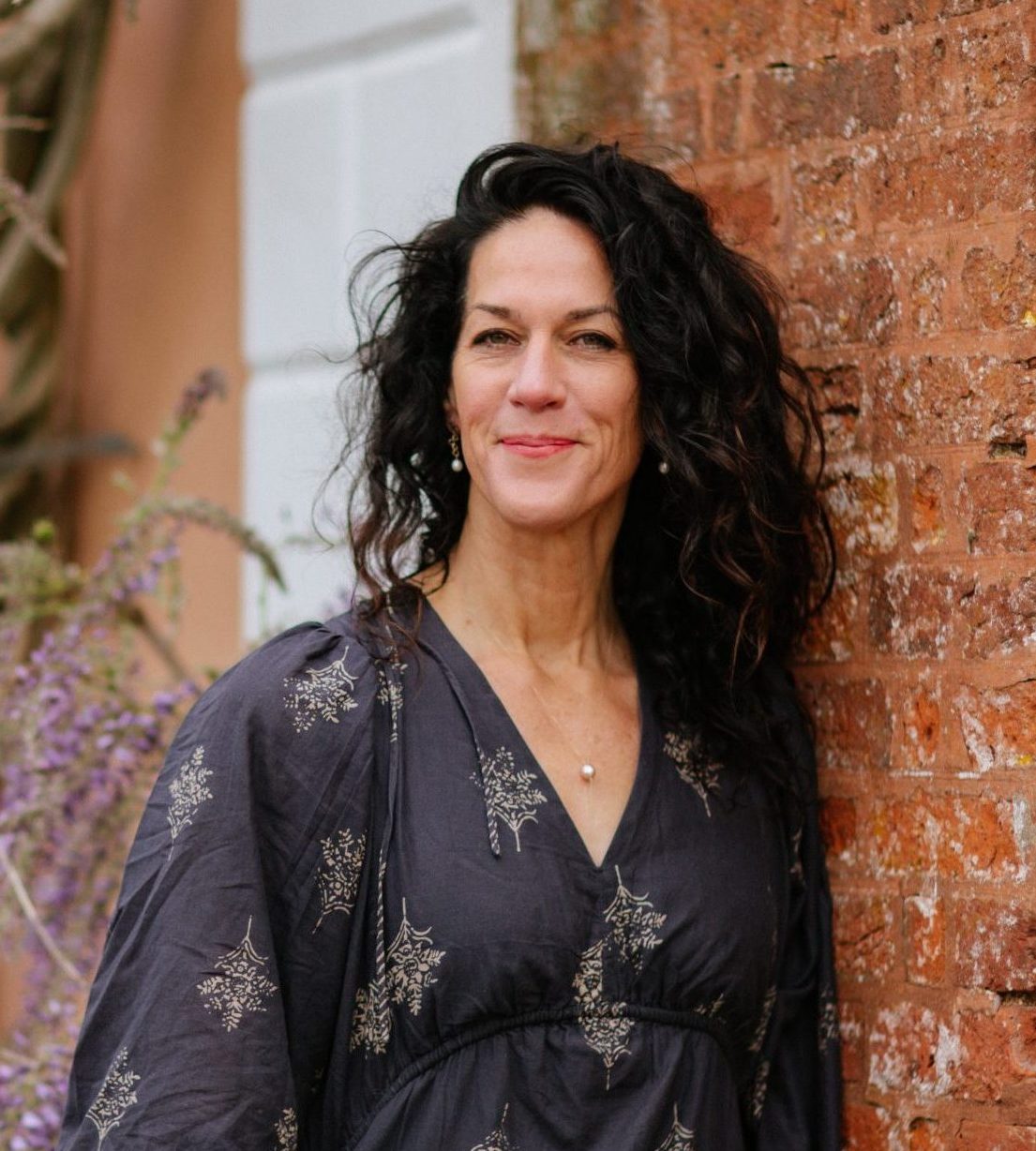
Kathryn Aalto is a New York Times bestselling author, historian and passionate teacher of narrative nonfiction. Her books include The Natural World of Winnie-the-Pooh: A Walk Through the Forest that Inspired the Hundred Acre Wood and Writing Wild: Women Poets, Ramblers, and Mavericks Who Shape How We See the Natural World.
From her studio in Devon, England, she leads The Narrative Life, an international school of narrative nonfiction whose students write from six continents. She teaches live online creative nonfiction courses in memoir, nature writing, travel writing and literary nonfiction — many of her students arriving as complete beginners, with nothing but a true story they needed to tell. Her students have gone on to win national travel writing prizes and sign contracts with major publishers.
Her teaching is built on her Eight Pillars of Narrative Nonfiction — presence, arc, character, dialogue, voice, language, setting and resonance — a framework for turning real life into resonant story. She holds master’s degrees in garden history and creative nonfiction, has taught critical thinking at university level, and believes the writing life is not a talent bestowed on a few but a path anyone can walk with excellent teaching. How to Build a Writing Practice is a practical component amongst her artistic technique-driven classes.
Explore all of Kathryn’s online creative nonfiction writing courses, masterclasses and mentoring: Online Creative Nonfiction Writing Courses | Kathryn Aalto.
Autumn 2026 Footpath Masterclasses
Day Class Mon 14 Sep Step 1 · Setting Out: An Introduction to Narrative Nonfiction Tue 15 Sep Step 2 · Clearing the Ground: How to Build a Writing Practice Wed 16 Sep Step 3 · Reading the Ground: How to Read Like a Writer Thu 17 Sep Step 4 · Finding Your Footing: How to Find Your Writing Voice Fri 18 Sep Step 5 · Off the Path: How to Research: Archives, Fieldwork & Interviews Sat 19 Sep Step 6 ·The First Step and the Last : How to Write Beginnings and Endings Sun 20 Sep Step 7 · Retracing Your Steps: How to Edit Your Own Writing