

Clearing the Ground: Building a Writing Practice
Nothing can be built or grown until the ground is cleared, and this step clears yours — replacing the wait for inspiration with a writing practice that runs whether or not you feel like a writer that morning.
Most unwritten books were never stopped by a lack of talent. They were stopped by Tuesday: by the meeting that ran over, the inbox that refilled, the good intention that survived until roughly four in the afternoon.
- Step 2 of 7 · The Footpath Autumn 2026· £50
- Tuesday 15 September · 4–6 PM London · 11 AM New York · 8 AM San Francisco · 5 PM Paris · 8:30 PM Delhi · 1 AM Sydney (next day) · 3 AM Auckland (next day)
- Live online, a recording goes to everyone.
Why writers stall
The obstacle is almost never ability and almost never, on close inspection, time. It is the absence of a system — a set of decisions made once, in advance, so that they do not have to be remade every single morning against the full weight of a working life. Writers who produce are rarely more disciplined than writers who do not. They have simply stopped negotiating. How to Build a Writing Practice is geared to make find that impossible time and use it to its full potential.
In How to Build a Writing Practice, we will look honestly at what actually blocks you: perfectionism disguised as standards, research disguised as progress, and the particular paralysis of not knowing what the next sentence is for.
What a writing practice actually is
A practice is not a mood and not a streak. It is a time, a place, a smallest viable session, and a rule for what happens when you miss a day — because you will miss a day, and the writers who continue are the ones who decided in advance what that would mean.
We will build yours in the room: the hour you can genuinely protect, the ritual that gets you sitting down, the way to leave a session so that returning is easy, and a method for keeping a project warm across the weeks when life takes the desk away. How to Build a Writing Practice will provide you with practical insights from a professional New York Times bestselling writer who has taught narrative nonfiction and nature writing for decades.
How to write when you have no time
Twenty minutes, used properly, is a working practice. In How to Build a Writing Practice, we will cover how to make short sessions productive, how to stop the inner critic from editing a sentence before it exists, and how to tell the difference between a fallow period and avoidance — which look identical from the inside and require opposite treatment.
What you will leave with
- An understanding of how to build a writing practice by honestly identifying: your time, your place, your minimum session
- A rule for missed days that keeps a bad week from ending a project
- Techniques for starting quickly and stopping well
- A clear-eyed view of your own avoidance patterns, with a name for each
Read before: Nothing.
Bring: Your diary or calendar for the next four weeks, and an honest account of when you last wrote.
Questions about How to Build a Writing Practice
- Is this class about productivity or about writing? About writing — the practice exists to serve the work, not the other way round.
- I have a full-time job and children. Is this realistic for me? Yes. The class is built around short protected sessions rather than long empty mornings.
- Do I need a project underway? No, though the class is more useful if you have one in mind.
- Does this apply to fiction as well as nonfiction? Yes — the practice is the same, though the examples are drawn from nonfiction.
- Do I have to attend live? No. A recording good for 2 months is sent to everyone who registers.

About The Footpath
Kathryn discovered the joys of footpaths when she moved to England in 2007, and they have served as significant parts of living a narrative life.
The Footpath series of masterclasses takes its name from the way a path is actually made. Nobody surveys it or lays it down; it appears because one person walks a route, and then another, until the ground itself remembers the way through. Learning to write works the same way. These seven masterclasses are seven steps along that path — each one complete in itself, each one two hours of live teaching you can take on its own, and each one facing the same direction. Walk a single step if that is what you need. Walk three. Walk all seven and you will have crossed the whole ground, from the empty desk on Monday morning to the revised page on Sunday night.
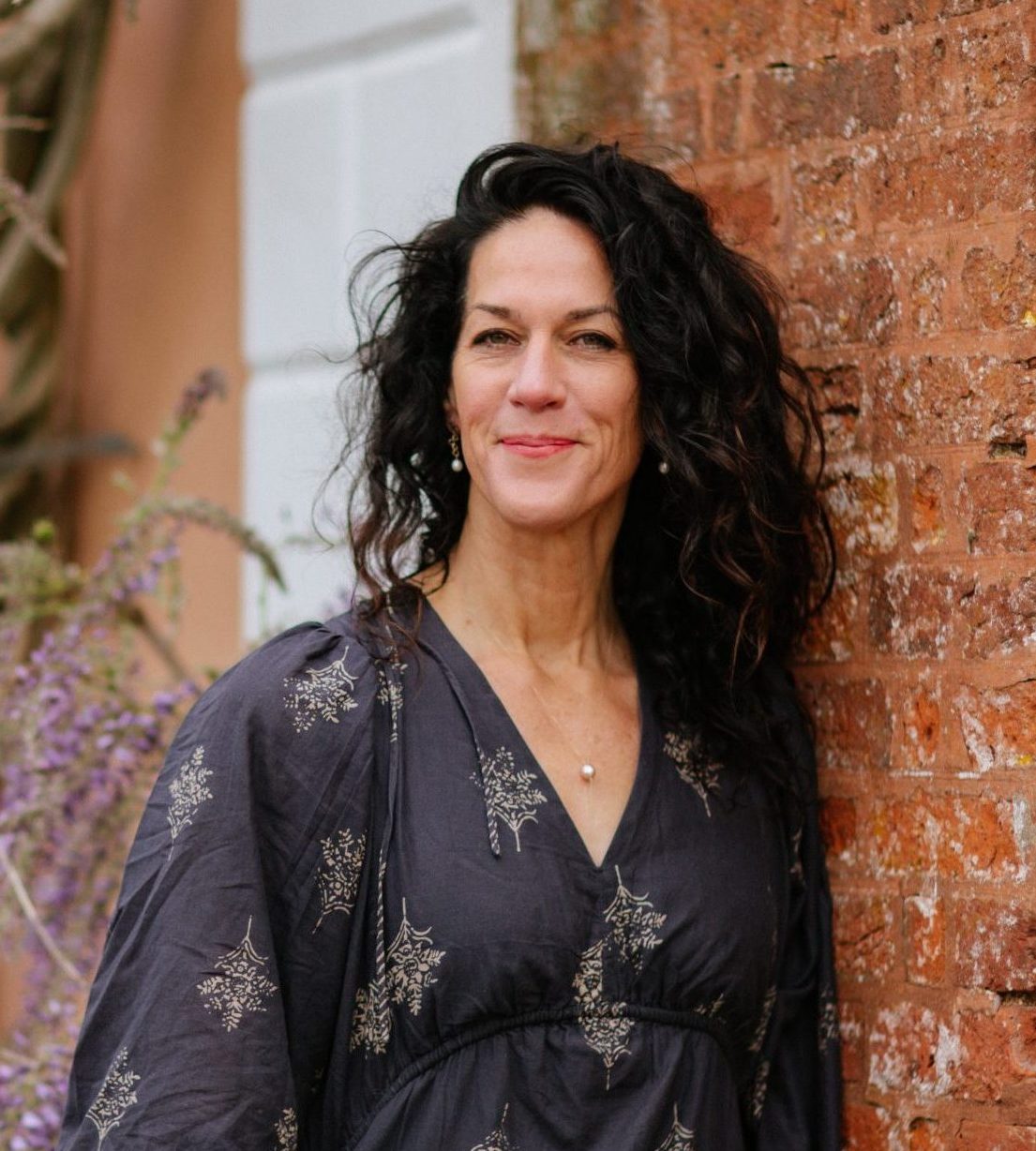
About Kathryn
Kathryn Aalto is a New York Times bestselling author, historian and passionate teacher of narrative nonfiction. Her books include The Natural World of Winnie-the-Pooh: A Walk Through the Forest that Inspired the Hundred Acre Wood and Writing Wild: Women Poets, Ramblers, and Mavericks Who Shape How We See the Natural World.
From her studio in Devon, England, she leads The Narrative Life, an international school of narrative nonfiction whose students write from six continents. She teaches live online narrative nonfiction courses in memoir, nature writing, travel writing and literary nonfiction — many of her students arriving as complete beginners, with nothing but a true story they needed to tell. Her students have gone on to win national travel writing prizes and sign contracts with major publishers.
Her teaching is built on her Eight Pillars of Narrative Nonfiction — presence, arc, character, dialogue, voice, language, setting and resonance — a framework for turning real life into resonant story. She holds master’s degrees in garden history and creative nonfiction, has taught critical thinking at university level, and believes the writing life is not a talent bestowed on a few but a path anyone can walk with excellent teaching. How to Build a Writing Practice is a practical component amongst her artistic technique-driven classes.
Explore all of Kathryn’s online creative nonfiction writing courses, masterclasses and mentoring: Online Creative Nonfiction Writing Courses | Kathryn Aalto.
“After six months of working with Kathryn–which is a bit like entering the space of a handwritten letter, what with her sharp aesthetic sense, far-ranging intelligence, wit, and curiosity–I’ve made tangible progress on an unwieldy, long-form project I was struggling to articulate. I came to her Memoir and Life Writing class for accountability, and came away having experienced the kind of support, writing insight, and real feeling of friendship that can be difficult to find in a workshop environment. Kathryn fostered a warm, charming atmosphere in class (a real feat online), allowing for life-long connections to develop among our group of writers. She cares about the arc of her student’s writing lives–a form of attention that encourages artistic growth and positive risk-taking. She not only brought her years of writing and publishing experience to class and to our bi-monthly writing assignments (her personal feedback, often handwritten, is invaluable), she also brought her unique perspective. Writer-gardener-historians are, I think, particularly adept at imagining the possibilities for a piece, no matter your subject. Kathryn pushed me to dig deeper, moving my writing in new directions. No matter where one is in their writing life, working with Kathryn will be an experience of profound joy, insight, and artistic deepening.“ — Veronica, Portland, Oregon
The Autumn 2026 Footpath
| Day | Class |
|---|---|
| Mon 14 Sep | Step 1 · Setting Out: An Introduction to Narrative Nonfiction |
| Tue 15 Sep | Step 2 · Clearing the Ground: How to Build a Writing Practice |
| Wed 16 Sep | Step 3 · Reading the Ground: How to Read Like a Writer |
| Thu 17 Sep | Step 4 · Finding Your Footing: How to Find Your Writing Voice |
| Fri 18 Sep | Step 5 · Off the Path: How to Research: Archives, Fieldwork & Interviews |
| Sat 19 Sep | Step 6 ·The First Step and the Last : How to Write Beginnings and Endings |
| Sun 20 Sep | Step 7 · Retracing Your Steps: How to Edit Your Own Writing |