

Finding Your Footing: Recovering Your Voice in the First Person
Somewhere in a career of writing like an institution, most people lose their footing — and this step recovers it, returning the first person to your prose along with the judgement to know how much of it you actually need.
- Step 4 of 7 · The Autumn 2026 Footpath· £50
- Thurs 17 Sep · 4–6 PM London · 11 AM New York · 8 AM San Francisco · 5 PM Paris · 8:30 PM Delhi · 1 AM Sydney (next day)
- Live online, a recording goes to everyone.
You can usually hear the moment it went. The sentences lengthen and grow careful. The verbs go quiet, buried inside abstract nouns. Every claim arrives pre-apologised for, flanked by qualifiers and propped up by other people’s names. The prose does its job competently, and nobody is home.
Institutions have done this to writers for a long time. Peer review teaches you that authority means absence. House style sands off whatever sounds like a person. A committee removes the one sentence you actually meant. Scientists, clinicians, lawyers, curators, civil servants and consultants all arrive having learned the lesson thoroughly — which is the problem, because the training worked.
More important than ever with AI
Now a second force is doing the same work, faster and to almost everyone. Millions of us draft alongside a machine that writes in a permanent, frictionless middle register: fluent, balanced, agreeable, symmetrical, and belonging to no one at all. Use it daily for a year and you absorb its rhythms without noticing — the three-part list, the tidy pivot, the sentence that offends nobody because nobody wrote it. Writers who never worked inside an institution now produce institutional prose anyway. And people who kept their voice through thirty years of professional life find they are quietly handing it over to a tool.
As a writer involved in a class action lawsuit against Anthropic, Kathryn Aalto innately understands what it feels like to have a voice taken away — to be used by others. Creative writing is a sacred act to be protected from this technology. Kathryn empowers you in how to do so.
This class teaches you to find your writing voice again, and to hold onto it. You will diagnose what took it — the trained reflexes, the borrowed cadences, the habits you cannot hear because they sound like competence. Then you will strip them out, one at a time, and put a person back on the page. Learning to find your writing voice is not a matter of style or decoration; your voice is your point of view made audible, the accumulated evidence of what you notice, what you refuse, what you find funny, and where you slow down. No machine has one. That is precisely why yours is worth recovering. Your voice is your unique literary fingerprint.
Why academics and professionals lose their writing voice
How to Find Your Writing Voice is especially but not exclusively for those trained out of the first person: taught that authority means absence, that “I” is un-rigorous, that hedging is honesty. Scientists, clinicians, lawyers, curators, civil servants, consultants — anyone whose sentences have been shaped by peer review, house style, or a committee. The training worked, and that is precisely the problem.
We begin with diagnosis: how the trained voice differs from the true one, and why voice is not decoration but point of view made audible — the accumulated evidence of what you notice, what you refuse, what you find funny, where you slow down.
Unlearning the institutional habits
Then exercises that loosen the trained reflexes one at a time: the passive voice, the qualifier stack, the citation reflex, the abstract noun doing work a verb should be doing. We will take a paragraph down to its load-bearing walls and rebuild it with a person inside. You will be an active member of class while making friends, having a good laugh at what institutions and AI can do to our voices, and feeling satisfied in recovering your innate voice.
How much ‘I’ does your writing need?
Getting the first person back is only half of it, and an unmanaged ‘I’ is its own kind of failure. We will work along the whole sliding scale: the full-bodied ‘I’ of memoir, the thin observing ‘I’ of reportage, and everything between.
Where the ‘I’ illuminates — when your experience is the evidence, when your position must be declared for the reader to weigh what follows — and where it blocks the view, standing between the reader and the thing itself. And how vulnerability, properly handled, reads as authority rather than weakness: what it costs, where it belongs, and how to tell an admission that earns trust from one that asks the reader for reassurance. If you have struggled to understand how to find your writing voice, we also explore sentence mechanics: how to consider the sounds of words, words next to each other, rhythm, placement, and the syntax of sentence can help define a person’s literary fingerprint.
What you will gain in How to Find Your Writing Voice
- An ear for your own institutional tics — and a name for each one
- Four exercises you can run on any draft, in any genre, for the rest of your writing life
- A working sense of how much narrator presence your particular project needs
- Two of your own paragraphs, rewritten with you in them
- Permission, if you have been waiting for it, to write in the first person
Read before: A before-and-after: scholarly prose transformed into voice-driven nonfiction. Provided.
Bring: Two paragraphs of your professional or objective writing — a paper, a report, a grant application, a memo. We will find the person hiding in them.
Questions
- Is this only for academics? No, though it is built for anyone whose writing has been shaped by professional convention.
- I write memoir, not reports. Is this relevant? Yes — the second half of How to Find Your Writing Voice is about calibrating narrator presence, which memoir depends on.
- Will this teach me to write about myself? It will teach you to decide how much of yourself the writing needs, which is a different and more useful skill.
- Do I need to bring published writing? No. Any professional or objective prose will do.
- Do I have to attend live? No though it is preferred and best if you can. A recording is sent to everyone who registers.

About The Footpath
Kathryn discovered the joys of footpaths when she moved to England in 2007, and they have served as significant parts of living a narrative life.
The Footpath series of masterclasses takes its name from the way a path is actually made. Nobody surveys it or lays it down; it appears because one person walks a route, and then another, until the ground itself remembers the way through. Learning to write works the same way. These seven masterclasses are seven steps along that path — each one complete in itself, each one two hours of live teaching you can take on its own, and each one facing the same direction. Walk a single step if that is what you need. Walk three. Walk all seven and you will have crossed the whole ground, from the empty desk on Monday morning to the revised page on Sunday night.
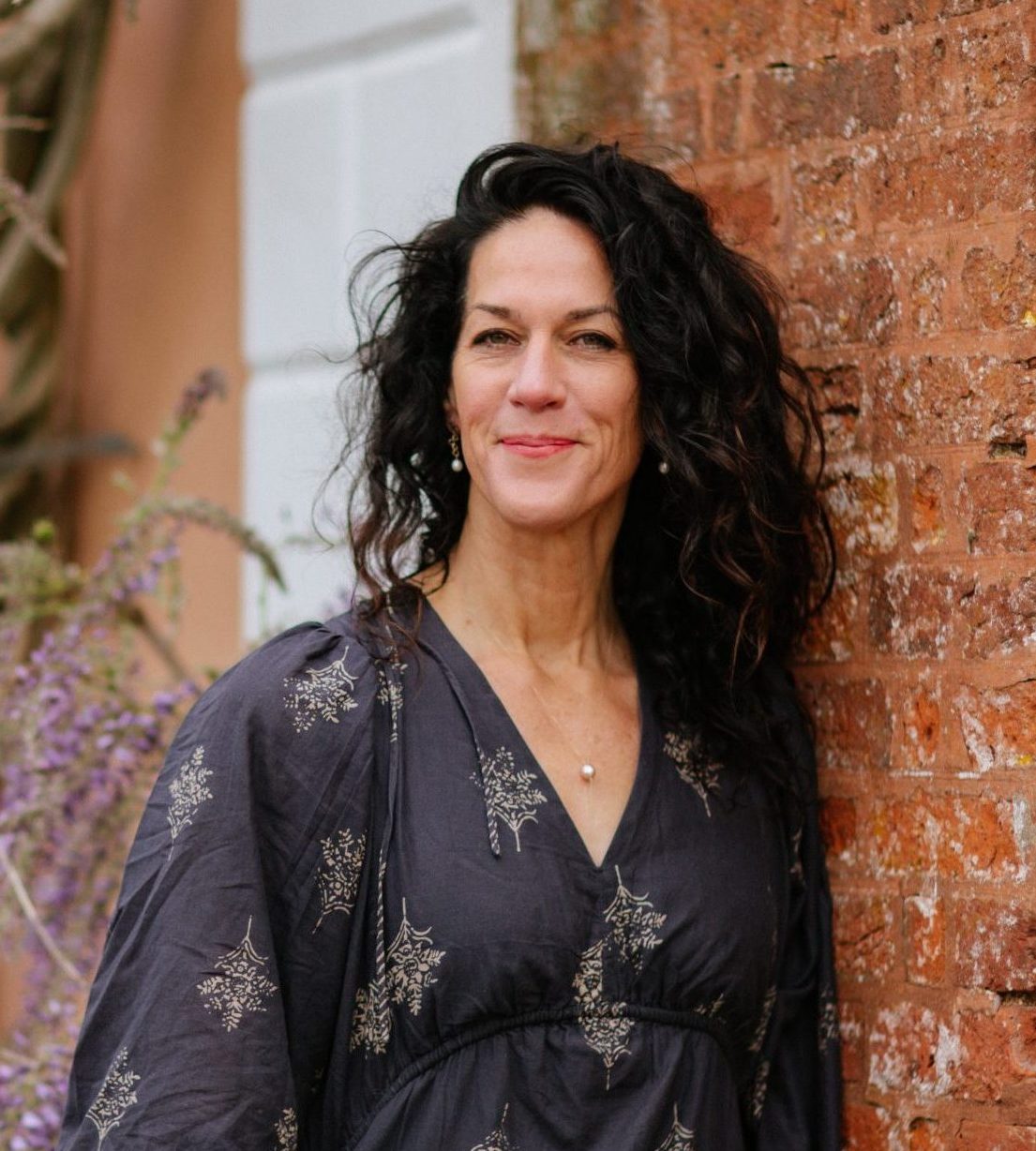
About Kathryn
Kathryn Aalto is a New York Times bestselling author, historian and passionate teacher of narrative nonfiction. Her books include The Natural World of Winnie-the-Pooh: A Walk Through the Forest that Inspired the Hundred Acre Wood and Writing Wild: Women Poets, Ramblers, and Mavericks Who Shape How We See the Natural World.
From her studio in Devon, England, she leads The Narrative Life, an international school of narrative nonfiction whose students write from six continents. She teaches live online creative nonfiction courses in memoir, nature writing, travel writing and literary nonfiction — many of her students arriving as complete beginners, with nothing but a true story they needed to tell. Her students have gone on to win national travel writing prizes and sign contracts with major publishers.
Her teaching is built on her Eight Pillars of Narrative Nonfiction — presence, arc, character, dialogue, voice, language, setting and resonance — a framework for turning real life into resonant story. She holds master’s degrees in garden history and creative nonfiction, has taught critical thinking at university level, and believes the writing life is not a talent bestowed on a few but a path anyone can walk with excellent teaching. How to Build a Writing Practice is a practical component amongst her artistic technique-driven classes.
Explore all of Kathryn’s online creative nonfiction writing courses, masterclasses and mentoring: Online Creative Nonfiction Writing Courses | Kathryn Aalto.
Kathryn Aalto is a world-class teacher. I had 30 years’ experience as a journalist and copywriter, but I was a novice in narrative non fiction. Kathryn taught me how to write, guiding me on a journey of discovery, revealing the secrets of sensory writing, bringing filmic vividness to my descriptions of the world around me and uncovering the inner landscapes of the mind. I will be forever grateful for her inspirational teaching and the support of the remarkable writing communities she curates, from whom I have received invaluable encouragement and among whom I have made enduring friendships.” — Gary F., Rutland, England
The Autumn 2026 Footpath
| Day | Class |
|---|---|
| Mon 14 Sep | Step 1 · Setting Out: An Introduction to Narrative Nonfiction |
| Tue 15 Sep | Step 2 · Clearing the Ground: How to Build a Writing Practice |
| Wed 16 Sep | Step 3 · Reading the Ground: How to Read Like a Writer |
| Thu 17 Sep | Step 4 · Finding Your Footing: How to Find Your Writing Voice |
| Fri 18 Sep | Step 5 · Off the Path: How to Research: Archives, Fieldwork & Interviews |
| Sat 19 Sep | Step 6 ·The First Step and the Last : How to Write Beginnings and Endings |
| Sun 20 Sep | Step 7 · Retracing Your Steps: How to Edit Your Own Writing |