

Reading the Ground: How to Read Like a Writer
A tracker reads a field for what passed through it, and this step teaches you to read a page the same way: not only what the writer said, but the marks they left while saying it.
- Step 3 of 7 · The Autumn 2026 Footpath· £50
- Wednesday 16 September · 4–6 PM London · 11 AM New York · 8 AM San Francisco · 5 PM Paris · 8:30 PM Delhi · 1 AM Sydney (next day)
- Live online, a recording goes to everyone.
You have been reading well for decades. What you may not have been doing is reading twice — once for the pleasure, and once for the machinery underneath it.
Reading for pleasure and reading for craft
In How to Read Like a Writer, we learn that these are two different acts and they cannot be performed simultaneously. The first is why we came to books at all and should never be given up. The second is the writer’s working method: slowing a page down until its decisions become visible, so that what moved you stops being magic and starts being technique you can use. In How to Read Like a Writer, you learn how to read with and against the grain.
We will practise the switch between them deliberately, because writers who cannot switch back into pleasure eventually stop reading, and writers who never switch out of it never learn anything they can apply.
Two passages, dismantled together
We take two short passages apart in the room. The first for structure: where the scene begins, what is summarised and what is rendered, where time compresses and where it slows, how the writer moves us between the small thing and the large one.
The second for sentence-craft: rhythm, verbs, the length of a line and what it does to a reader’s breath, the specific noun doing work three abstractions could not. This is close reading with the tools of a builder rather than a critic — we are not asking what the passage means but how it was made.
Annotation habits that last
A method you can apply to everything you read from here on: what to mark, what to ignore, how to keep a commonplace book that you actually return to, and how to build a personal archive of technique from books you were going to read anyway. How to Read Like a Writer fundamentally shifts you from being a passive reader just for pleasure into being an active reader for techniques. It can be imagined like turning a garment inside out to study how it was made.
What How to Read Like a Writer leaves you with
- A repeatable method for close reading any piece of nonfiction
- Two passages fully dismantled, with your own notes on both
- An annotation system you can use for the rest of your reading life
- The ability to name why a piece of writing worked on you
Read before: A one-page passage, provided. Read it once, for pleasure only. We will read it a second way together in class.
Bring: The provided passage, marked or unmarked as you prefer, and a pen.
Questions about How to Read Like a Writer
- Is this masterclass How to Read Like a Writer the same as the Francine Prose book? No. The phrase is shared; this class is live, two hours, and works exclusively with nonfiction.
- Do we read fiction or nonfiction? Nonfiction — essays, memoir, nature writing, reportage.
- Do I need to have done the pre-reading? It helps considerably, and takes about five minutes.
- Is this a literature class? No. We read as builders, not as critics — the goal is technique you can use.
- Do I have to attend live? No. A recording is sent to everyone who registers. Being present is desired however.
- What time is this in the United States? 11 AM Eastern, 8 AM Pacific.

About The Footpath
Kathryn discovered the joys of footpaths when she moved to England in 2007, and they have served as significant parts of living a narrative life.
The Footpath series of masterclasses takes its name from the way a path is actually made. Nobody surveys it or lays it down; it appears because one person walks a route, and then another, until the ground itself remembers the way through. Learning to write works the same way. These seven masterclasses are seven steps along that path — each one complete in itself, each one two hours of live teaching you can take on its own, and each one facing the same direction. Walk a single step if that is what you need. Walk three. Walk all seven and you will have crossed the whole ground, from the empty desk on Monday morning to the revised page on Sunday night.
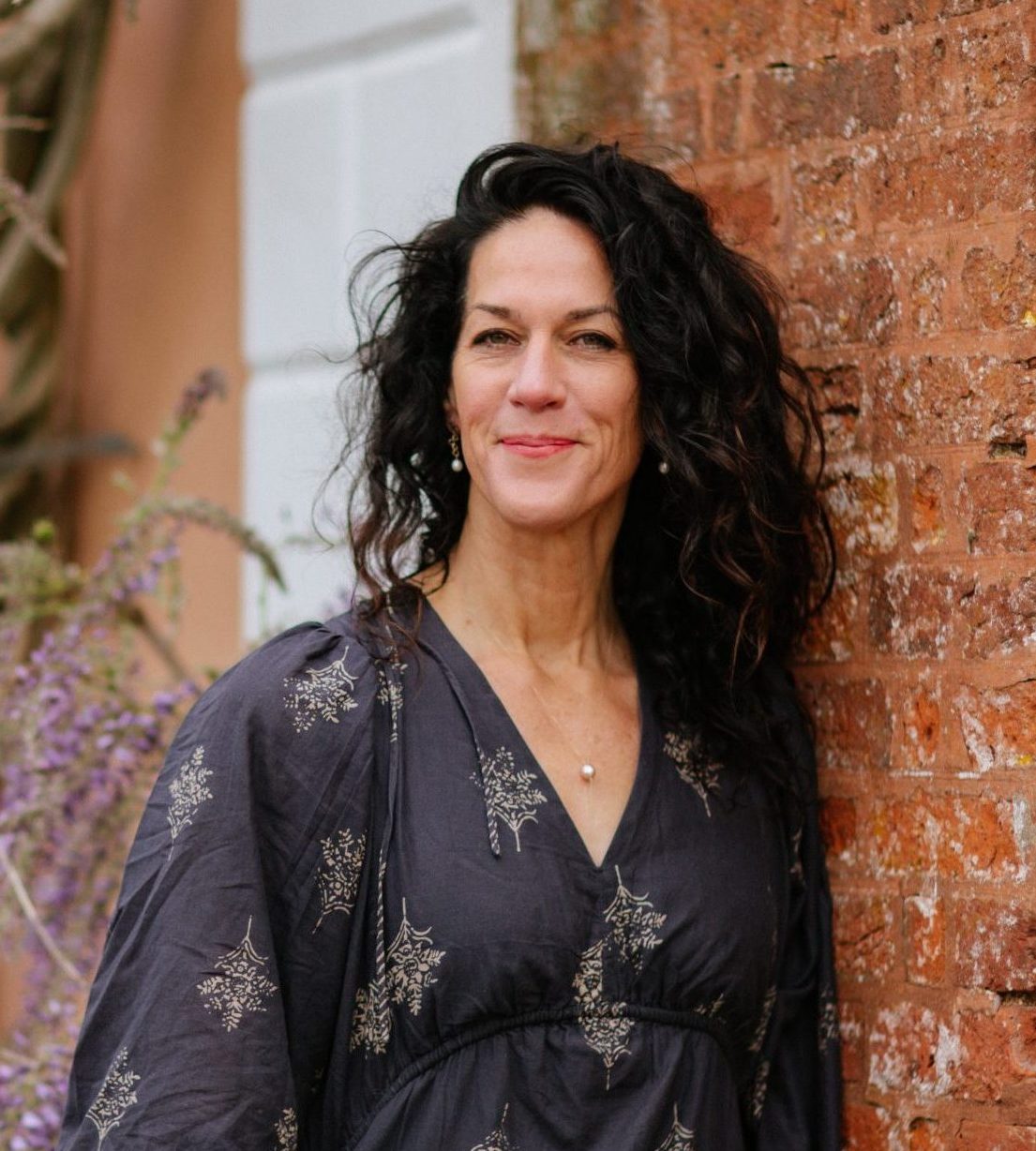
About Kathryn
Kathryn Aalto is a New York Times bestselling author, historian and passionate teacher of narrative nonfiction. Her books include The Natural World of Winnie-the-Pooh: A Walk Through the Forest that Inspired the Hundred Acre Wood and Writing Wild: Women Poets, Ramblers, and Mavericks Who Shape How We See the Natural World.
From her studio in Devon, England, she leads The Narrative Life, an international school of narrative nonfiction whose students write from six continents. She teaches live online creative nonfiction courses in memoir, nature writing, travel writing and literary nonfiction — many of her students arriving as complete beginners, with nothing but a true story they needed to tell. Her students have gone on to win national travel writing prizes and sign contracts with major publishers.
Her teaching is built on her Eight Pillars of Narrative Nonfiction — presence, arc, character, dialogue, voice, language, setting and resonance — a framework for turning real life into resonant story. She holds master’s degrees in garden history and creative nonfiction, has taught critical thinking at university level, and believes the writing life is not a talent bestowed on a few but a path anyone can walk with excellent teaching. How to Build a Writing Practice is a practical component amongst her artistic technique-driven classes.
Explore all of Kathryn’s online creative nonfiction writing courses, masterclasses and mentoring: Online Creative Nonfiction Writing Courses | Kathryn Aalto.
“Recently I completed Kathryn Aalto’s Memoir and Life Writing Level 1 course. Kathryn is a gifted communicator. Numerous beta readers, intimately familiar for decades with my writing, have mentioned finding deeper, more exciting levels of my storytelling ability since I studied with the extraordinary Ms. Aalto. I have already enrolled in Level 2 Memoir and Life Writing. Her writing course is, bar none, the best value for money of any writing course I have ever taken, either online or in person.” — Bonnie L., Mobile, Alabama
The Autumn 2026 Footpath
| Day | Class |
|---|---|
| Mon 14 Sep | Step 1 · Setting Out: An Introduction to Narrative Nonfiction |
| Tue 15 Sep | Step 2 · Clearing the Ground: How to Build a Writing Practice |
| Wed 16 Sep | Step 3 · Reading the Ground: How to Read Like a Writer |
| Thu 17 Sep | Step 4 · Finding Your Footing: How to Find Your Writing Voice |
| Fri 18 Sep | Step 5 · Off the Path: How to Research: Archives, Fieldwork & Interviews |
| Sat 19 Sep | Step 6 ·The First Step and the Last : How to Write Beginnings and Endings |
| Sun 20 Sep | Step 7 · Retracing Your Steps: How to Edit Your Own Writing |