
Narrative Nonfiction Masterclass Schedule
| Day | Class |
|---|---|
| Mon 24 Aug | Class 1: The Eight Pillars: An Introduction to Narrative Nonfiction |
| Tue 25 Aug | Class 2: Clearing the Ground: Building a Writing Practice |
| Wed 26 Aug | Class 3: Reading Like a Writer |
| Thu 27 Aug | Class 4: Recovering Your Voice: The ‘I’ in Your Writing |
| Fri 28 Aug | Class 5: Research for Writers |
| Sat 29 Aug | Class 6: First Words, Last Words: Beginnings and Endings |
| Sun 30 Aug | Class 7: The Editor’s Eye: Revising Your Own Work |
First Words, Last Words: Beginnings and Endings
Saturday 29 August 2026 · 4–6 PM BST · Two hours, live on Zoom · £50
Recording available to all registrants.
The two moments a reader never forgives you for getting wrong.
We begin with openings, and with a claim: your first five hundred words are a contract. They promise a subject, a voice, and — most importantly, and most often unnoticed — a kind of attention. They tell the reader how fast this will move, how close it will get, whether it intends to be funny, whether it will ask anything of them. A reader who abandons a piece on page three has usually not been bored. They have been misled: promised one thing and given another.
So the session’s first half is diagnostic. We will take published openings and dismantle them one at a time, asking of each: what exactly is being promised here, in the first sentence, the first paragraph, the first page? And then — did the piece keep it?
Along the way we will separate the hook that earns attention from the hook that begs for it. Begging has a recognisable repertoire: the rhetorical question, the dictionary definition, the false urgency, the paragraph of throat-clearing before the writer works out where to stand. Earning is quieter and harder. It usually involves trusting a specific true thing to be interesting on its own, and starting closer to the middle than feels comfortable.
Then endings — the harder problem, and the one almost nobody teaches.
Nonfiction cannot close with a bow, because the material did not. The person is still alive, or still dead; the argument is unfinished; nothing was solved. What we are after is not resolution but resonance: the sense that the piece has arrived somewhere, without pretending the world has. We will look at the difference between ending on a final image and ending on a final idea, and at what each costs. Image trusts the reader and risks vagueness. Idea is clear and risks the sermon.
We will also address the most common structural fault in otherwise finished work: the essay that ends one paragraph too late. The instinct to explain what we have just shown is almost irresistible, and almost always wrong. You will practise cutting your own last paragraph and looking at what remains.
And we will talk about why last paragraphs are usually written last — not from procrastination, but because you cannot know how to close a piece until you have discovered what it was actually about, which is generally somewhere around the fourth draft.
The pairing is the point. A great ending is almost always a return, transformed, to the opening’s promise. Not a repetition — a rhyme. The same object, the same place, the same phrase, met again by a reader who has been changed in the interval, and who therefore sees it differently without being told to. Learn to hear that rhyme and you will have the architecture of the essay in your hands.
Read before: nothing — arriving fresh to the openings is part of the method. Coming to them cold is the only way to feel a promise being made.
Bring: the first paragraph of something you’re writing, and — if it exists — its current last line. If it doesn’t exist yet, bring the first paragraph anyway. By the end of the session you will have a candidate.
About Kathryn
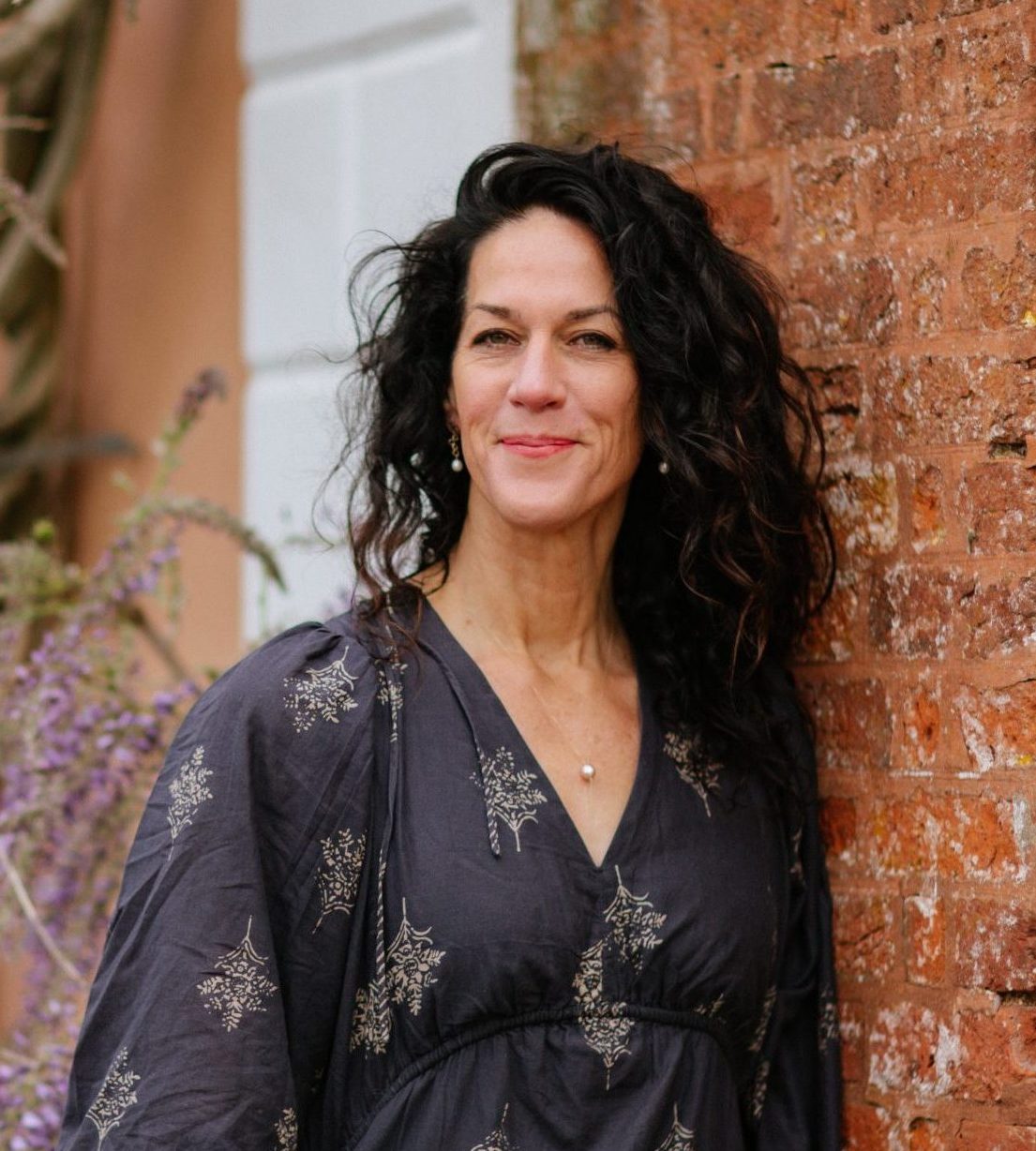
Kathryn Aalto is a New York Times bestselling author, historian, and public speaker whose books include The Natural World of Winnie-the-Pooh and Writing Wild: Women Poets, Ramblers, and Mavericks Who Shape How We See the Natural World. From her home in Devon, England, she leads The Narrative Life, an international school of narrative nonfiction — many of her students beginning writers who arrived with nothing but a true story they needed to tell. Her teaching is grounded in her Eight Pillars of Narrative Nonfiction, a framework for turning real life into resonant story. She believes the writing life is not just a talent bestowed on the few but a path anyone can walk with excellent teaching — and she has spent her career showing people the way in through narrative nonfiction masterclasses, mentoring, and longer courses. Learn more about her upcoming autumn courses in narrative nonfiction and poetry here: Online Creative Nonfiction Writing Courses | Kathryn Aalto
Endorsements
Kathryn Aalto is a world-class teacher. I had 30 years’ experience as a journalist and copywriter, but I was a novice in narrative non fiction. Kathryn taught me how to write, guiding me on a journey of discovery, revealing the secrets of sensory writing, bringing filmic vividness to my descriptions of the world around me and uncovering the inner landscapes of the mind. I will be forever grateful for her inspirational teaching and the support of the remarkable writing communities she curates, from whom I have received invaluable encouragement and among whom I have made enduring friendships.” — Gary F., Rutland, England
“Recently I completed Kathryn Aalto’s Memoir and Life Writing Level 1 course. Kathryn is a gifted communicator. Numerous beta readers, intimately familiar for decades with my writing, have mentioned finding deeper, more exciting levels of my storytelling ability since I studied with the extraordinary Ms. Aalto. I have already enrolled in Level 2 Memoir and Life Writing. Her writing course is, bar none, the best value for money of any writing course I have ever taken, either online or in person.” — Bonnie B. L., Mobile, Alabama
“After six months of working with Kathryn–which is a bit like entering the space of a handwritten letter, what with her sharp aesthetic sense, far-ranging intelligence, wit, and curiosity–I’ve made tangible progress on an unwieldy, long-form project I was struggling to articulate. I came to her Memoir and Life Writing class for accountability, and came away having experienced the kind of support, writing insight, and real feeling of friendship that can be difficult to find in a workshop environment. Kathryn fostered a warm, charming atmosphere in class (a real feat online), allowing for life-long connections to develop among our group of writers. She cares about the arc of her student’s writing lives–a form of attention that encourages artistic growth and positive risk-taking. She not only brought her years of writing and publishing experience to class and to our bi-monthly writing assignments (her personal feedback, often handwritten, is invaluable), she also brought her unique perspective. Writer-gardener-historians are, I think, particularly adept at imagining the possibilities for a piece, no matter your subject. Kathryn pushed me to dig deeper, moving my writing in new directions. No matter where one is in their writing life, working with Kathryn will be an experience of profound joy, insight, and artistic deepening.“ — Veronica, Portland, Oregon