“An amazing, rich resource that rises above visions of conquest and domination to reveal the possibility of meeting eye-to-eye with wildness, and of being broken open and changed.” — Foreword
“A fantastic resource for readers looking to grow their TBR piles.” — The Los Angeles Times
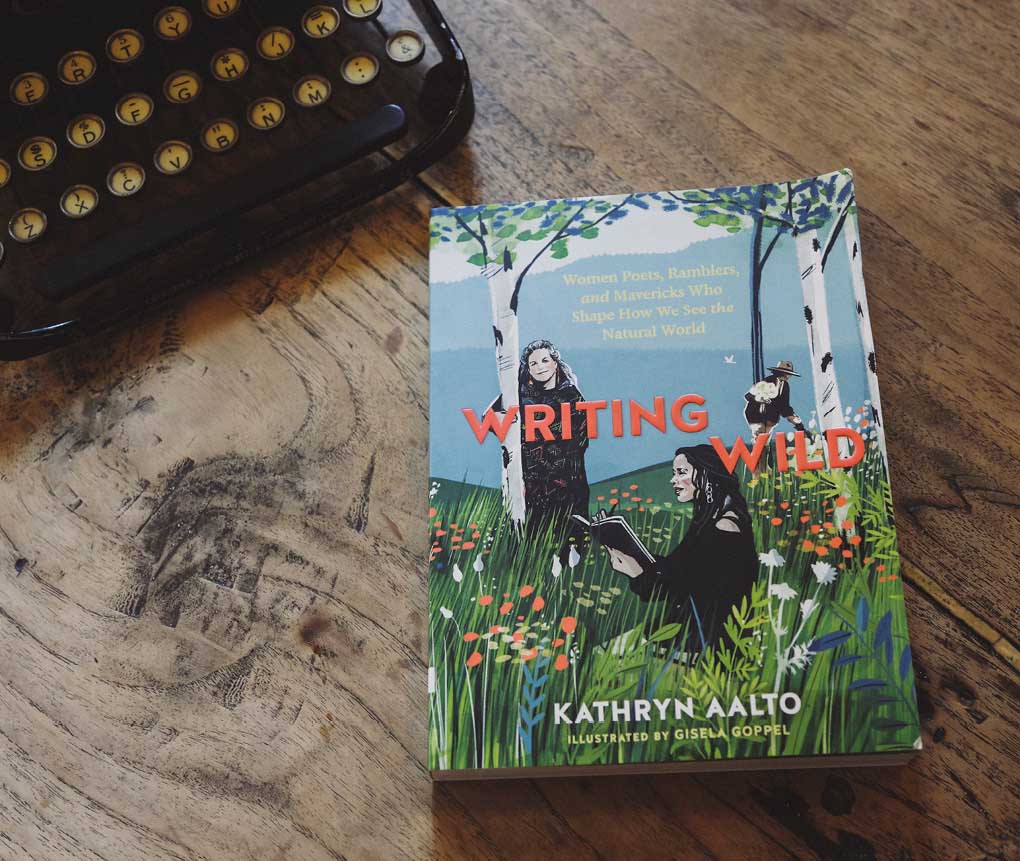
WRITING WILD
Women Poets, Ramblers, and Mavericks Who Shape How We See the Natural World
For more than two hundred years, women have walked, climbed, gardened, studied and written their way into the natural world, yet their voices have often been overlooked in a genre long dominated by men. Writing Wild, part travel essay, part literary biography and part cultural history, celebrates twenty-five of these remarkable women: gardeners, scholars, spiritual seekers, conservationists, scientists, novelists and explorers who share a bold authenticity that makes their writing both distinct and universal.
In this engaging and multifaceted talk, Kathryn Aalto accessibly weaves together travelogue, literary biography and cultural history, exploring the intersection of landscape, gender and storytelling. Audiences will learn about:
- Dorothy Wordsworth, the diarist, poet and often-overlooked sister of William Wordsworth, whose 1818 climb up England’s tallest mountain opens the journey.
- Susan Fenimore Cooper, considered America’s first nature writer, and the barriers that “dame scribblers” faced in nineteenth-century publishing.
- The lives, landscapes and legacies of twentieth- and twenty-first-century writers, from icons such as Rachel Carson, Vita Sackville-West, Mary Oliver and Gene Stratton-Porter to contemporary voices including Robin Wall Kimmerer, Kathleen Jamie, Camille T. Dungy and Helen Macdonald.
Through rich visuals, an immersive soundscape and Kathryn’s masterful storytelling, this talk transports audiences across centuries and continents, revealing how women have shaped the way we see, and write about, the natural world.
Exploring Universal Themes
Kathryn delves into the universal themes of courage, curiosity, belonging and voice that make these women’s writing so enduring. Their work, as she explains, is more than nature writing. It is a record of how women claimed the freedom to walk, observe and speak, often ahead of their time and against the expectations of the world around them.
Kathryn also reflects on the power of storytelling to shape our relationship with nature. By bringing forgotten and underrepresented voices into the light, including Indigenous and Black writers, she illustrates how a fuller literary canon can inspire both conservation and a deeper sense of connection to the natural world.
Tailored for Every Audience
Kathryn adapts this talk to the needs of her audience:
- For universities and literature departments, she lingers on literary history, the publishing barriers women faced, and how the canon of nature writing has been shaped.
- For garden clubs, botanical gardens and conservation organisations, she focuses on the gardeners, naturalists and conservationists among these writers, and the landscapes they loved and protected.
- For libraries, museums and Women’s History Month events in March, she highlights trailblazing women and the ongoing journey toward equality in the arts, literature and environmental storytelling.
An Immersive Experience
Listening to Kathryn’s talk is like walking alongside these writers. With vivid visuals, an evocative soundscape and a narrative style that blends warmth with insight, audiences feel transported from the English fells to American woodlands and beyond.
Framed by Kathryn’s own journeys in the footsteps of these women, beginning with her climb up England’s tallest mountain in the path of Dorothy Wordsworth, the talk is as personal as it is historical.
Themes of resilience, wonder and belonging resonate deeply, leaving audiences inspired to read more widely, notice more closely, and recognise women’s vital contributions to both culture and conservation.
Broad Appeal
This is a talk for book lovers, nature enthusiasts, gardeners, historians and anyone interested in women’s lives and voices. It combines the richness of literary biography with the pleasures of travel and natural history, offering a fresh perspective on a genre we thought we knew.
Honorarium, Length, Themes
Details
- Honoraria: Negotiable
- Length: 60 minutes, with time for Q&A.
- Themes: The talk explores themes of biodiversity, climate change, environmental justice, and the intersection of race, gender and the environment. Kathryn examines shifting social norms, the silencing effects of patriarchy on women’s voices in publishing, and how gender roles have evolved.
- How to book a talk: Contact kathryn@kathrynaalto.com to discuss dates and honoraria.
Reviews
“This book is a wonderful jumping-off point for anyone who loves the outdoors and wants to know more about the many talented female writers who have made it their work’s focus.” — Book Page
“Exciting, inspiring, intimidating, and bold.” — San Francisco Book Review
“A luminous collection of mini-biographies of female nature writers past and present. Beautifully illustrated by Gisela Goppel, Aalto’s book champions historical figures like Rachel Carson and Vita Sackville-West, and contemporary writers like Rebecca Solnit and Robin Wall Kimmerer. She makes a point of including Indigenous and Black female authors, ending each chapter with a list of (even) further reading to explore.”— Shelf Awareness
“From Henry David Thoreau to Wallace Stegner to Edward Abbey, male nature writers occupy a great deal of space in the environmental literary canon. But in her book, Writing Wild, Kathryn Aalto offers another perspective to the genre.” — The Nature Conservancy
“A heartening book, granting attention to women who dared to write and ramble wild.” — BBC Countryfile
“This fine and thoughtful book puts these remarkable women writers right smack bang in to focus where they belong—as key shapers of how we see the natural world.” — James Rebanks, author of The Shepherd’s Life