

ABOUT
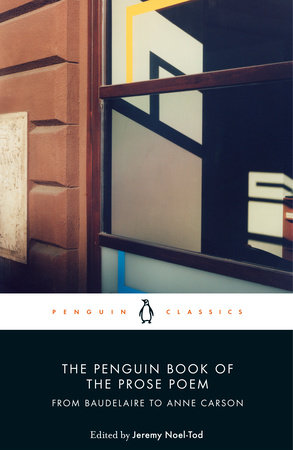
A prose poetry course for writers of every kind. Over eight Wednesday evenings, read The Penguin Book of the Prose Poem: From Baudelaire to Anne Carson, write four prose poems of your own, and discover what happens to a sentence when it no longer has a line break to lean on. Live online with Kathryn Aalto and guest speaker Jeremy Noel-Tod, the anthology’s editor.
This autumn, step into The Unbroken Line, a live online prose poetry course built around one extraordinary book, read the way it asks to be read: slowly, aloud, and backwards through time. Over eight weekly sessions, writers of all levels will travel through Jeremy Noel-Tod’s landmark anthology of a form that has never quite settled on what it is, and is all the more alive for it. The course is an echo of The Living Line: Poetry, Prose, and Song, Kathryn’s summer course on the music that poetry lends to prose. Where The Living Line listened to the line, The Unbroken Line listens to what happens when the line dissolves into the sentence.
Where her fortnightly courses unfold over many months, this autumn course meets every week, with shorter sessions, conversation at the centre, lighter writing between classes and limited places. They are made to fit inside a real life, like a lantern lit early on an autumn evening. You do not need to be a poet. You need only be curious about what happens when a poem gives up the line break and a paragraph begins to sing. Kathryn has written about why every writer should study poetry here.
Why Take a Prose Poetry Course?
If a lined poem is a film cut into frames, the prose poem is a single unbroken take. The camera never looks away, and the writer has nowhere to hide. Everything the line break does in verse (the pause, the held breath, the turn) the prose poet must achieve with the sentence alone.
That is why this small form matters so much to writers of every kind. The prose poem teaches compression, the charged image, and the paragraph as a unit of breath. The best lyric essays, the most memorable openings in memoir, the passages of nature writing readers copy into notebooks — so many of them are prose poems in disguise. Study the form closely and your own writing changes: you hear the rhythm inside a sentence, you trust an image to carry meaning, and you learn exactly when to stop.
What You Will Read in This Prose Poetry Course
Noel-Tod arranges his anthology in reverse, and the course follows him, like walking a river upstream to its source. We begin with the form’s recent flowering in Claudia Rankine, Anne Carson, Patricia Lockwood and Eileen Myles. We move back through the twentieth century’s international experiments in Gertrude Stein, T.S. Eliot, Jorge Luis Borges, Lu Xun, Czesław Miłosz, Allen Ginsberg, Adrienne Rich and Seamus Heaney. And we arrive, in the final weeks, at the beginnings: Baudelaire’s Paris, alongside Ivan Turgenev, Oscar Wilde and Emma Lazarus. By the last session, the origins of the form will feel startlingly modern, because you will have seen everything they made possible.
Guest Speaker: Jeremy Noel-Tod
It is rare to study an anthology with the person who made it. On November 4, Jeremy Noel-Tod joins the class to talk about how he gathered a century and a half of prose poems from around the world, why he chose to arrange them backwards through time, and what the form reveals about the sentence. Students will have the chance to ask him their own questions about the poems they have been reading and writing.
Noel-Tod is an Associate Professor in the School of Literature, Drama and Creative Writing at the University of East Anglia, where his research focuses on modern poetry. He studied at Oxford and wrote his doctorate on T.S. Eliot at Cambridge, and he has taught at Oxford, Cambridge and UEA. The Penguin Book of the Prose Poem is his landmark anthology of the form.
How the Prose Poetry Sessions Work
Each two-hour class opens with a Poetry Portal, a single poem read aloud to gather the room. A short craft talk follows (the sentence as line, the image, the turn, fable and the surreal, the list, the fragment), then a Harkness-style conversation about the week’s reading. Students read each poem twice on their own beforehand, so their first encounter with the text is their own.
The course moves in a two-week rhythm, like breathing in and out. In one session, we write together in class, trying the week’s technique while the reading is still warm. In the next, you bring a prose poem written at home and hear it read in the company of other writers. By the final evening, you will have written four prose poems, each with written feedback from Kathryn.
Outcomes
By the end of this course, participants will read a prose poem as a writer reads, recognising how rhythm, compression and syntax do the work the line break does in verse.
They will understand the history of the prose poem from nineteenth-century France to the present, and how it quietly shaped the lyric essay and contemporary narrative nonfiction.
They will leave with four finished prose poems, a notebook of in-class drafts, and the feedback and conversation that shaped them.
And they will carry a new musicality into their prose, whatever they write next: essays, memoir, nature writing or poems. Small enough to finish in a week and deep enough to return to for a lifetime, the prose poem is the ideal form for a weekly autumn course.
DATES
- Format: Live online via Zoom (sessions are not recorded)
- Schedule: Eight weekly Wednesday sessions
- Dates: 21 Oct · 28 Oct · 4 Nov · 11 Nov · 18 Nov · 25 Nov · 2 Dec · 9 Dec 2026
- Time: 7–9 PM UK · 2 PM New York · 11 AM San Francisco
- A note on the clocks: On 28 October only, class begins at 3 PM in New York and noon in San Francisco.
TUITION
Tuition: £450
Invest in your learning journey with a one-time payment.
Flexible Payment Plans
Contact kathryn@kathrynaalto.com to discuss options.
Terms and Conditions
Review the details of enrolment below before registering.
- Course Overview. The Course provides online writing instruction.
- Eligibility and Registration. Participants must be 16 or older and provide accurate registration details.
- Payment Terms. Full payment is required at registration. Payment plans, if arranged, must be honoured regardless of attendance.
- Refund Policy. Refunds are available up to 14 days before the Course start date. No refunds will be issued after this period. Requests must be emailed to kathryn@kathrynaalto.com.
- Course Access. Participants receive the syllabus upon registration.
- Intellectual Property. All Course materials are the property of Kathryn Aalto and cannot be reproduced, distributed, downloaded, or filmed without written permission.
- Conduct and Participation. Respectful and professional behaviour is expected.
- Technical Requirements. Participants need to have a stable internet connection and compatible device.
- Course Changes and Cancellation. The schedule, content, or speakers may be modified. If the Course is cancelled, a full refund will be issued.
- Privacy Policy. Participant information will not be shared.
By registering, you agree to these Terms and Conditions. For assistance, contact kathryn@kathrynaalto.com.
FAQs
1. Are Kathryn Aalto’s courses suitable for beginners?
Yes, all levels of writers. Beginners gain foundational skills in a supportive environment, while experienced writers refine their craft and explore advanced techniques.
- Level 1: Foundational courses for beginners in narrative nonfiction.
- Levels 2–3: Intermediate courses requiring Level 1, a similar course, or application with a writing sample.
- Levels 3–4: Advanced courses focusing on voice, structure, dialogue, and other nuanced techniques.
2. What kind of feedback can I expect?
Kathryn provides detailed, constructive feedback to improve both technical skills and thematic resonance. Students receive handwritten feedback via her reMarkable device, addressing everything from syntax and language to structure and voice. Her feedback supports, encourages, and challenges students to grow.
3. What assignments or exercises are typical?
Courses include in-class reflective exercises and self-directed at home reading and writing.
- Level 1: 1–3 poems or 2-4 pages of experimental sketches, scenes, or essays per session
- Levels 2–4: 4–10 pages every two weeks
- In The Unbroken Line, students write four prose poems across the eight weeks, alternating in-class writing with poems written at home.
Assignments balance variety and independence, encouraging students to explore their own interests.
4. Can taking one course lead to publication?
A single course is a valuable step toward publication, providing essential skills, guidance, and confidence. However, becoming published requires persistence, revision, and industry knowledge. Most successful students take 2–4 courses, participate in workshops, and hone their craft over time, much like an MFA program in narrative nonfiction. While publication isn’t guaranteed, Kathryn’s courses equip you to pursue your goals effectively.
5. Who are my classmates?
Your classmates come from around the globe, creating a diverse and enriching learning community. Students hail from the USA, Canada, the UK, Europe, Africa, Asia, and beyond, offering a broad spectrum of perspectives and experiences.
6. Can I pay tuition in instalments?
Yes, tuition can be billed over 2–4 months. Contact kathryn@kathrynaalto.com to arrange a plan that works for you.
COMMUNITY
Every class with Kathryn Aalto begins not with a lecture but with a greeting. She asks how people are and actually waits for the answer, taking what she calls “a meteorology of the room,” because a writing community is not a warm-up to the work. It is where the work begins. From that first evening, a group of strangers on a Zoom screen starts to become something closer to a table of friends, gathered from Devon to Montana, from Vancouver to Cologne, all walking the same path and each seeing it differently.
Then comes the Poetry Portal: a single poem read aloud, a few minutes of quiet thought, and a conversation that lets the outside world fall away. Many writers arrive carrying old classroom memories of poetry as a test they might fail. Here there is no wrong way to read a poem, and it is often in this small, shared moment, when someone reads aloud for the first time and their voice catches, that a room of strangers becomes a room of writers.
Discussion runs on the Harkness method, the art of conversation Kathryn first saw at Phillips Exeter Academy, where her three children studied. Everyone contributes. Everyone listens. You do not have to agree with a classmate, but you do have to let them know they have been heard. “Let’s go to the text” is the room’s gentle refrain: say what you think, and show where the writer gave you reason to think it. Kathryn values original thought above all, and she has a gift for drawing it out of the quietest person at the table. Introverts and extroverts, fast thinkers and slow ones, the talkers and the ones who sit back and weigh every word: every way of learning is welcome here, and every one is needed.
In workshop, the mood is less seminar room and more café table with a trusted friend. Writers listen to their pieces being read closely rather than defending their choices, and they come away with the thing every writer needs most: honest, generous readers who have taken their pages seriously. Kathryn often asks students to read their own work aloud, and it is always a surprise, and always something people look forward to.
It is little wonder that the friendships outlast the term. Writers who meet in these classes go on reading each other’s drafts, trading encouragement before a submission, and cheering each other’s news from across continents, long after the last session ends. They arrive to learn a craft. Many leave having found their people.
Learn more about Kathryn and listen to her discuss writing in the following interviews:
- National Public Radio’s “The Write Question” from Montana Public Radio here.
- “Cultivating Place: Conversations on Natural History and the Human Impulse to Garden” here.
- “All Things Considered” on National Public Radio with Ari Shapiro here.
- “A Savoured Life” podcast on nature writing with Sumayya Usmani here.
TEACHING PHILOSOPHY

My teaching philosophy is rooted in the belief that education is a collaborative and transformative journey, one that empowers students to explore their creative potential, embrace their unique voices, and engage deeply with the world around them. I am committed to creating a learning environment that is inclusive, supportive, and intellectually stimulating, where students feel encouraged to take risks, ask questions, and challenge themselves.
Philosophy
1. Fostering Creative Exploration
I believe that creativity flourishes when students are given the freedom to explore ideas, experiment with language, and push the boundaries of conventional thinking. My role as an educator is to provide the tools, guidance, and encouragement that allow students to embark on this journey of exploration. I strive to create lectures, discussions, and assignments that inspire curiosity and invite students to engage with material in ways that are personally meaningful and artistically daring.
2. Encouraging Critical Thinking and Reflection
I view literature and writing as powerful tools for understanding the human experience, and I encourage my students to engage critically with texts and their own work. By fostering an environment of thoughtful discussion and reflection, I aim to help students develop their analytical skills, deepen their understanding of complex themes, and articulate their ideas with clarity and conviction. I emphasise the importance of considering diverse perspectives and encourage students to question assumptions and explore the ethical dimensions of their writing.
3. Building a Supportive Learning Community
I am deeply committed to cultivating a classroom environment where all students feel respected, valued, and heard. I believe that learning is most effective when it occurs in a community where individuals support and learn from one another. To this end, I prioritise creating a space where students can share their work, offer constructive feedback, and engage in meaningful dialogue. I also recognise the importance of addressing each student’s unique needs and learning styles, and I strive to be responsive and adaptable in my teaching approach.
Strongly influenced by the Harkness method founded at the Phillips Exeter Academy in New Hampshire where my three children graduated, I actively cultivate a learning space that emphasises the art of conversation with active listening, collaboration, and respect.
4. Empowering Student Voices
One of my primary goals as an educator is to empower emerging writers to find and refine their own voices. I encourage them to write with authenticity and confidence, whether they are crafting a new personal narrative as a long-time academic or exploring creative nonfiction from another genre. I believe that every student has a story worth telling, and I aim to help them discover the best ways to tell it. This involves not only developing their technical skills but also helping them overcome any inhibitions or self-doubt that may hinder their creative expression.
5. Lifelong Learning and Growth
I view teaching as a reciprocal process of learning and growth. Just as I seek to inspire my students, I am continually inspired by their insights, creativity, and courage. I am committed to my own professional development as a member of ASLE (Association for the Study of Literature and Environment) and AWP (Association of Writers and Writing Programs), which helps me stay engaged with current trends and debates in literature, writing, and pedagogy. By modelling a passion for learning and a commitment to intellectual curiosity, I hope to instil in my students a lifelong love of learning and a desire to continue honing their craft long after they leave my classroom.
Results
My teaching philosophy is centered on the idea that education is a dynamic and collaborative process. By fostering creativity, critical thinking, and community, I aim to empower my students to become confident, thoughtful, and innovative writers who are prepared to differently engage with the world in reflective and meaningful ways.
After acquiring key skills in narrative nonfiction, I encourage people to apply for awards, submit to publications, and continue keeping personal writing journals. My pro-active stance helps emerging writers find validation of their insights and writing skills outside our nurturing communities.
My students have won numerous awards including the 2022 £10,000 Nature Chronicles Prize with two long-listed for the same 2024 prize. A student won the 2022 Bradt New Travel Writer of the Year and many have been short-listed for literary awards including the Fish Memoir Prize. My students have been published by general and university presses, book trusts, popular magazines, and literary journals.
However, publication and awards are only one measure of success. Learning to embrace the writing process as just one part of leading a contemplative life cannot be measured nor externally validated. There is different and great fulfilment in both.
TESTIMONIALS
On Poetry
“I can confidently state I am a better poet because of her guidance and consistent feedback and questions. After decades in academia, finding my authentic voice was a challenge. Writing poetry is, I think, one of the most vulnerable acts a human can engage in, and Kathryn has created a soft place for all of us fledglings to land.” — Laura T., Fayetteville, Arkansas
“The Living Line was a truly inspired course. From Kathryn’s lectures, to the marvellous guests, to the cheerful and supportive community of fellow writers, these sessions provided a soundtrack to my summer. I learned to hone and polish my writing, not just for clarity, but for sound, feel, and rhythm. I called them my ‘singing lessons.'” — Jenny T., Vancouver, British Columbia
“The Living Line has been an absolute gift and a joy from start to finish. I have of course learned more about the craft of writing, but more than that I have been nourished and uplifted by the energy that Kathryn, her guest speakers and my classmates all brought to every class. This felt like a real community, led by a gifted teacher. My world has expanded.” — Sheila S., Scotland
On the teaching
“Kathryn teaches with a deep care about the individual student and is very clever about bringing out their voices and passions. She has an unparalleled knowledge of nature and landscape writing that gives a real gravitas and authority on the subject, a knowledge that she wears lightly without intimidating students.” — James Rebanks, author of The Shepherd’s Life and English Pastoral
“Kathryn Aalto is a world-class teacher. I had 30 years’ experience as a journalist and copywriter, but I was a novice in narrative nonfiction. Kathryn taught me how to write, revealing the secrets of sensory writing, bringing filmic vividness to my descriptions of the world around me and uncovering the inner landscapes of the mind.” — Gary F., Rutland, England
“She is highly adept at refining one’s technical skills without stifling a writer’s voice. I love the combination of rigour and nurturing she provides. Without her mentoring, I would still be stumbling in the dark along my path to publication.” — Lise, Los Angeles, California
On arriving from another discipline
“Although I had published a lot of academic work, I was struggling making the transition to writing in a more personal vein and lacking in confidence. I found in Kathryn a superbly knowledgeable and lucid teacher. Through the lectures and class discussion, I learnt how to implement narrative nonfiction techniques and, in just a few weeks, saw my writing become much more engaging and evocative.” — David, Leeds, England
“I have been making my living with journalistic texts for four years now. Being sceptical of virtual courses at first, I was immediately drawn into the group. With an attractive mix of lecture, discussion, workshop and personal tutoring she enabled us to not only profit from her vast experience as a writer but also to open up our pieces to our peers from various cultural backgrounds. I’ll definitely be back for more.” — Johannes, Cologne, Germany
“I was apprehensive, as a new writer. There’s something very scary about sharing your work for the first time! As it turned out, I needn’t have worried. Kathryn’s personal feedback on my essays was always helpful and thought provoking, gently encouraging me to consider different directions for my writing. This class delivered so much more than I had expected.” — Toni, England
On the room
“Kathryn has a gift for holding the space, so I felt safe sharing my work and opening myself up for critique. We’d start each class with a short lecture about the craft of writing, and then we’d apply what we learnt through workshopping and readings. That’s the best thing about Kathryn’s classes: that we are taught the skills we need to continue learning for ourselves.” — Marissa, Austria
“The esprit de corps in our class was beyond what I would have thought possible in a Zoom class. The energy was lovely and it was a real pleasure to share work with writers from Australia to Europe to America.” — Kimberley, Michigan
“Kathryn creates a warm and inviting atmosphere in the virtual classroom, even as she encourages writers to pursue their craft with rigour and tenacity. Aspiring writers receive detailed and actionable feedback, whether to build on existing skills or experiment with fresh approaches.” — Wendy K., Maidenhead, England
On what came of it
“Judging the success of our relationship is easy: less than a year after we started, I have had five of the six essays she critiqued accepted for publication. Kathryn did more than just review and suggest — she recommended books and articles I should read, authors I should follow, conferences and short courses I should attend.” — Andrew, Maine