
Two writers are joining Every Life an Odyssey, my memoir and biography writing course this autumn, and between them they make the whole argument of this essay before I have said a word.
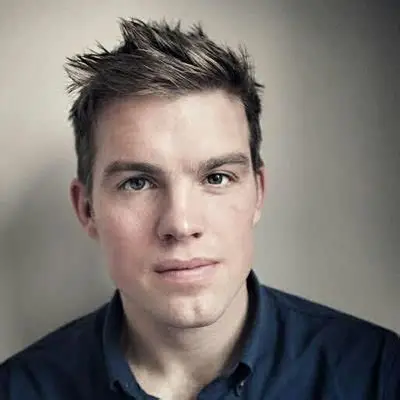
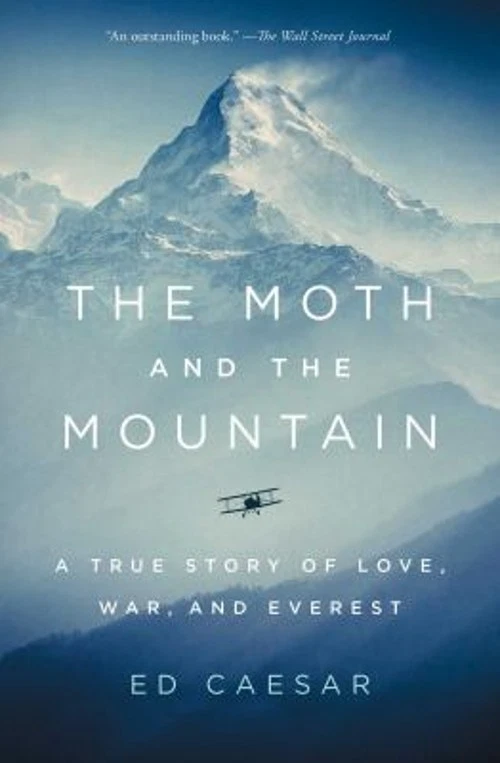
Ed Caesar is a staff writer at The New Yorker. He has written about secretive Russian oligarchs, wingsuit flyers, transnational cocaine shipments, giant diamonds, marathon tennis matches, civil wars and shipwrecks. He was once asked by Kevin Costner whether he was anxious to die. Whatever the ostensible subject, what he is actually writing is a person — a whole life, conjured in the space of an afternoon’s reading.
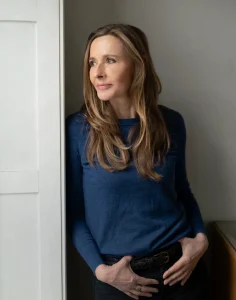
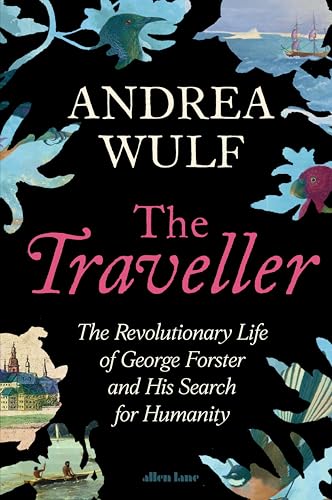
Andrea Wulf works at the opposite scale. She spends years inside a single life. The Invention of Nature, her book about Alexander von Humboldt, won the Costa Biography Award and the Royal Society Science Book Prize, sold more than 800,000 copies and has been translated into twenty-seven languages. Her new book, The Traveller, follows the eighteenth-century explorer Georg Forster. In 2019 she walked Humboldt’s route through Ecuador and Colombia with the German President’s delegation.
One compresses a life into six thousand words. The other expands one across four hundred pages and half a decade. By every conventional measure they work in different forms, and are shelved in different sections, and would be taught — if they were taught at all — in different courses.
Ask them how the work is actually done, though, and you will hear much the same answers. Which brings me to the question I ask every autumn.
Who is the person you cannot stop thinking about?
When I teach memoir, half the room names a stranger. A great-grandmother who crossed an ocean at nineteen. A woman in a photograph, unlabelled, at the edge of a group of men. The other half looks at the table and eventually says: me. It’s something that happened to me, and I have been carrying it for eleven years.
Then both halves go looking for a course, and the internet politely separates them at the door.
The shelves lie about this
Bookshops file memoir and biography in different sections. Universities teach them in different departments. Search for a course and the split is starker still: memoir often, but not always, goes to the short workshops, built on memory prompts and the promise of legacy. Biography goes to the academy, where it arrives as a semester and an archive.
I understand why the division exists. It is administratively convenient. It is also, as a description of the work, almost entirely false.
Here is the difference between memoir and biography, stated as plainly as I can manage: in one, the person you are writing about is you, and in the other, they are not.
That is it. That is the whole of it. Everything else — every technique, every difficulty, every hard-won piece of craft — is held in common.
What both forms are actually doing
Set the labels aside and ask what is happening on the page. In both cases a writer attempts the least likely thing in all of nonfiction: to make a human being exist inside a stranger’s head. Someone the reader has never met and has no reason to care about must become as real as a person in the next room. The techniques for doing that do not change according to whose life it is.
You need character — the desire that drives a person, the flaw that complicates them, the contradiction that makes them believable rather than described. A saint is not a character. Neither is a villain. A person is.
You need scene, because a single rendered afternoon does more than four pages of explanation, and because readers believe what they are shown and merely tolerate what they are told.
You need structure. A life arrives without a shape. Making one is the writer’s work, and it is the same work whether the life is yours or a stranger’s.
You need restraint: the nerve to leave the thing you most want to say unsaid, because the reader will arrive at it themselves and believe it more for having got there alone.
The archive and the memory are the same problem
The biographer works from letters, ledgers, interviews, parish records. The memoirist works from memory. These look like different situations. They are not. Both are partial, both are self-serving, and both go quiet exactly where you most need them to speak.
Every document in an archive was made by someone with reasons, and reading for those reasons is where the story usually hides. Memory is no different — it is simply an archive you are inside of, curated by an interested party over several decades, with whole rooms sealed off and a few scenes suspiciously well lit.
The honest memoirist and the honest biographer face the identical question: what may I write at the point where the record falls silent? Not what can I get away with — what is permissible, and how do I let the reader see the seam?
The double vision, and who needs it
Memoir does ask one thing that biography does not, and it is genuinely hard. It asks you to be at once the one who lived it and the one who watches, at some remove, from the cliff.
Most people manage one or the other. Living it produces prose that is close, hot and shapeless. Watching from the cliff produces prose that is orderly, cool and dead. The work is holding both at once — rendering the remembered self as a true character, exactly as you would render a stranger. The technique that saves a memoir is a biographer’s technique, applied to yourself.
The traffic runs the other way too. The biographer must decide how much of themselves belongs in the book — whether to appear at all, and if so, how.
Why I teach them together
Because most writers, sooner or later, need both. The memoirist has to render a mother, and discovers she is a stranger. The biographer, three years into an archive, finds the person has vanished into the paper and cannot be raised without the very techniques memoir teaches.
Between the two sits the profile: biography compressed into a few thousand words, a whole life conjured in the space of an afternoon’s reading. It is the most publishable thing most writers I teach could produce in a year, and almost nobody teaches it as a form in its own right.
Writing about real people is one craft. It has two directions and three lengths, and the labels on the shelves have made it look like three separate skills for so long that most writers only ever learn one.
Where to start
Read two books side by side — one memoir, one biography — and mark every place a person becomes vivid. Not where they are described. Where they become vivid. You will find the same handful of moves in both, and finding them yourself is worth more than being told them.
Then answer the question I opened with, in writing, in one sentence. Who is the person you cannot stop thinking about?
If the answer arrived before you finished reading it, you already have a project. What remains is the craft — and the craft, unlike the obsession, can be taught.
I teach Every Life an Odyssey, a Level 2 course on writing memoir, biography and profiles, over seven Sunday evenings from 18 October 2026, with a one-to-one session for every student. This term we are joined by Costa Biography Award winner Andrea Wulf and Ed Caesar of The New Yorker. Details and registration for the memoir and biography writing course here.