

Ways to Walk the Footpath
The Four-Class Bundle — £160
Pick any four of the seven — a saving of £40. Ideal if you want to shape the week around your own writing life.
After you book, we’ll send a follow-up email asking which classes you would like to attend — so simply secure your place now, and choose the masterclasses at leisure. If you cannot make a class, you will be sent a recording.
Schedule
| Day | Class |
|---|---|
| Mon 24 Aug | The Eight Pillars: An Introduction to Narrative Nonfiction |
| Tue 25 Aug | Clearing the Ground: Building a Writing Practice |
| Wed 26 Aug | Reading Like a Writer |
| Thu 27 Aug | Recovering Your Voice: The ‘I’ in Your Writing |
| Fri 28 Aug | Research for Writers |
| Sat 29 Aug | First Words, Last Words: Beginnings and Endings |
| Sun 30 Aug | The Editor’s Eye: Revising Your Own Work |
Class Descriptions
1. The Eight Pillars: An Introduction to Narrative Nonfiction The gateway class — and the only place a newcomer such as yourself can get the whole territory in one sitting. What narrative nonfiction actually is: not journalism, not memoir exactly, not the essay exactly, but the craft of true stories told with a novelist’s tools and a historian’s conscience. The session walks through the Eight Pillars one by one — the framework that underpins everything taught at The Narrative Life — showing how each pillar appears in published work, and how together they turn true material into story. You will leave with a map of the whole discipline and a clear sense of which pillar their own writing most needs next. This is the class where people meet Kathryn, her method, and the school — the front door. Read before: nothing — come curious. A short published excerpt provided, to return to as each pillar is introduced. Bring: the true story you’ve always wanted to write, in a sentence.
2. Clearing the Ground: Building a Writing Practice Before craft, the conditions for craft. This is the mindset class: how to set up a writing practice that survives contact with real life. The mechanics — time, place, ritual, the phone in another room — and the deeper work: how attention is cultivated rather than summoned, why waiting for inspiration is the most reliable way never to write, and how to build a boundary around your writing life that family, work, and the noise of the world learn to respect. The actual practices of working writers — early hours, walking, notebooks — treated as engineering, not folklore. Everyone leaves with a written plan for their own practice: when, where, how long, and what to do when it collapses, because it will, and rebuilding is part of the practice too. Read before: a short piece on writers’ working days — provided. Bring: an honest description of your current writing routine, including “none.”
3. Reading Like a Writer Writers are made by reading — but not the reading most of us do. This class teaches the second kind: reading with the hood up, watching how the engine works. How to slow down over a paragraph and ask why this verb, why this sentence length, why the scene breaks here. Two short passages dismantled together — one for structure, one for sentence-craft — plus the annotation habits that turn every book you love into a private masterclass. The aim is a permanent change: after this class, you never read the same way again, and everything on your shelf becomes faculty. Read before: a one-page passage, provided — read once for pleasure; we read it the second way together.
4. Recovering Your Voice: The I in Your Writing For everyone who feels they don’t have a voice — or had one once, and lost it somewhere in a career of writing like an institution. Especially for academics and professionals trained out of the first person: taught that authority means absence, that “I” is un-rigorous, that hedging is honesty. How the trained voice differs from the true one; why voice is not decoration but point of view made audible; exercises that loosen institutional habits — the passive voice, the qualifier stack, the citation reflex — and let the person back onto the page. Then the craft of the I itself: how much presence a narrator needs, where the I illuminates and where it blocks the view, and how vulnerability, properly handled, reads as authority rather than weakness. Read before: a before-and-after — scholarly prose transformed into voice-driven nonfiction; provided. Bring: two paragraphs of your professional or objective writing. We’ll find the person hiding in them.
5. Research for Writers Where material lives and how to gather it — the full ecosystem in one class. Archives, libraries, and the paper trail: letters, deeds, newspapers, records, and how to interrogate a document that’s partial or lying. The field: place as a primary source, and the note-taking that makes a walk yield prose. And people — the richest material is inside other humans, so this class folds in the craft of the interview: preparation, question sequences that open a subject, the discipline of silence, and why the real material arrives after the rehearsed answers run out. Finishes with the two disciplines that save years: a filing system that doesn’t collapse, and recognising the moment research becomes a way of avoiding writing. Read before: a short piece of research-rich nonfiction — provided — read once for the story, once to spot where each fact must have come from. Bring: your project’s biggest unanswered question, and where you’ve looked so far.
6. First Words, Last Words: Beginnings and Endings The two moments a reader never forgives you for getting wrong. First, openings: how the first five hundred words make a promise — of subject, of voice, of the kind of attention the piece will pay — and the mechanics of hooks that earn attention rather than begging for it. Published openings dismantled to expose each one’s promise. Then endings: how nonfiction closes without a bow — resolution versus resonance, the final image versus the final idea, and why last paragraphs are usually written last, once you finally know what the piece was about. The pairing is the point: a great ending is almost always a return, transformed, to the opening’s promise. Read before: nothing — arriving fresh to the openings is part of the method. Bring: the first paragraph of something you’re writing, and — if it exists — its current last line.
7. The Editor’s Eye: Revising Your Own Work The class where writing actually becomes good — because nobody drafts well, and everybody can learn to revise well. The passes in order: the structural read (right shape, right order?), the paragraph pass (does each one earn its place and hand off to the next?), and the line edit (verbs, cuts, rhythm, the ruthless deletion of throat-clearing). Practical techniques throughout: reading aloud, the cooling-off period, printing it out, the reverse outline that X-rays a draft’s real structure. And the psychological half of editing, which nobody teaches: reading your own pages as a stranger, killing sentences you’re proud of, and knowing the difference between revising and endlessly rearranging out of fear. As the final class, it completes the arc — the week began with the writing life and ends with the skill that sustains it. Read before: a short before-and-after of a professionally edited passage — provided. Bring: one page of your own drafting you suspect isn’t working.
About Kathryn
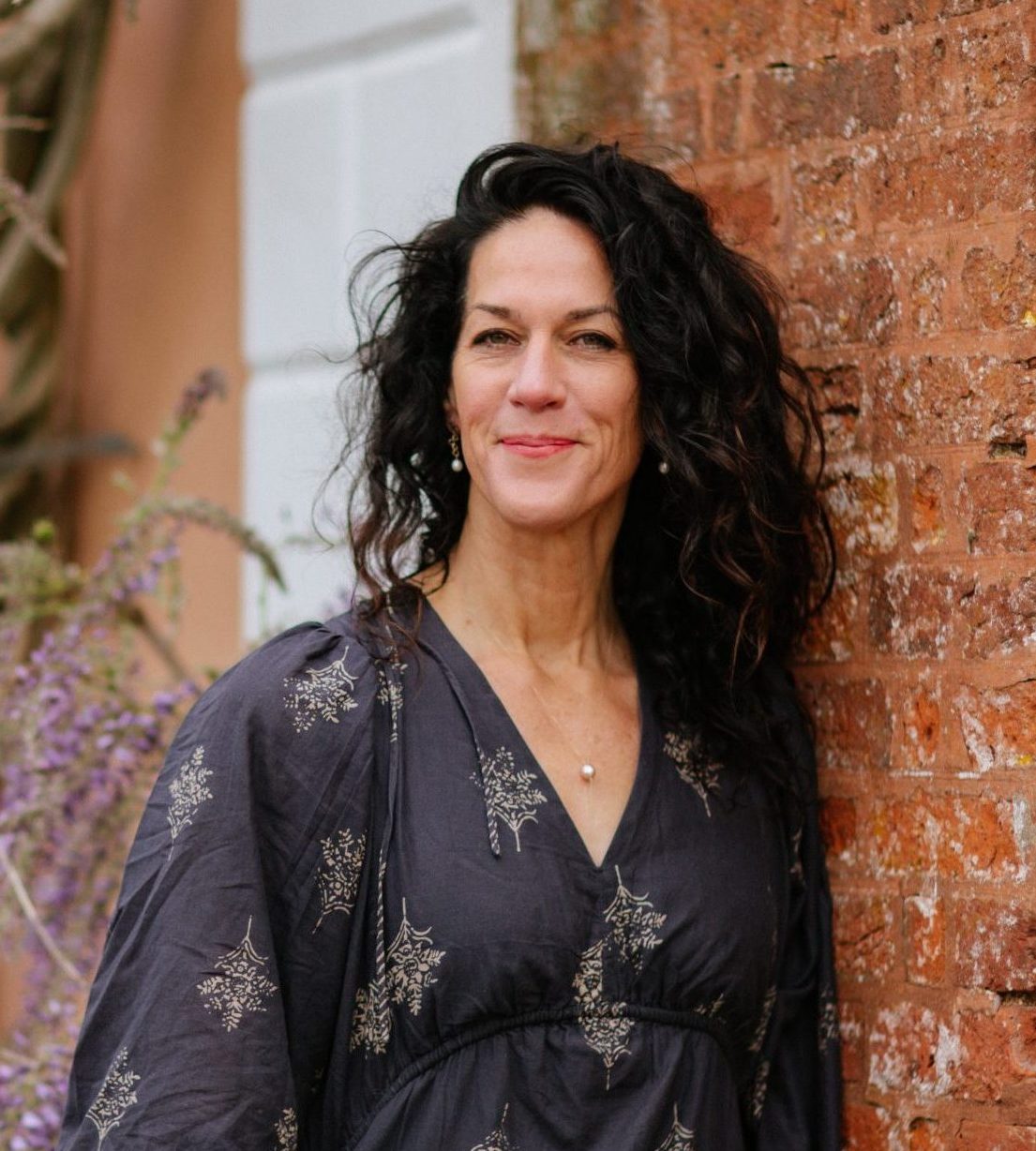
Kathryn Aalto is a New York Times bestselling author, historian, and public speaker whose books include The Natural World of Winnie-the-Pooh and Writing Wild: Women Poets, Ramblers, and Mavericks Who Shape How We See the Natural World. From her home in Devon, England, she leads The Narrative Life, an international school of narrative nonfiction — many of her students beginning writers who arrived with nothing but a true story they needed to tell. Her teaching is grounded in her Eight Pillars of Narrative Nonfiction, a framework for turning real life into resonant story. She believes the writing life is not just a talent bestowed on the few but a path anyone can walk with excellent teaching — and she has spent her career showing people the way in through narrative nonfiction masterclasses, mentoring, and longer courses. Learn more about her upcoming autumn courses in narrative nonfiction and poetry here: Online Creative Nonfiction Writing Courses | Kathryn Aalto
Endorsements
“The Research for Writers masterclass was simply superb and the boost I needed to help to conceptualize, and most importantly, get started on the research I need to do for a book project. The accompanying guide is robust and detailed with practical information around online and offline sources to explore. What’s more is that the instructor taught from personal experience with vivid stories of how she approached research for her best-selling work. I highly recommend this masterclass!” — Chris A., New York, New York
Kathryn Aalto is a world-class teacher. I had 30 years’ experience as a journalist and copywriter, but I was a novice in narrative non fiction. Kathryn taught me how to write, guiding me on a journey of discovery, revealing the secrets of sensory writing, bringing filmic vividness to my descriptions of the world around me and uncovering the inner landscapes of the mind. I will be forever grateful for her inspirational teaching and the support of the remarkable writing communities she curates, from whom I have received invaluable encouragement and among whom I have made enduring friendships.” — Gary F., Rutland, England
“Recently I completed Kathryn Aalto’s Memoir and Life Writing Level 1 course. Kathryn is a gifted communicator. Numerous beta readers, intimately familiar for decades with my writing, have mentioned finding deeper, more exciting levels of my storytelling ability since I studied with the extraordinary Ms. Aalto. I have already enrolled in Level 2 Memoir and Life Writing. Her writing course is, bar none, the best value for money of any writing course I have ever taken, either online or in person.” — Bonnie B. L., Mobile, Alabama
“After six months of working with Kathryn–which is a bit like entering the space of a handwritten letter, what with her sharp aesthetic sense, far-ranging intelligence, wit, and curiosity–I’ve made tangible progress on an unwieldy, long-form project I was struggling to articulate. I came to her Memoir and Life Writing class for accountability, and came away having experienced the kind of support, writing insight, and real feeling of friendship that can be difficult to find in a workshop environment. Kathryn fostered a warm, charming atmosphere in class (a real feat online), allowing for life-long connections to develop among our group of writers. She cares about the arc of her student’s writing lives–a form of attention that encourages artistic growth and positive risk-taking. She not only brought her years of writing and publishing experience to class and to our bi-monthly writing assignments (her personal feedback, often handwritten, is invaluable), she also brought her unique perspective. Writer-gardener-historians are, I think, particularly adept at imagining the possibilities for a piece, no matter your subject. Kathryn pushed me to dig deeper, moving my writing in new directions. No matter where one is in their writing life, working with Kathryn will be an experience of profound joy, insight, and artistic deepening.“ — Veronica, Portland, Oregon