
ABOUT
Retreat into the Devon Countryside
A residential Devon writing retreat at Ashley Court, Tiverton — 30 April to 2 May 2027
Most writing retreats give you quiet and a desk. This one gives you something rarer.
For three days at Ashley Court, a Regency house set in the Devon countryside near Tiverton, twenty-five writers work on narrative craft with the Scottish poet and essayist Kathleen Jamie, the folk musician Jon Boden, and New York Times bestselling author Kathryn Aalto. They write by day, sing by firelight at night, and discover that the distance between story and song is far smaller than they thought.
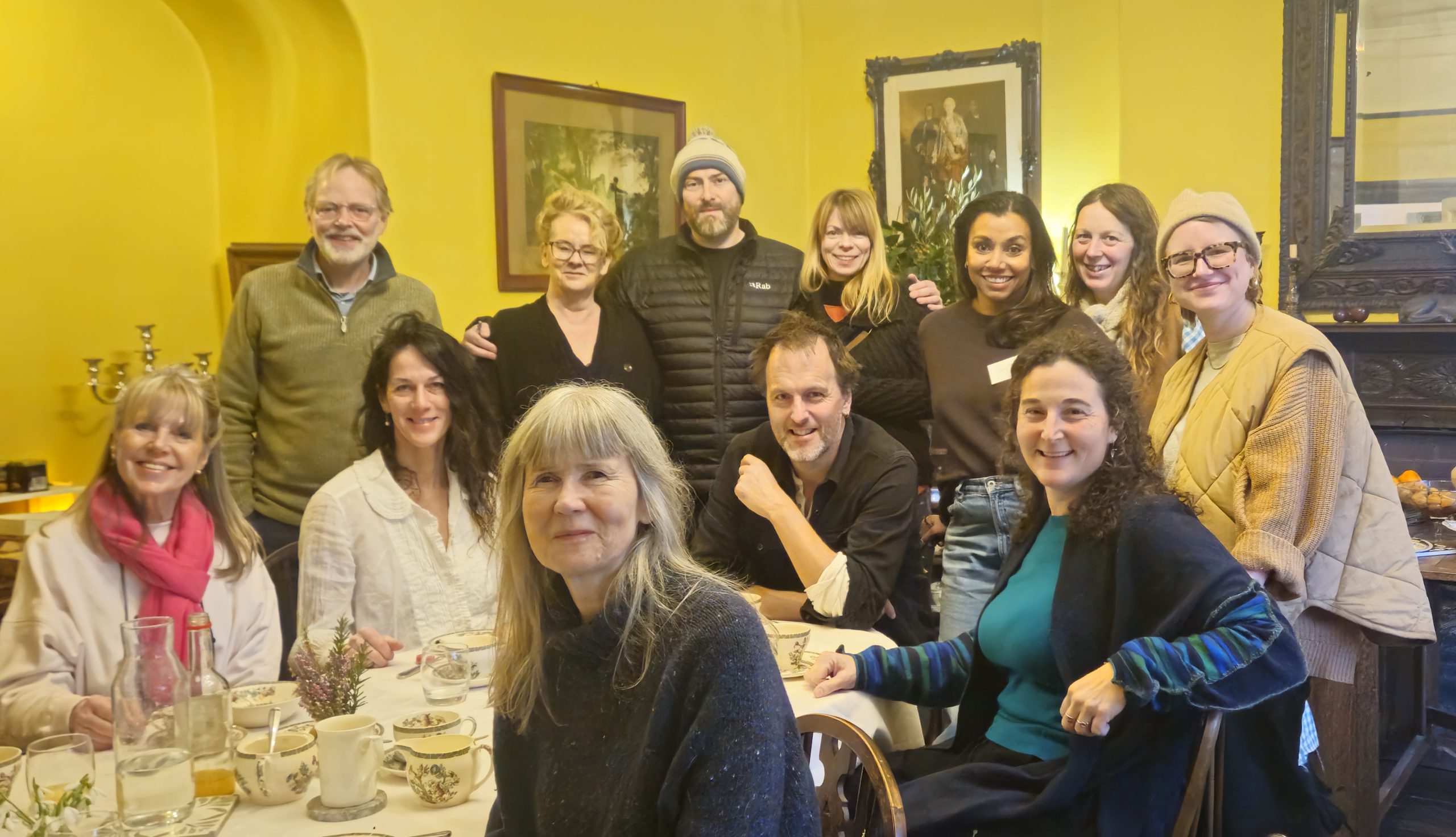
This Devon writing retreat had its inaugural gathering in January 2026, and now The Narrative Life® returns to Ashley Court for spring. Same luminous location. Same attentive and generous hosts, Tara and Nigel. The same three days that one past guest called “the soul medicine I needed” — and this time, more.
What makes this Devon writing retreat unlike any other
There is no other residential writing retreat in England where you will spend a morning working on poetry and prose with a former national poet of Scotland, an afternoon on the architecture of narrative nonfiction with a New York Times bestselling author, and a night by the fire with one of the most celebrated folk musicians of his generation, singing along into the small hours.
At its heart this is a writing retreat: serious, immersive, and transformational in the way that only three days of complete creative immersion can be. The writing is the spine of everything. What sets it apart from other writing retreats in the UK is what surrounds that writing: a full creative world, built on the belief that writers who also sing, listen, and make things together go home with something deeper than craft notes. They go home changed.
Kathleen Jamie: poetry, prose, and the discipline of attention
Kathleen Jamie is one of the most significant writers at work in Britain today, and for anyone drawn to nature writing, memoir or the literary essay, time in her company is a rare thing.
She served as Makar, Scotland’s national poet, from 2021 to 2024. Her poetry has won the Forward Prize and the Costa Poetry Award. Findings is widely regarded as a landmark of British nature writing, and Sightlines won the Orion Book Award. Her body of work ranges from peregrines above Fife to Neolithic darkness in Orkney to whale bones and Arctic light, and it has quietly reset what an essay about the natural world is permitted to do.
On Saturday morning she will lead a workshop moving between poetry and prose, setting exercises drawn from her own practice and asking you to make choices about sound, image, rhythm and attention that you may never have made consciously before. This is not a lecture but a dialogue, between poetry and prose, and between the page and the conversation that opens around it. She responds to a participant’s work with the same quality of attention she brings to her own, and writers often find that one exchange in a workshop like this shifts something that stays shifted.
On Friday evening she will join Kathryn for an after-dinner conversation by candlelight about how poems begin, how essays find their shape, and what it means to attend to the world closely enough to write it truthfully. Expect readings from her work, questions from the room, and the sort of unhurried talk only possible once the day’s work is done.
Jon Boden: song, story, and the craft of a lyric
Jon Boden has won eleven BBC Radio 2 Folk Awards, more than any other musician in the award’s history, and as lead singer of Bellowhead he fronted the band that redefined English folk music. He returns to Ashley Court as both performer and creative collaborator.
Jon arrives late on Saturday night, and the house will be waiting for him. By then the day’s workshops are done, dinner is over, and the open mic has warmed the room. The fire is built up, and when Jon walks in, the night turns to music: songs from across his career, played late into the night for everyone gathered there. In 2026 he played until half past one in the morning. Everyone may sing. Night owls can stay to the last note, and anyone who needs their sleep may slip away whenever they like, because Sunday begins later.
On Sunday morning, Jon teaches. His songwriting workshop is among the retreat’s most distinctive offerings: a session that opens the architecture of lyric and melody to writers who have never written a song, and shows how closely the craft of a verse mirrors the craft of a paragraph. You’ll come to it with his songs from the night before still in your ears. You can try your hand or simply watch how it is done. No instrument and no musical training are required.
He then leads a session on collaborating with voices from the past: how the work of long-dead writers can be reworked and argued with rather than merely revered. It raises questions that reach well beyond song.
Kathryn Aalto: your host, and the architecture of a true story
Kathryn Aalto is the New York Times bestselling author of The Natural World of Winnie-the-Pooh and Writing Wild, a garden historian and speaker, and the founder of The Narrative Life®, an international school of narrative nonfiction whose students span six continents. For more than thirty years she has taught writers on both sides of the Atlantic, and her students have gone on to win the Nature Chronicles Prize and Bradt New Travel Writing Award and to sign book contracts. She has lived in Devon for twenty years, and this retreat is her invitation into the landscape she calls home.
Her teaching rests on her Eight Pillars of Narrative Nonfiction: presence, arc, character, dialogue, voice, language, setting and resonance. At Ashley Court she brings them into the room across four sessions. On Friday evening she opens the retreat by the fire with Why We Write: To Live Twice. On Saturday, The Narrative Life turns the tools of the craft outward, from the page toward the life. In The Red Thread, she uses her signature image of thread and pins to map the structure of a piece, showing where your own writing goes slack and where it pulls taut with meaning. On Sunday afternoon, The Living Witness asks what narrative nonfiction offers that no algorithm can: a human being who was there, who saw, and who tells.
Creativity doesn’t live in a single room. It grows in dialogue with others.
Your days: workshops in creative nonfiction, memoir, poetry and song
Mornings belong to the workshops, and to the company of other writers. Kathleen’s workshop moves between poetry and prose and, if the Devon morning is kind, as it often is in May, may move outdoors into the grounds, with the landscape itself as prompt. Kathryn’s sessions in creative nonfiction and memoir are intimate, rigorous, and the kind that send you back to your desk with new eyes. On Sunday, Jon’s songwriting workshop opens the craft of the lyric to writers who have never written a song.
Late afternoons are the gift of unscheduled time. Walk the grounds of Ashley Court, journal in a quiet window seat, follow a Devon lane into the hedgerows, or sit with your notebook in the walled kitchen garden.
Evenings are where this retreat becomes something else entirely. On the first night there is candlelit conversation with Kathleen. On the second there is an open mic by the fire, then Jon’s music late into the night, voices joining in the dark with the Devon hills quietly around you. It’s the kind of memory you draw on long after the retreat is over.
Ashley Court, Tiverton, in springtime
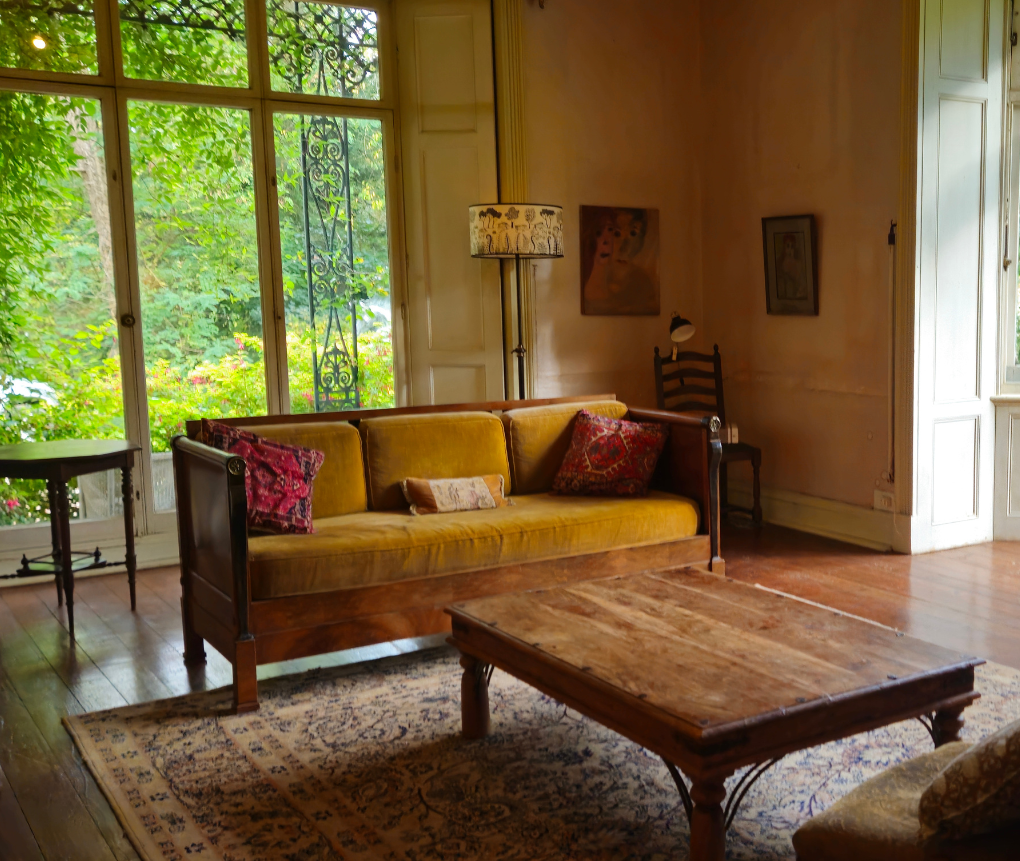
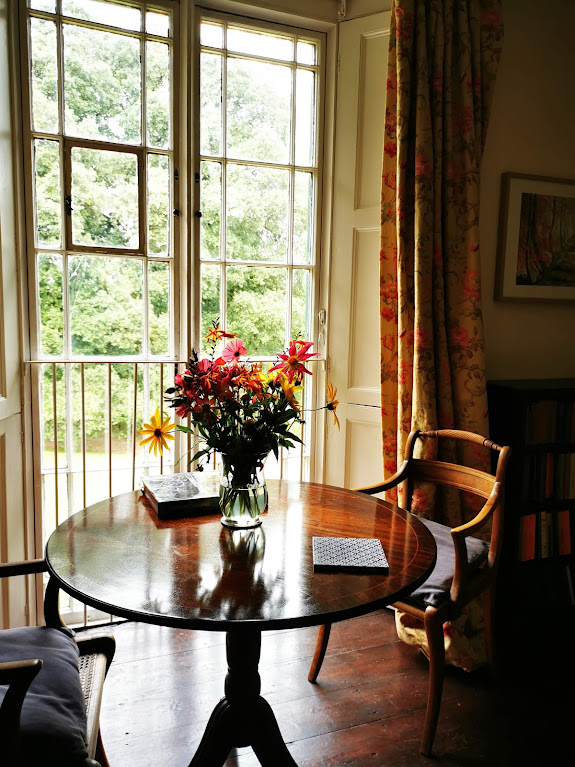
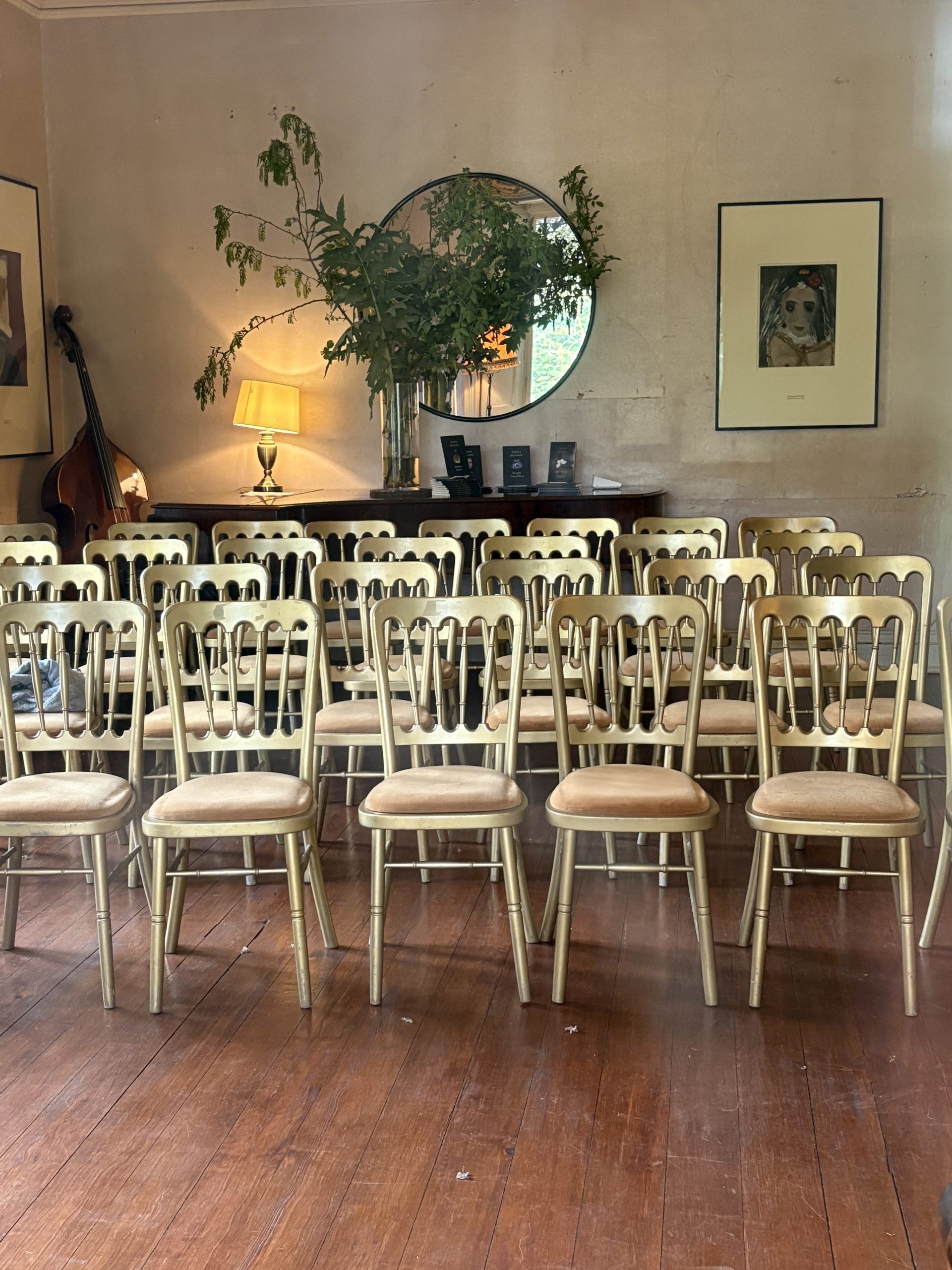
Ashley Court is a house of extraordinary beauty, its rooms carrying stories in their stone walls and wide fireplaces. It is not a hotel or a conference centre. It is a private home, and it feels like one. In spring the grounds are coming into bloom: the kitchen garden waking, the old trees greening, the light arriving earlier each day and staying longer. Devon in this season gives you things to write about whether you go looking for them or not.
Meals are drawn from the gardens and the wider Devon landscape, seasonal dishes that arrive at the table the way good stories do, one thing following naturally from the next. Breakfasts are generous enough to sustain a morning’s work, lunches give you room to breathe, and long candlelit dinners let the conversation drift between craft and life and everything in between. Coffee and cake appear between sessions without anyone having to ask.
Ashley Court is about ten minutes from Tiverton Parkway, with direct trains from London Paddington in around two hours, and about twenty-five minutes from Exeter Airport.
Who this writing retreat is for
This retreat is for writers of creative nonfiction, memoir and nature writing who want to go deeper, and for poets who want to work alongside one of Britain’s finest. It’s for anyone carrying a story who needs space, company and expertise to begin telling it well, and for anyone who suspects that what they need isn’t only quiet, but community, challenge, laughter, and a fire that burns past midnight.
You do not need to have published. You do not need to be certain what you’re working on. You need only be willing to show up and pay attention.
Places are strictly limited to twenty-five to keep the retreat intimate.
Come to hone your craft. Stay for the solace, the songs, and the friendships that begin around a fire and tend to last a lifetime.
Book your place, then complete the short application form so we know a little about you and your work.
DATES
The retreat runs from Friday 30 April to Sunday 2 May 2027, three days and two nights at Ashley Court, in that tender hinge between spring and summer when the Devon lanes are foaming with cow parsley, the woods are blue, and the evenings stretch long and golden towards nine o’clock. It falls on the Early May bank holiday weekend, so most people will have Monday 3 May free to travel home unhurried.
Arrivals and departures
Arrive any time from 3pm on Friday. If you’re staying in the house, settle into your room; if you’re staying in Tiverton, come straight here and make yourself at home. The afternoon is yours to wander the gardens, find the walled kitchen garden, and take tea and cake as the house fills with new faces. Kathryn welcomes everyone by the fire in the early evening, so please aim to arrive in time for that, since it sets the tone for everything that follows. The retreat closes on Sunday afternoon, with departures by 4pm.
The rhythm of the weekend
Each day follows the gentle pattern of a country house, with work in the mornings, space in the afternoons, and gatherings in the evenings. Mornings and early afternoons bring workshops in poetry, prose, songwriting, and the craft of narrative nonfiction with Kathleen Jamie, Jon Boden, and Kathryn Aalto. Between sessions, there is time to walk the grounds, write in a quiet corner, rest, or talk over tea. Meals are shared at long tables, and dinners are served by candlelight.
The evenings are where the weekend comes alive. On Friday, Kathleen joins everyone after dinner for an intimate conversation about craft, work, and life as a poet. Saturday is the long night of the weekend, with an open mic by the fire where you can read something new, something from the drawer, or simply listen. It ends late with Jon playing music as the house grows quiet, and night owls can stay to the last note while anyone who needs their sleep is welcome to slip away whenever they like. Sunday gathers the threads together, with a final round of workshops and a farewell before everyone carries their new pages home.
Good to know
All meals from Friday dinner to Sunday lunch are included, along with tea, coffee, and cake throughout. Saturday runs late, so if you’re staying in Tiverton, book a taxi home in advance, as they can be scarce in the countryside after midnight. Bank holiday trains to and from Tiverton Parkway can be busy, so booking travel early is wise. The four-week cancellation deadline falls on Friday 2 April 2027.
TUITION
Registration
The retreat fee is £650 and covers:
- All lectures and performances, evening talks, workshops, and panel discussions.
- Breakfast, lunch, and dinners.
- Coffee, tea, and cake breaks.
At the time of registration, please fill out the application. Cancellations made at least four weeks before the retreat, by Friday 2 April 2027, are eligible for a refund.
One-to-One
A review of 15 pages of work and a 30-minute meeting is available for £95. Write to Kathryn at kathryn@kathrynaalto.com to schedule prior to the retreat.
Accommodation
To keep costs low, accommodation is arranged independently by participants at nearby hotels or guest houses. This flexibility allows you to choose from a range of options to suit your preferences and budget. These include hotels such as Travelodge, Premier Inn, and the Hartnoll Hotel. Lovely bed and breakfasts are also available in the area. Four rooms are available at Ashley Court for £110 per night on a first-come, first-served basis. Write to Kathryn to enquire about their availability.
DESCRIPTION
1. What is the Retreat into the Devon Countryside? It is a three-day, two-night residential writing retreat at Ashley Court, a privately owned Regency house near Tiverton in Devon. Hosted by New York Times bestselling author Kathryn Aalto, founder of The Narrative Life®, it brings together 25 writers for workshops in poetry, prose, creative nonfiction, memoir and songwriting with Kathryn and guest tutors Kathleen Jamie and Jon Boden. This Devon writing retreat was first held in January 2026 and returns for spring 2027.
2. Who is this writing retreat for? Writers at every level and from every background, whether you are working on a memoir, a creative nonfiction book, poetry, or nature essays, or simply want time and company to return to your writing. You do not need to be published, and you do not need to have a project underway.
3. I write fiction. Is this retreat right for me? Yes. The teaching has particular depth for writers of memoir, creative nonfiction and poetry, but the craft Kathryn, Kathleen and Jon teach applies across genres. That includes voice, structure, character, image, rhythm, and the architecture of a story, a poem and a song. Character, setting, dialogue and language are as central to fiction as they are to narrative nonfiction.
4. I’ve never been on a writing retreat before. Is this a good place to start? Yes. The group is small, the atmosphere is welcoming, and the programme leaves room for everyone to find their own pace. First-time retreat participants attend alongside writers who have been on many.
5. Can I attend if I’m not currently working on a project? Yes. You are welcome to come simply to think, to write freely, or to begin something new. The workshops include writing exercises, so you will leave with new material whether or not you arrive with any.
6. Is the songwriting workshop only for musicians? No. Jon Boden’s workshop is designed for writers who have never written a song, as well as for songwriters who want to work more deeply with language and structure. No instrument or musical experience is required.
7. When does the retreat take place? From Friday 30 April to Sunday 2 May 2027, which is the Early May bank holiday weekend. Arrival is from 3pm on Friday, and the retreat closes with a farewell on Sunday afternoon, with departures by 4pm.
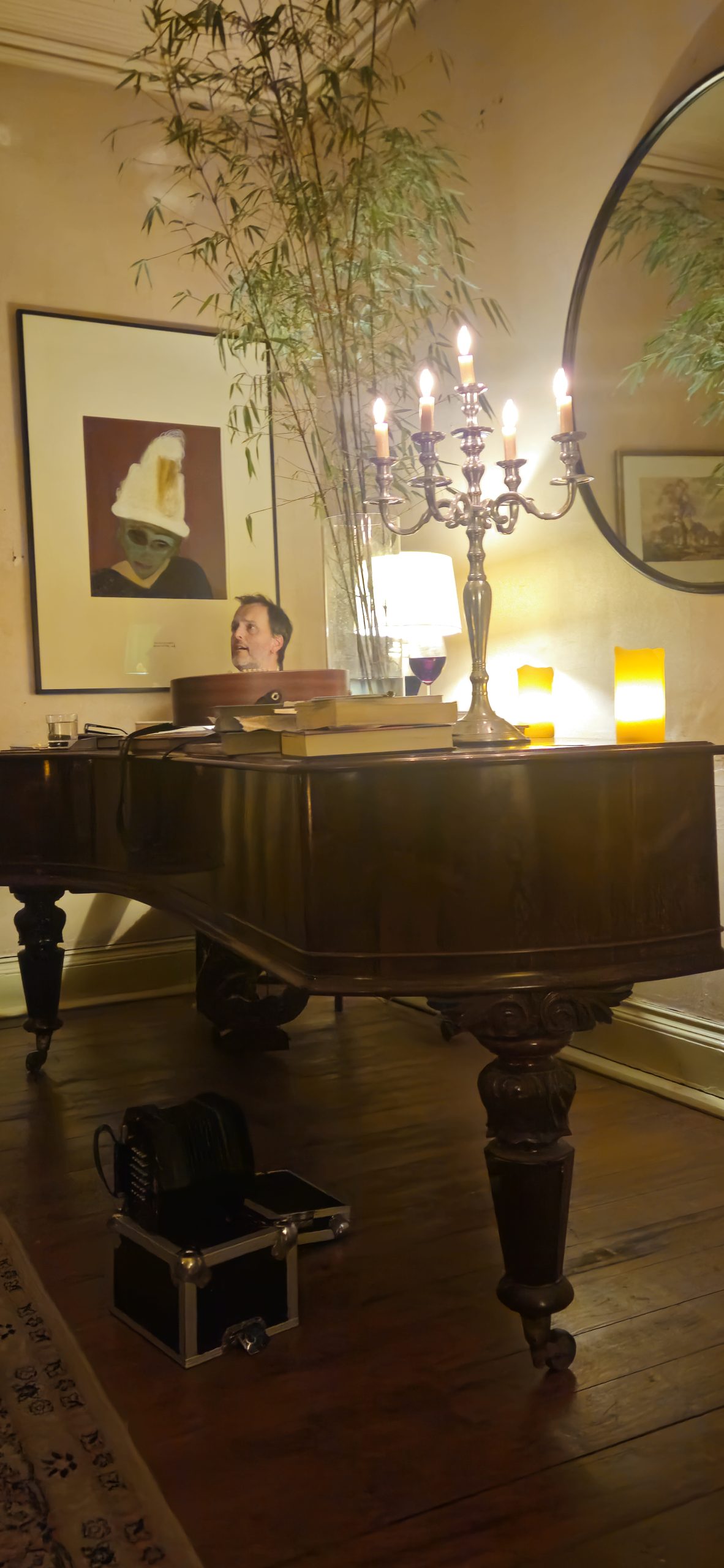
8. Where does the retreat take place? At Ashley Court, a Regency house near Tiverton, set in walled gardens and surrounded by woodland and farmland. It is a private home rather than a hotel or conference centre, with open fires, candlelit rooms, a 19th-century Broadwood grand piano, and a kitchen garden that supplies many of the meals. Hosts Tara and Nigel live on site, as do the resident cats.
9. How do I get there? Ashley Court is about ten minutes from Tiverton Parkway station, which has direct trains from London Paddington in around two hours. Exeter Airport is about 25 minutes away. Because the retreat falls on a bank holiday weekend, we recommend booking train tickets early.
10. What is included in the £650 fee? The fee includes all workshops, talks and evening sessions, course materials, and all meals from Friday dinner to Sunday lunch, with tea, coffee and cake throughout. Alcohol and accommodation are not included.
11. Is accommodation included? No. Four rooms at Ashley Court are available at £110 per night on a first-come, first-served basis, so write to Kathryn early if you would like one. Otherwise, there are hotels and B&Bs nearby in Tiverton, listed in the Accommodation section under Tuition. Saturday’s music runs late, so if you are staying off-site, please book a taxi home in advance.
12. What happens in the evenings? Dinners are served by candlelight. On Friday, Kathleen Jamie joins Kathryn after dinner for a conversation about her life and work, with readings and questions from the room. On Saturday, there is an open mic by the fire, followed by Jon Boden playing late into the night. In 2026 he played until 1.30am, so Sunday starts later.
13. Will there be free time? Yes. Late afternoons are unscheduled, so you can walk the grounds, read in a quiet corner of the house, or write in the walled garden.
14. What should I bring? Bring a notebook, pens or a laptop, comfortable clothes, and walking shoes for the grounds and lanes. Dinners are a chance to dress up, so bring something you feel good in. You are welcome to bring work in progress, but it is not required.
15. Can I get feedback on my own writing? Yes. An optional one-to-one review of 15 pages, with a 30-minute meeting with Kathryn, is available for £95. Please write to kathryn@kathrynaalto.com to arrange it before the retreat.
16. Are places limited? Yes. The retreat is limited to 25 participants to keep the group small and the teaching personal, and places are allocated in order of registration.
17. Can I speak with Kathryn before registering? Yes. You can book a free 15-minute consultation to ask any questions before you apply.
18. How do I register? Click Add to basket to pay the £650 fee, then complete the short application form so Kathryn knows a little about you and your work.
19. What is the refund policy? Cancellations made on or before Friday 2 April 2027, four weeks before the retreat, receive a full refund. Cancellations between Saturday 3 April and Thursday 22 April receive a 50% refund. From Friday 23 April, one week before the retreat, fees cannot be refunded, but your place may be transferred to another participant. We recommend travel insurance.
ITINERARY
Subject to change
Friday, 30 April – Sunday 2 May 2027
3 PM Check-in and explore gardens and countryside surrounding Ashley Court
6 PM Fireside Welcome, Introductions and “The Narrative Life and Why We Write: To Live Twice” with Host Kathryn Aalto
7 PM Dinner by Candlelight
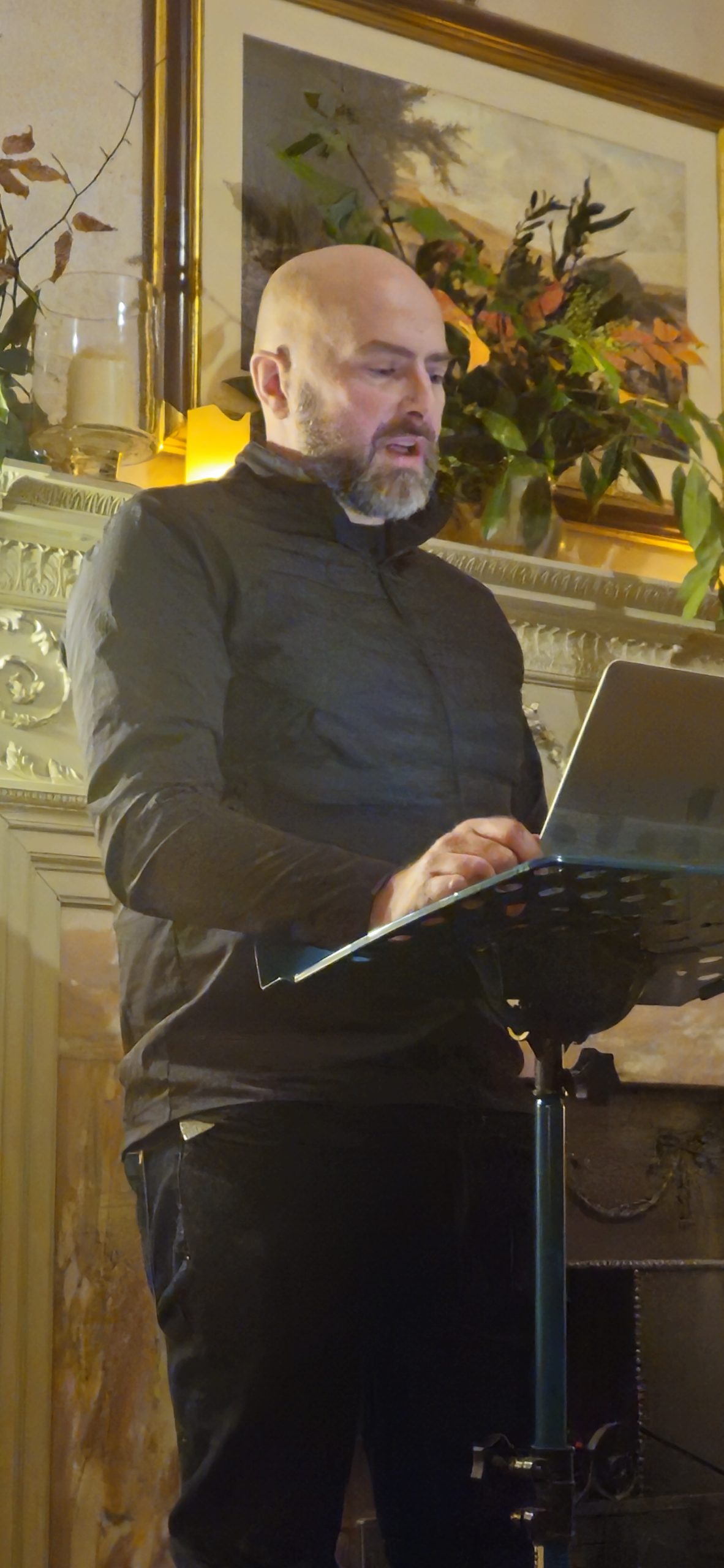
8:30-9:30 PM After Dinner Talk with Kathleen Jamie
Kathleen will join us for an after-dinner talk and an intimate candlelight conversation with Kathryn Aalto — one of those rare evenings that retreatants remember for a long time afterwards. By candlelight, in the beautiful surroundings of Ashley Court, Kathleen will speak about her creative process: how poems begin, how essays find their shape, what it means to attend to the natural world with the particular quality of attention that has made her one of the most celebrated writers of her generation. She will read from her work — poetry and prose both — and she and Kathryn will fall into the kind of wide-ranging, unhurried conversation that is only possible when the day’s workshops are done and the room feels like a gathering of friends, open for questions. Expect to talk about the relationship between poetry and prose, about landscape and language, about the discipline of seeing clearly and the courage of saying what you see. Expect, too, to leave the evening with a notebook full of ideas and a renewed sense of what your own writing can become.
Saturday, 1 May 2027
8–9 AM Breakfast
9–11 AM Poetry and Prose with Kathleen Jamie
Kathleen Jamie will lead us in a writing workshop that grows naturally from the conversation of the evening before. We will gather in a circle — and if the Devon morning is kind, as it so often is in early May, we may move outside into the grounds of Ashley Court, writing in the open air with the landscape itself as both prompt and companion. Kathleen will set writing exercises drawn from her own practice, inviting you to work at different levels and stages of a poem — to make choices about sound, image, rhythm, and attention that you may never have made consciously before. This is not a lecture. It is a dialogue: between Kathleen and the group, between poetry and prose, between the exercises on the page and the conversation that opens up around them. She will respond to your work with the same quality of attention she brings to her own, and students often find that a single exchange in a workshop like this — a question answered, an idea reconsidered, a new possibility glimpsed — can shift something in their writing that stays shifted. Come ready to write, to listen, and to be surprised by what the morning brings.
11 AM Coffee Break
11:30–1 PM Song-lyric Writing for Non-Songwriters with Jon Boden
- What are the fundamental differences between song-lyric writing and poetry?
- How can a non-musician approach lyric writing?
- How can engaging with the art form of song-lyric writing interact with other types of writing and enrich your own practice?
1-2 PM Lunch
2-3:30 The Red Thread: Structure, Arc, and the Architecture of a Piece with Kathryn Aalto
Every piece of writing has a spine — an organising idea, a thread of meaning that runs through it from the first sentence to the last, holding everything together even when the writing ranges freely across time, place, and subject. Finding that thread, trusting it, and following it all the way to the end is one of the most important and least-taught skills in narrative nonfiction. This workshop is about exactly that.
Using her signature red thread and pins metaphor — a way of thinking about narrative arc that students in Kathryn’s writing programmes have found genuinely transformative — Kathryn will guide participants through the structural logic of a piece of narrative nonfiction: how it begins, how it moves, and how it ends. We will look at how the opening of a piece makes a promise to the reader, and how the ending must honour that promise in a way that feels both inevitable and alive. We will work with examples from the finest practitioners of lyrical narrative nonfiction, and we will work with your own writing — mapping its arc, finding where the thread goes slack, and discovering where it pulls taut with meaning.
Come with a piece in progress, or simply come ready to write. You will leave with a clearer sense of how your material wants to be shaped — and with the structural tools to shape it.
3:30-5 PM Coffee Break and Open Mic
We’ll gather for a late-afternoon of shared voices and stories. Open Mic Hour is an informal, welcoming space for writers to read their work aloud—whether a finished piece, something newly written during the retreat, or a passage still finding its form. This hour is not a performance, but a celebration of expression and listening. It’s a chance to hear the rhythms and cadences of your own voice, to test the weight of words in the air, and to experience the resonance that comes when stories are shared in community. Participants are invited to read for up to five minutes. You may bring a piece prepared in advance or select something you’ve written during the weekend. Simply sign up on the list posted earlier in the day.
Tea, wine, and warmth will be on hand as we gather to honour language, courage, and the joy of being heard.
5–8 PM: Quiet Reflective Time and Connection
8 PM Dinner
9:30 PM Music and Campfire with Jon Boden
In 2026, Jon performed from 9 PM until 1:30 AM and it was so magical and memorable. Imagine glowing candelabras, a soaring tenor in a room made for live voices, and a spellbound audience. He braided live music from his career as a solo artist, part of a duo (Spiers and Boden), and with bands (The Remnant Kings, Bellowhead) with a talk on “The Creative Life: Purpose, Balance, and Perspective.” In 2027, Jon will be playing music around a campfire Ashley Court, improvising songs written by retreat participants and drawing upon his rich musical performance history. We are not merely observing a performance but taking part.
Sunday, 2 May 2027
8–9:30 AM Breakfast
9:30-11 AM The Narrative Life: What the Page Teaches Us About Living with Kathryn Aalto
Saturday will be a late night, so here we have a later start!
There is a moment that many writers recognise — sometimes years into their practice — when they realise that the skills they have been developing at the desk have quietly been reshaping the way they move through the world. They notice more. They listen differently. They find themselves standing in an ordinary moment — a conversation, a landscape, a loss — and sensing, beneath the surface of it, a structure. A shape. A meaning that was always there, waiting to be seen.
This class is built around that realisation, and takes it seriously as both a literary and a philosophical proposition: that the tools of narrative nonfiction are not only tools for writing. They are tools for living.
We will take each element of the craft in turn and turn it outward — from the page toward the life. Narrative presence asks us, on the page, to be fully in the scene: to render experience with the kind of sensory and emotional specificity that makes a reader feel they are there. But what does it mean to bring that same quality of presence to our actual days — to be, in our own lives, the attentive narrator rather than the distracted one? Narrative arc invites us to ask, of any piece of writing, where it is going and what it is becoming. The same question, asked of a life, is not a trivial one. Character — the deep, patient study of what makes a person who they are — teaches us a quality of attention toward others that has consequences far beyond the literary. Dialogue, on the page, is never merely conversation: it is revelation, tension, subtext, connection. To listen to the people in our lives the way a writer listens for dialogue is to hear what is not being said as clearly as what is.
Language and voice — the twin disciplines of finding the precise word and the authentic self behind the sentence — are, in life as on the page, acts of courage. To speak in your own voice, to resist the approximate and the performed, to mean what you say and say what you mean: these are not only stylistic virtues. They are ethical ones. Setting and resonance — the writer’s understanding that a place is never merely backdrop, that landscape carries meaning, that where we are shapes who we are — gives us a richer relationship with the physical world we inhabit. And the principle of resonance itself: the idea that the particular contains the universal, that the part speaks to the whole, that a single well-observed detail can open onto everything — this is perhaps the deepest gift the craft can offer a life. It is the understanding that nothing is too small to matter, and that attention, paid honestly and long enough, always finds its way to something true.
The Narrative Life is not a metaphor. It is a practice. And this class is an invitation to begin — or deepen — yours.
11-11:30 AM Coffee Break
11:30-1 PM Collaborating with Voices from the Past with Jon Boden
When a theatre director creates a production of Shakespeare, it is assumed that they will re-shape it into something original, something personal, something that chimes with the twenty-first-century concerns that Shakespeare himself could not possibly have comprehended. Shakespeare’s texts are not viewed as sacred objects that must not be interfered with, but living, breathing works of art that can interact with and adapt to modern creative voices. Although well established in drama, this relationship is often not the case with poetry, prose and song lyrics from the past, where the text is more often seen as an immutable artefact to be revered but not actively interacted with.
- How can the work of writers from the past enrich our own practice?
- What are our responsibilities to those whose work we are utilising?
- Can a collaboration with a long-dead writer be a dialogue with that artist, or are we just unilaterally repurposing their creation for our own purposes?
1-2 PM Lunch
2-3:30 PM The Living Witness: Narrative Nonfiction in the Age of AI with Kathryn
There is something that artificial intelligence cannot do, and it is the thing that narrative nonfiction does better than any other form: it bears witness. It places a singular human consciousness — with its particular history, its scars and longings, its specific way of standing in the world — in contact with reality, and brings back a true account. That act of witnessing is not a supplement to knowledge. It is a form of knowledge. And in a cultural moment when language is increasingly generated rather than lived, it matters more than ever.
This class takes up the question of what it means to be a narrative nonfiction writer right now — not with anxiety, but with clarity and a renewed sense of purpose. We will consider what the form has always offered that no algorithm can replicate: embodied experience, moral complexity, the irreducible particularity of a life. The smell of a place. The weight of a grief. The precise quality of light on a specific morning that changed everything. These are not decorative details. They are the form’s deepest argument for its own necessity.
We will also think about the writer’s role in society more broadly — as cultural memory-keeper, as truth-teller, as the person in the room who stayed long enough and looked hard enough to say something real. Narrative nonfiction has always been a literature of presence. In an age of absence — of generated text, of synthetic voice, of content without consequence — that presence is not just valuable. It is radical. It is, perhaps, the most important thing a writer can offer the world right now.
Come ready for a conversation that may well change how you think about why you write. And leave the retreat with an inspired and renewed sense of purpose.
3:30-4 PM Farewell
TEACHERS & SPEAKERS
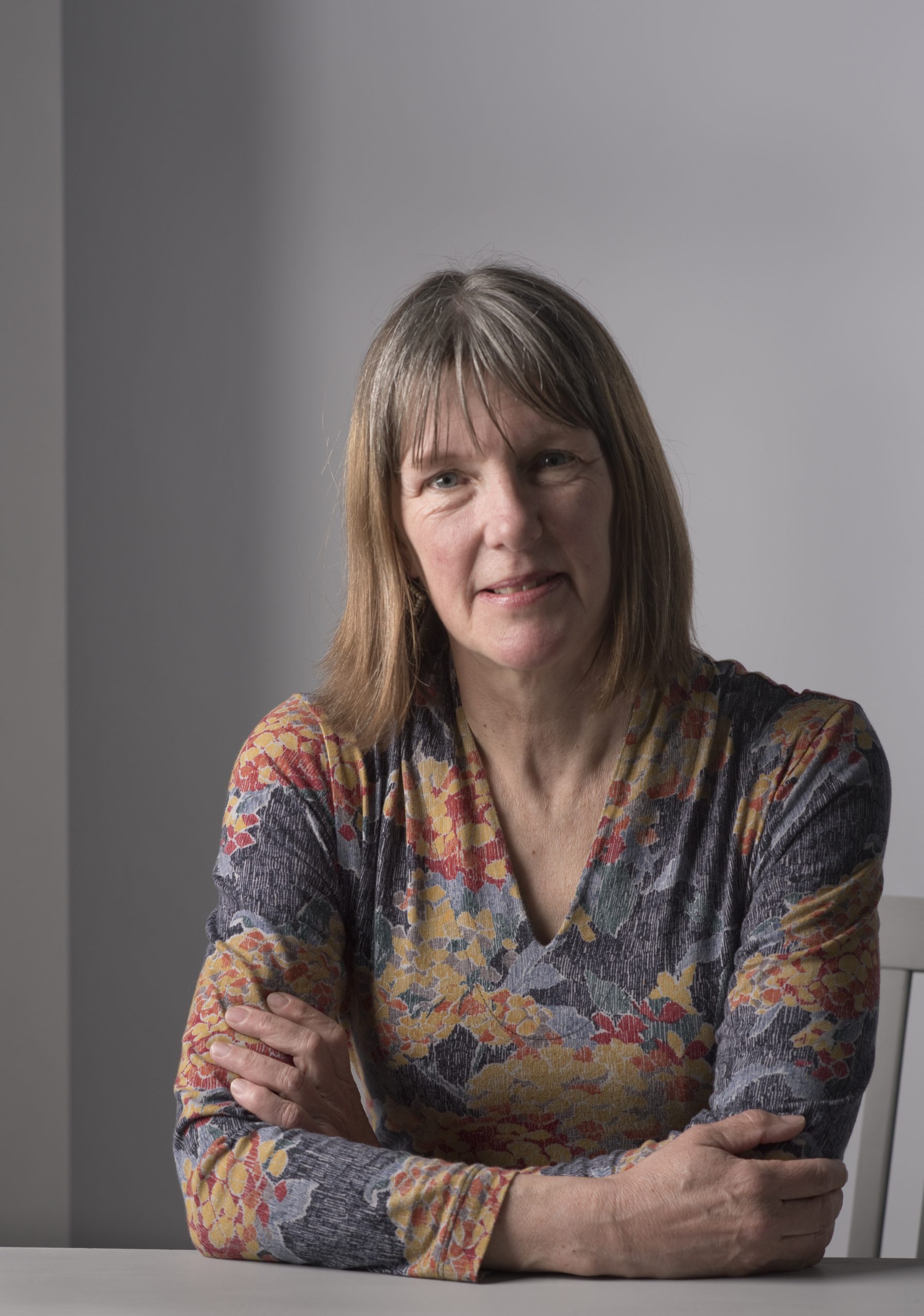
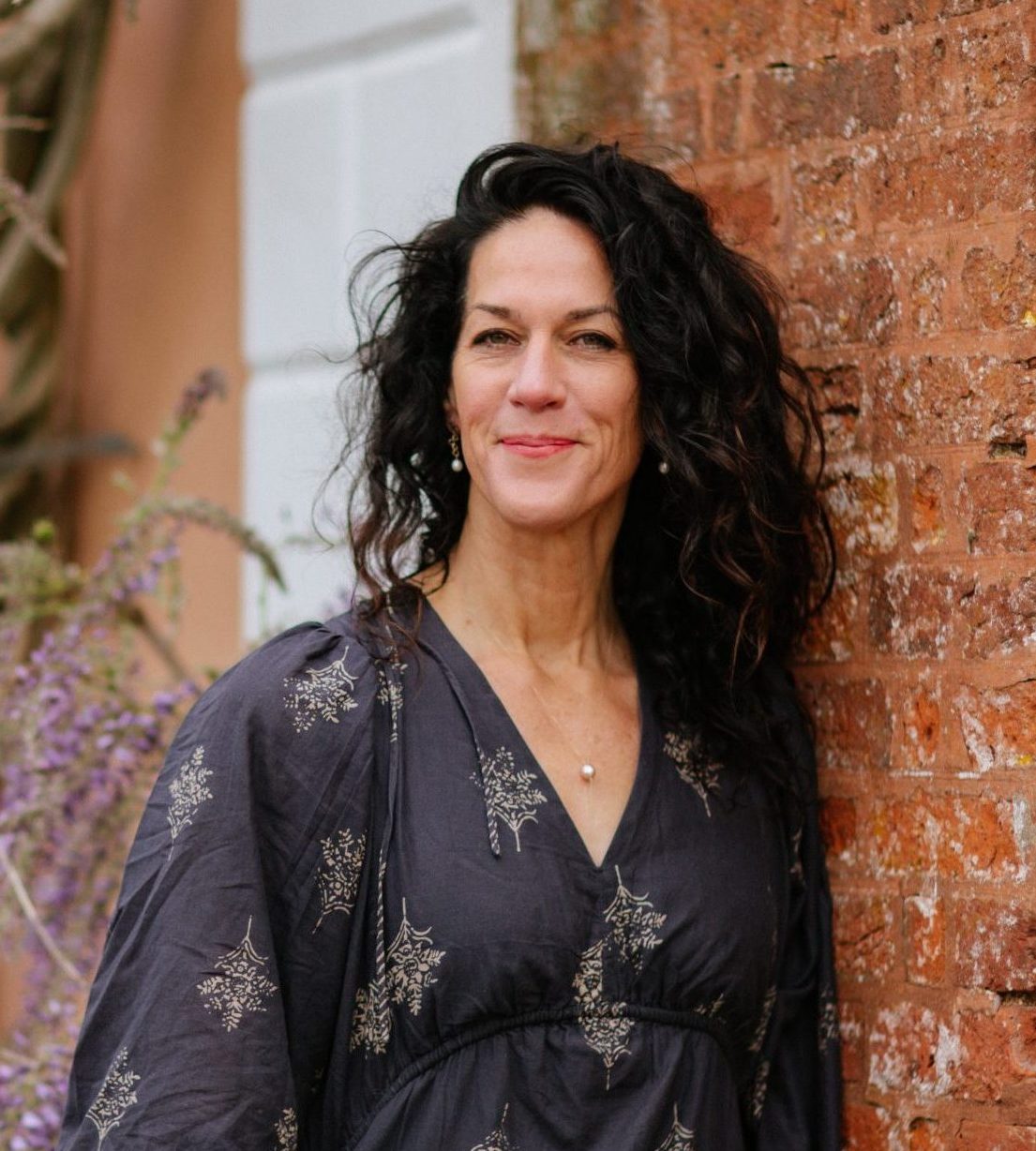

Kathryn Aalto: Author, Teacher, and Guide to the Art of Narrative Nonfiction
If you have ever wanted to write the true story that has been living inside you — and wanted someone in the room who knows exactly how to help you find it — Kathryn Aalto is that person.
Kathryn is a New York Times bestselling author, historian, literary scholar, and a sought-after teacher of narrative nonfiction and memoir writing working in the UK and US today. Her teaching is the kind that writers describe in the same breath as life-changing: technically rigorous, deeply personal, and lit throughout by a contagious enthusiasm for what becomes possible when a writer finally learns to trust their own story.
The Books
Her writing moves at the intersection of story, history, landscape, and the natural world — territory that will feel immediately resonant to anyone drawn to nature writing, memoir, creative nonfiction, or the kind of literary essay that asks serious questions about how we belong to places and to time.
The Natural World of Winnie-the-Pooh (2015) traces the real landscapes and lives behind one of the most beloved stories in the English language. Writing Wild: Women Poets, Ramblers, and Mavericks Who Shape How We See the Natural World (2020) recovers the voices of the women writers, walkers, and visionaries who taught us how to look at the land — and whose example continues to shape how nature writing is made today. Both books are well-researched yet written in her trademark style that is both accessible and lyrical. Her work has been reviewed in the Wall Street Journal, the Washington Post, and the Los Angeles Times, and she has contributed essays and criticism to Smithsonian, Outside, BuzzFeed, and international publications across the UK and US.
The Teaching
For more than twenty-five years, Kathryn has taught narrative nonfiction, memoir, and creative writing at every level — from complete beginners finding their way to a first draft, to experienced writers working toward their next publication. She has lectured at universities on both sides of the Atlantic, led immersive writing retreats across the UK and the United States, and guided thousands of writers through the particular challenges of telling true stories well: how to structure a life on the page, how to find the voice that is unmistakably yours, how to sustain a creative practice through the inevitable difficulties of a writing life.
Her approach draws equally on literary depth and practical technique. She does not teach writing as a set of rules to follow but as a set of questions to live inside — questions about time, memory, character, voice, and what it means to render the real world with the precision and care that narrative nonfiction demands. Writers who work with her leave not just with stronger drafts but with a clearer understanding of who they are as writers, and why that matters.
At the Devon retreat, Kathryn will lead workshops in creative nonfiction and memoir writing tailored to the full range of experience in the room. Whether you are beginning a book, deepening a project already underway, or simply trying to understand what kind of writer you are, her sessions will give you the tools, the perspective, and the confidence to move forward.
The Background
Kathryn holds a degree in Literature from the University of California, Berkeley, a Master’s in Creative Nonfiction from Western Washington University, and a Master’s in Garden History from the University of Bristol. She is also a trained garden designer, is a former award-winning arts administrator, and has appeared in film and on television as an authority on literature, landscape, and the natural world. She lives in Devon — which means she brings to this retreat not only her expertise but an intimate, lived knowledge of the landscape that surrounds it.
Kathleen Jamie: Poet, Essayist, and Guide to the Art of Attention
Kathleen Jamie is one of the most significant writers at work in Britain today — and for anyone drawn to nature writing, memoir, or the literary essay, three days in her company is a rare thing indeed.
Her story begins, as the best ones do, with a decision made early and never abandoned. Raised in Currie on the edge of Edinburgh, she was still an undergraduate reading philosophy when her first poems found their way into print. She won the Eric Gregory Award at nineteen and published her first collection, Black Spiders, at twenty. Poetry has been the touchstone of her life ever since — through travels in the Karakoram and Tibet, through The Queen of Sheba and Jizzen and The Tree House, through a body of work rooted in Scottish landscape and language yet ranging freely across archaeology, art, travel, and the whole difficult territory of women’s lives.
The recognition has followed steadily: the Somerset Maugham Award, the Geoffrey Faber Memorial Prize, the Forward Prize for Best Collection for The Tree House, the Costa Poetry Award for The Overhaul, the Saltire Society Scottish Book of the Year for The Bonniest Companie. In August 2021 she was appointed the fourth Makar — Scotland’s national poet — a post she held until December 2024. One of her poems is inscribed on the national monument at Bannockburn. But the accolades, considerable as they are, tell only part of the story.
In 2014, Kathleen set herself a discipline that will sound familiar to anyone who admires a sustained creative act: one poem, every week, for a year. What emerged was The Bonniest Companie, a collection written through a season of extraordinary national change and shaped entirely by the practice of showing up — proof, if a writer needs it, that constraint is not the enemy of imagination but frequently its engine.
Beyond poetry, Kathleen has done something quietly radical to the essay. Findings (2005), Sightlines (2012) and Surfacing (2019) — the books that made her a defining figure in what became known as the new nature writing — refuse the old boundary between the natural world and the human one. In her hands, a Neolithic chamber in Orkney, a whale’s skeleton in a Norwegian museum, an iceberg off Greenland, and a countryside of cells beneath a hospital microscope all belong on the same page, examined with the same unhurried and unsentimental attention. Sightlines won the John Burroughs Medal and the Orion Book Award in the United States; Surfacing was a co-winner of the Highland Book Prize. Her most recent prose, Cairn (2024), goes further still — forty-five micro-essays, fragments and notes stacked like the stones of a wayside marker, a form she invented because the moment seemed to demand it.
For writers working in narrative nonfiction, memoir and nature writing, this is the most instructive body of work available. She has spent forty years solving, in public, the exact problems you are trying to solve.
Kathleen studied philosophy at the University of Edinburgh and has taught creative writing for two decades, first at the University of St Andrews and latterly as Professor of Poetry at the University of Stirling, with fellowships at Queen’s University Belfast and the University of Otago in New Zealand. She is a Fellow of both the Royal Society of Literature and the Royal Society of Edinburgh, edited Antlers of Water, the first anthology of Scottish nature writing, and writes essays and criticism for the London Review of Books and the Guardian. She lives in Fife.
At the Devon retreat, Kathleen will lead a workshop moving between poetry and prose, setting exercises drawn from her own practice and asking you to make choices about sound, image, rhythm and attention that you may never have made consciously before. She will also join Kathryn for an after-dinner conversation by candlelight: how poems begin, how essays find their shape, and what it means to attend to the world closely enough to write it truthfully. Expect readings, questions from the room, and the sort of unhurried talk that only becomes possible once the day’s work is done.
For writers who have never quite trusted their own noticing — and for those who have always suspected that noticing is the whole of the craft — this is a rare chance to learn from a writer who has built a life on it.
Learn more about Kathleen and her work here.
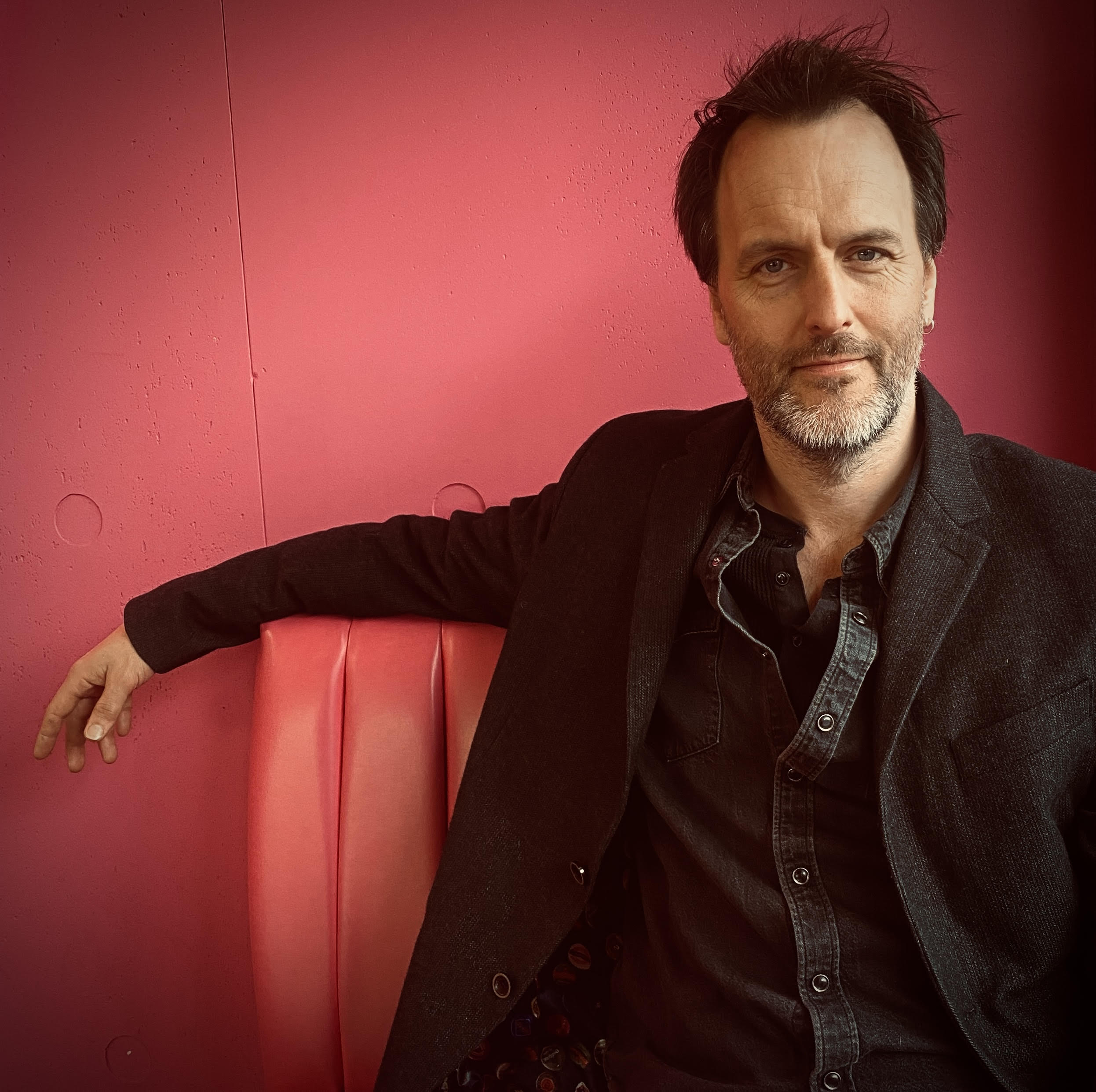
Jon Boden: Musician, Composer, and Creative Collaborator
Jon Boden is one of the most influential and widely celebrated figures in modern British folk music — and one of the most compelling creative minds you will encounter at any writing retreat anywhere in England.
His story begins, as the best ones do, with two people and a shared obsession. In 2001, Jon began performing traditional English songs alongside melodeon player John Spiers. The duo became Spiers & Boden, and Spiers & Boden became the seed of something larger: Bellowhead, an 11-piece folk ensemble that would go on to become the most successful traditional folk band of its generation — selling out concert halls, headlining festivals, and introducing a new audience to the raw vitality of English folk music.
Over the course of his career, Jon has won eleven BBC Radio 2 Folk Awards — more than any other artist in the history of the award. But the accolades, impressive as they are, tell only part of the story.
In 2010, at the height of Bellowhead’s success, Jon launched one of the most quietly radical creative projects in recent British musical history: A Folk Song A Day, in which he recorded and released one traditional unaccompanied song every single day for a year. The project was an act of cultural generosity — a celebration of song as a living, social, communal practice — and created an extraordinary digital archive of folk heritage that continues to be discovered by new listeners today.
Beyond performance, Jon is a composer, educator, and original thinker about creativity. He has composed for theatre at the Royal Shakespeare Company. He has pioneered Colourchord, an accessible system for teaching four-part harmony singing that brings communal music-making to people with no formal training — the same spirit of openness and inclusion he will bring to the song writing workshop at Ashley Court. His three solo albums — Songs From The Floodplain (2009), Afterglow (2017), and Last Mile Home (2021) — form a post-oil concept trilogy that moves through landscape, resilience, and what it means to be human when the old certainties fall away. For writers working in narrative nonfiction, memoir, and nature writing, the thematic territory will feel immediately familiar.
Jon studied Medieval History and Literature at Durham University and Composition for Theatre at the London College of Music. He holds honorary doctorates from both institutions for his contributions to English folk music and culture.
At the Devon retreat, Jon will perform in the candlelit parlour at Ashley Court, lead a song writing workshop open to writers at every level of musical experience, and sing around a campfire. He has also created a specially curated Spotify playlist to begin your immersion in his world before you arrive.
For writers who have never thought of themselves as songwriters — and for those who have always suspected they might be — this is a rare opportunity to learn from one of the most original creative practitioners working in Britain today.
Learn more about Jon and his work here.
TESTIMONIALS
“An astonishing, never to be forgotten retreat.” — Toni W, Lincolnshire, England
“Listening to Kathryn, Rob and Jon share their expertise, experience and wisdom, and spending time in the company of fellow creatives was both illuminating and deeply nourishing. Every detail of the Retreat into the Devon Countryside was thoughtfully considered from the stunning setting at Ashley Court and the personalised, handwritten letter given to each of us on the first day to the wisdom and generosity shared, fireside conversations and exquisite food. The experience was the soul medicine I needed, more so than I realised at the time.” — Nicky J., Devon, England
“The Retreat into the Devon Countryside was exactly the fuel to push on with the last few chapters that I needed it to be.” — Shakira C., London, England
“I sat in the room with the upright piano at Ashley Court and asked myself how did I get here, was I really there. I am still in awe and always will be of all whom I met, all that I heard, saw, tasted and touched. How wonderful it was to be audience to everyone’s written word with the candles and the glow and warmth of the fire. I completely loved the beauty of the evenings.” — Amanda R., Bath, England