
ABOUT
An online nature writing course from a master teacher of narrative nonfiction
Eight weekly sessions · Live on Zoom · Level 1
The Record
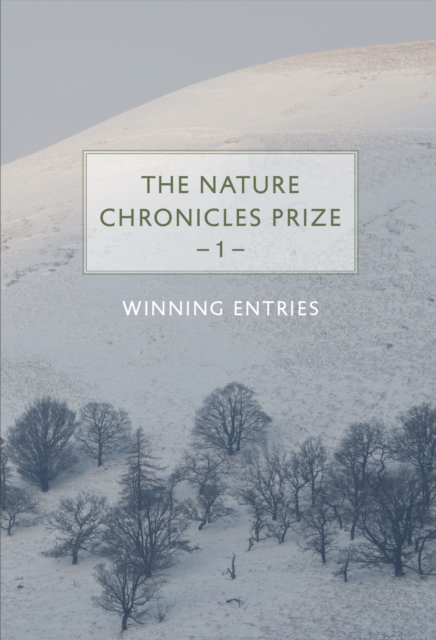
Writers who began here have signed book deals, won the £10,000 Nature Chronicles Prize, taken Bradt New Travel Writer of the Year, and been shortlisted for the Fish Memoir Prize. Their essays appear in national magazines, literary journals, anthologies, and books from university and general presses. Kathryn’s students come from six continents.
Nearly all of them arrived without having published a word.
Most went on from this foundational course into Levels 2 and above, where guest authors including Kathleen Jamie, Andrea Wulf, Ross Gay and Camille Dungy teach alongside Kathryn.
Why This Teacher
Kathryn Aalto is a New York Times bestselling author, public speaker, and a experienced teacher of narrative nonfiction, with more than thirty years in the classroom. She is also a garden historian and landscape designer, holding master’s degrees in Garden History and Creative Nonfiction.
That combination is rare and it changes the workshop. A draft is read for whether the sentence lands — and for whether the hedgerow is a hedgerow, how that valley was cut, why that plant grows on that slope and not the one opposite. Landscape has a history, and writing about it without knowing that history produces prose that gestures instead of prose that knows.
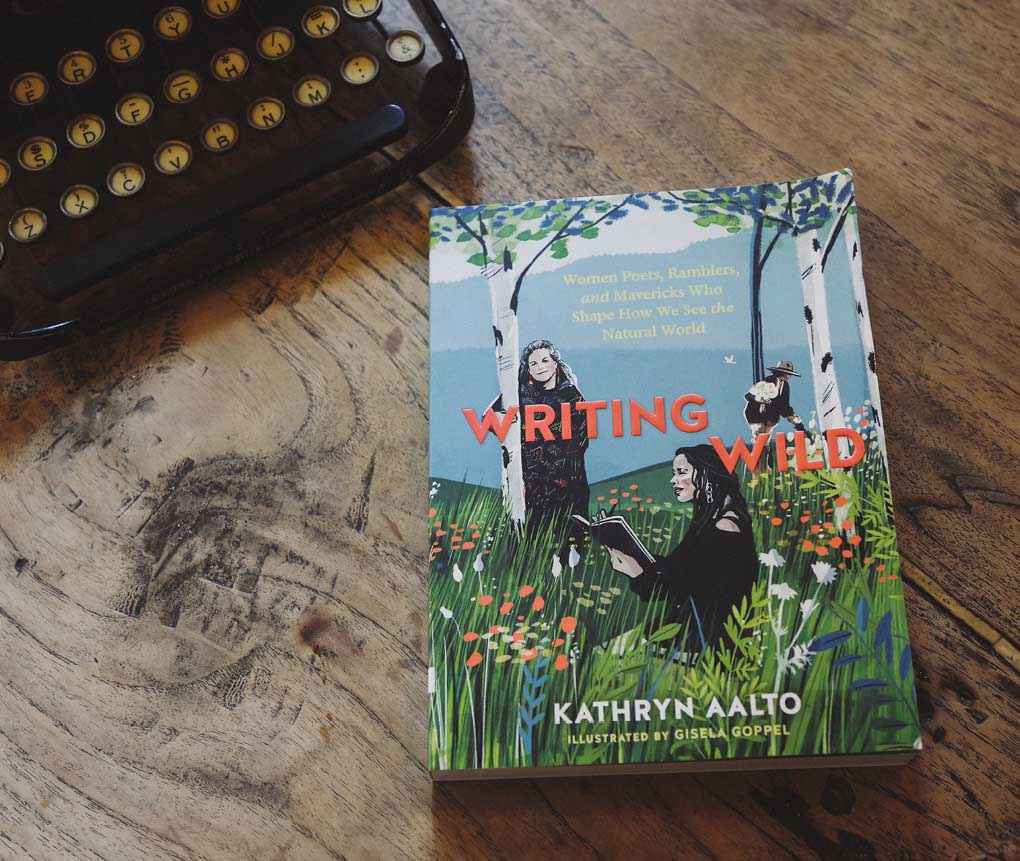
Her books include The Natural World of Winnie-the-Pooh and Writing Wild: Women Poets, Ramblers, and Mavericks Who Shape How We See the Natural World. She teaches every session of this course herself.
“She has an unparalleled knowledge of nature and landscape writing that she wears lightly without intimidating students.”
— James Rebanks, author of The Shepherd’s Life and English Pastoral
“Writer-gardener-historians are, I think, particularly adept at imagining the possibilities for a piece, no matter your subject.”
— Veronica, Portland, Oregon
What This Course Teaches
Good nature writing is not made of good descriptions. It is made of the quality of attention behind them — and attention can be taught.
How to observe. Most of us look without seeing. Learning to notice precisely — the particular grey of that lichen, the order in which a field wakes — is the discipline everything else rests on. The writing is only ever as good as the looking.
How to listen. Nature writing takes you into other people’s lives as often as into landscapes. Active listening is a craft skill, not a courtesy: it is how you catch the sentence someone didn’t quite say, and where the best material in the genre comes from.
Empathy and humility. The genre’s oldest failure is the writer who arrives already knowing. Humility on the page is a technique — it changes who gets to speak, and whether a reader trusts you. That is a craft claim, not a moral one.
Literary craft, with an ear for music. Most prose fails at the level of sound before it fails at the level of sense. Where the stresses fall, when to run long and when to stop dead, how a clause arriving a beat late lands twice as hard. The musicality of the sentence is the part of literary craft most often left unteachable — and the most transformative when it isn’t.
Close reading, in service of writing. The best writers are the closest readers. Half of each term begins with taking an essay apart — and then, the same hour, writing from what it revealed. Reading is never the destination here; it is how the craft becomes visible enough to steal.
Reading In, Writing Out
This is a writing course. You will write in every single session.
The rhythm alternates between two kinds of week, and they feed each other directly.
Reading-and-generating weeks. The class takes one narrative nature essay apart — actively, aloud, at the level of the paragraph and the sentence — to see exactly how it was built. Then, in the same session, you write. Generative exercises follow immediately, aimed at the technique just uncovered: if the essay we opened up did something extraordinary with a shift in time, you write that shift yourself, that hour, while it is still warm. Nothing is examined that isn’t then attempted.
Workshop weeks. You bring a finished essay — grown out of the exercises and the reading that preceded it — and the room gives it the same close attention. Students find this experience a little exhilarating and scary at first, but it comes to be their favourite part of the learning process, where they make friends who are on the same literary journeys.
Four essays across eight weeks, each one drafted in the fortnight between a reading week and its workshop, each one built on craft the class has just handled directly. There will also be shorter sketches.
The reading is there because it is the fastest route to writing well. Every good essay was made by someone taking hundreds of deliberate decisions — where to enter, what to withhold, how long to let a sentence run — and those decisions are visible on the page once you know how to look. Active reading is how you learn to look: reading a paragraph twice to see what holds it up, hearing rhythm by reading aloud, noticing what a writer chose not to do, reading against the grain as well as with it. Kathryn taught critical thinking at university level for years before she wrote the books, and this is that training turned toward the natural world.
But the point is never the essay on the page in front of you. It is the essay you write on Thursday because of it.
One rule. You read each piece twice before opening any guide, and before Kathryn says a word about it. Your own first response is the thing being trained — handed an interpretation too early, most readers stop having one. Yours first, then the room’s, then hers.
How the Eight Weeks Run
| Week | ||
|---|---|---|
| 1 | Close reading + generative exercises | |
| 2 | Workshop | Essay one |
| 3 | Close reading + generative exercises | |
| 4 | Workshop | Essay two |
| 5 | Close reading + generative exercises | |
| 6 | Workshop | Essay three |
| 7 | Close reading + generative exercises | |
| 8 | Workshop | Essay four |
The essays we read are chosen for what they teach, not for their reputations: work from Writing Wild, Henry Beston’s The Outermost House, and standalone pieces selected because each demonstrates something a writer can take.
The Eight Pillars
Everything is built on Kathryn’s original Eight Pillars of Narrative Nonfiction: presence, arc, character, dialogue, voice, language, setting, and resonance.
They work in both directions — eight things to look for when you are reading actively, and eight things to build when you are writing. That is what makes them a framework rather than a syllabus: three decades of literary craft compressed into a method writers carry into everything they attempt afterwards. Inspiration expires. This doesn’t. It will help you understand narrative nonfiction from the foundation up.
The Feedback
Kathryn responds to your pages in her own handwriting, on her reMarkable, in your margins — cadence and syntax, but also structure, pacing and where the piece loses its nerve. It is close reading applied to your own work, which is the point: eventually you learn to do it yourself.
Students name it more often than anything else as the thing that changed their writing. It is also the reason the class is small.
“Kathryn’s critical feedback, gentle but pointed, definitely shaped me into a more observant and insightful writer.”
— Laura, Fayetteville, Arkansas
“I found in Kathryn a superbly knowledgeable and lucid teacher… in just a few weeks, I saw my writing become much more engaging and evocative.”
— David, Leeds, England
The Room
Discussion runs on the Harkness method — conversation-led, everyone contributing, with technique lectures foregrounding each class. Listening well to each other is part of the training, not a by-product of it. Every course builds from strangers to a strong writing community.
Choose the morning or evening class at registration, which is why a single cohort holds writers from across the United States, Canada, the UK, Europe, Africa and Asia — and why the landscapes in the conversation range so far. A Devon writer and a Montana writer describing the same weather in entirely different vocabularies teaches both of them something.
For Writers in the United States
A large share of every cohort is American, and the course is built to make that easy rather than merely possible.
Most American writers take the evening UK session — 1:00 pm Eastern, 10:00 am Pacific, a perfectly civilised time to sit down and work. Sessions are live, so you are in the room with everyone else, not watching a recording after the fact.
Kathryn is American. She grew up in California, studied there, and has taught for thirty years on both sides of the Atlantic — so the reading spans both traditions, and she knows the American publishing landscape as well as the British one. Students write about the Sierra, the Sonoran desert, Michigan winters and Cape Cod as often as about English hedgerows.
Where This Leads: Levels 2, 3 and 4
This is the foundation, and it is deliberately a foundation. Level 1 gives you the Eight Pillars, the reading eye, and four finished essays. What comes next is where writers develop the range and the nerve that publication asks for.
Levels 2 through 4 build progressively — through voice, structure, dialogue, research, and the architecture of long-form work. Taken together they amount to an MFA in narrative nonfiction, one term at a time, without the fees or the residency requirement. Level 1 is the prerequisite for all of them.
And from Level 2 onward, guest authors join the room.
Not as recorded lectures or names on a syllabus — live, in conversation with the class, taking questions about how they actually work. Writers who have taught in these rooms include:
- Kathleen Jamie — poet and essayist, Sightlines, Surfacing
- Andrea Wulf — The Invention of Nature, Magnificent Rebels
- Ross Gay — The Book of Delights, Inciting Joy
- Camille Dungy — Soil, Guidebook to Relative Strangers
- Rob Cowen — Common Ground, The Heeding
- Elena Passarello — Animals Strike Curious Poses
- Ed Caesar — The Moth and the Mountain, staff writer at The New Yorker
- Elizabeth Rush — Rising, The Quickening
- Diane Ackerman — A Natural History of the Senses
- Stephen Moss, Chris La Tray, Andrew McCarthy, Mike Brown, and many others
Ask a working writer what changed things for them and they rarely say a technique. They say a conversation. These are those conversations.
Writers who go on to prizes and book contracts almost always take several courses. This is where they start.
Who It’s For
- Beginners looking for somewhere serious, and kind, to start
- Academics, journalists and professionals turning toward personal, literary prose
- Gardeners, walkers, birders and naturalists who already look closely and want to write it
- Lifelong readers who have never quite tried writing — you are further along than you think
- Writers returning after a long gap
- Writers who want a genuine progression, not a one-off course
- Anyone with a book in mind who knows the craft comes first
No experience required. Curiosity and a willingness to look slowly, essential. Check out why every writer should study poetry as well here.

DATES
Format — Live online via Zoom
Schedule — Fortnightly on Thursdays, eight sessions. Choose the morning or the evening class when you register.
Dates 2027 — 21 January · 4 February · 18 February · 4 March · 18 March · 1 April · 15 April · 29 April
Morning class — 8.00–10.30am UK
Paris 9.00am · Mumbai 1.30pm
Best for writers in the UK, Europe, Africa, Australia, New Zealand, India and Asia.
Evening class — 7.00–9.30pm UK
Paris 8.00pm · New York 2.00pm · San Francisco 11.00am
Best for writers in the UK, Europe and the Americas.
A note on the clocks. US clocks go forward on 14 March 2027, a fortnight before ours. For the 18 March session only, the evening class begins at 3.00pm in New York and 12 noon in San Francisco. From 1 April everything returns to the times above, except Mumbai, where the morning class moves to 12.30pm. We’ll remind you by email.
A note on time zones. All sessions are scheduled in UK time — GMT from late October to late March, BST thereafter. The clock time never changes; only the label does. The morning class runs 8.00–10.30am and the evening class 7.00–9.30pm throughout the term, whatever the season.
Most writers outside Europe take the evening session, which falls at 2.00pm Eastern and 11.00am Pacific — a civilised time to sit down and work. One exception to diarise: US clocks go forward on 14 March 2027, a fortnight before ours. For the 18 March session only, the evening class begins at 3.00pm Eastern and 12 noon Pacific. Every other session runs at its usual time, and we’ll remind you by email.
TUITION
Tuition: £550 per term
Flexible Payment Plans
Contact kathryn@kathrynaalto.com to discuss options.
Tuition is billed in pounds, which for most American students has meant a favourable exchange — and comfortably less than a comparable US workshop or low-residency programme. Wherever you are in the world, tuition is automatically converted into your currency at check out.
Terms and Conditions
Review the details of enrolment below before registering.
- Course Overview. The Course provides online instruction in narrative nonfiction with an emphasis in nature writing.
- Eligibility and Registration. Participants must be 16 or older and provide accurate registration details.
- Payment Terms. Full payment is required at registration. Payment plans, if arranged, must be honoured regardless of attendance.
- Refund Policy. Refunds are available up to 14 days before the Course start date. No refunds will be issued after this period. Requests must be emailed to kathryn@kathrynaalto.com.
- Course Access. Participants receive the syllabus upon registration.
- Intellectual Property. All Course materials are the property of Kathryn Aalto and cannot be reproduced, distributed, downloaded, or filmed without written permission.
- Conduct and Participation. Respectful and professional behaviour is expected.
- Technical Requirements. Participants need to have a stable internet connection and compatible device.
- Course Changes and Cancellation. The schedule, content, or speakers may be modified. If the Course is cancelled, a full refund will be issued.
- Privacy Policy. Participant information will not be shared.
By registering, you agree to these Terms and Conditions. For assistance, contact kathryn@kathrynaalto.com.
FAQs
1. Are Kathryn Aalto’s courses suitable for beginners?
Yes, all levels of writers. Beginners gain foundational skills in a supportive environment, while experienced writers refine their craft and explore advanced techniques.
- Level 1: Foundational courses for beginners in narrative nonfiction.
- Levels 2–3: Intermediate courses requiring Level 1, a similar course, or application with a writing sample.
- Levels 3–4: Advanced courses focusing on voice, structure, dialogue, and other nuanced techniques.
2. What kind of feedback can I expect?
Kathryn provides detailed, constructive feedback to improve both technical skills and thematic resonance. Students receive handwritten feedback via her reMarkable device, addressing everything from syntax and language to structure and voice. Her feedback supports, encourages, and challenges students to grow.
3. What assignments or exercises are typical?
Courses include in-class reflective exercises and at-home assignments.
- Level 1: 2–4 pages of sketches, experimental scenes, and essays every two weeks
- Levels 2–4: 4–10 pages every two weeks — your choice
Assignments balance variety and independence, encouraging students to explore their own interests.
4. Can taking one course lead to publication?
A single course is a valuable step toward publication, providing essential skills, guidance, and confidence. However, becoming published requires persistence, revision, and industry knowledge. Most successful students take 2–4 courses, participate in workshops, and hone their craft over time, much like an MFA programme in narrative nonfiction. While publication isn’t guaranteed, Kathryn’s courses equip you to pursue your goals effectively.
5. Who are my classmates?
Your classmates come from around the globe, creating a diverse and enriching learning community. Students hail from the USA, Canada, the UK, Europe, Africa, Asia, and beyond, offering a broad spectrum of perspectives and experiences.
6. Can I pay tuition in instalments?
Yes, tuition can be billed over 2–4 months. Contact kathryn@kathrynaalto.com to arrange a plan that works for you.
COMMUNITY
In Kathryn Aalto’s online writing courses, a warm and welcoming community blossoms—one rooted in curiosity, creativity, and care. Writers from all walks of life gather in these thoughtfully cultivated spaces, drawn together by a shared desire to explore language, landscape, and self. With grace and generosity, Kathryn fosters an atmosphere where collaboration flourishes, dialogue deepens, and each voice is honoured.
Her teaching is grounded in empathy and deep listening. She invites you to write bravely, to trust your instincts, and to discover the quiet power of your unique perspective. Through guided discussions, personalized feedback, and meaningful peer connection, she helps you build confidence not only in your craft, but in your place within a supportive and like-minded community.
In Kathryn’s courses, the classroom becomes more than a learning space—it becomes a sanctuary for growth, expression, and creative kinship. Here, every participant is both a learner and a guide, contributing to a shared journey rooted in respect, inspiration, and a profound love for the written word.
TEACHING PHILOSOPHY

“My teaching philosophy is rooted in the belief that education is a collaborative and transformative journey, one that empowers students to explore their creative potential, embrace their unique voices, and engage deeply with the world around them. I am committed to creating a learning environment that is inclusive, supportive, and intellectually stimulating, where students feel encouraged to take risks, ask questions, and challenge themselves.”
1. Fostering Creative Exploration
Creativity, in my view, behaves a bit like a curious fox: it shows up when the landscape feels open, safe, and full of intriguing trails. Give it room to roam, and suddenly it’s leaping over fences and discovering new worlds. My role as an educator is to hand students the compass, snacks, and map—then encourage them to wander boldly. Through lively lectures, spirited discussions, and assignments that stretch (but don’t snap) the imagination, I aim to spark curiosity and embolden writers to push beyond the well-worn paths of conventional thinking. I want students to experiment with language, subvert expectations, and make creative mischief in ways that feel personally meaningful and artistically daring.
2. Encouraging Critical Thinking and Reflection
I see literature and writing as both telescope and mirror: tools that help us examine the world with precision and examine ourselves with honesty. In my classes, I encourage students to read critically, question confidently, and reflect deeply. We unpack big ideas, tease apart tangled themes, and learn to articulate insights with clarity, courage, and a bit of flair. I emphasise the importance of seeking out multiple perspectives—especially the uncomfortable ones—and exploring the ethical terrain of storytelling. After all, thoughtful writing doesn’t just entertain; it illuminates what it means to be human.
3. Building a Supportive Learning Community
A flourishing classroom is less like a lecture hall and more like a vibrant micro-ecosystem: collaborative, respectful, and humming with exchange. I work intentionally to create a space where every student feels seen, heard, and valued. We share work, give generous and constructive feedback, and engage in conversations that matter. Heavily influenced by the Harkness method—fine-tuned at Phillips Exeter Academy, where my three children graduated—I structure my classes around the art of conversation: active listening, thoughtful dialogue, and genuine collaboration. I also recognise that students learn differently, and I aim to adapt my teaching to meet a wide range of needs, voices, and learning styles.
4. Empowering Student Voices
One of my central goals as a teacher is to help writers locate, strengthen, and celebrate their own voice—the one that is unmistakably, unapologetically theirs. Whether a student is rediscovering creativity after years of academic writing or stepping into narrative nonfiction from another genre entirely, I encourage them to write with authenticity and conviction. Every student has a story deserving of the spotlight; my job is to help them polish the lens. This means developing technical craft, yes—but also dissolving the self-doubt, inhibitions, and inner critics that tend to lurk around creative work.
5. Lifelong Learning and Growth
Teaching, for me, is a beautifully reciprocal exchange: I learn as much from my students as they learn from me. Their insights, bravery, and curiosity continue to expand my own thinking. My commitment to professional growth—through ongoing engagement with ASLE (Association for the Study of Literature and Environment) and AWP (Association of Writers and Writing Programs)—keeps me connected to current conversations in literature, writing, and pedagogy. By modelling curiosity, openness, and joy in lifelong learning, I hope to inspire my students to keep growing long after the course ends, both as writers and as thoughtful humans.
Results
My teaching philosophy is rooted in the belief that education is a dynamic, collaborative, human-centred process. By nurturing creativity, fostering critical thinking, and building strong communities, I aim to empower students to become confident, reflective, innovative writers—people who engage with the world in ways that are both imaginative and meaningful.
Once students sharpen their narrative nonfiction skills, I encourage them to step into the literary world with boldness: apply for awards, submit to publications, and keep nourishing their private writing lives through journals and ongoing practice. This proactive support helps emerging writers find external validation for their insight and craft—should they seek it.
My students have achieved remarkable successes: winning the £10,000 Nature Chronicles Prize in 2022, longlisted for the 2024 and 2026 prizes, claiming the 2022 Bradt New Travel Writer of the Year award, and appearing on shortlists for prizes such as the Fish Memoir Prize. Their work has been published by university and general presses, book trusts, national magazines, and literary journals.
But accolades are only one chapter in the story of a writer’s life. There is equally profound value in embracing writing as part of a contemplative, curious, reflective way of being. That quieter fulfilment cannot be measured, ranked, or awarded—and it is every bit as meaningful.
TESTIMONIALS
“I learnt so much from taking Kathryn’s Memoir and Life Writing course. Although I had published a lot of academic work, I was struggling making the transition to writing in a more personal vein and lacking in confidence. I found in Kathryn a superbly knowledgeable and lucid teacher. Through the lectures and class discussion, I learnt how to implement narrative nonfiction techniques and, in just a few weeks, saw my writing become much more engaging and evocative. I also benefited from being part of a supportive and friendly learning community, and building relationships that I expect to last far beyond the duration of the course. Finally, I really appreciated Kathryn’s warmth and positivity, both in the virtual classroom and in her individual feedback. She was an attentive and sympathetic reader of my work, giving clear guidance for improvement while simultaneously building my confidence. The course enabled me to see new possibilities in my writing and I am keen to work with Kathryn again as I continue to develop.” — David, Leeds, England
“After six months of working with Kathryn–which is a bit like entering the space of a handwritten letter, what with her sharp aesthetic sense, far-ranging intelligence, wit, and curiosity–I’ve made tangible progress on an unwieldy, long-form project I was struggling to articulate. I came to her Memoir and Life Writing class for accountability, and came away having experienced the kind of support, writing insight, and real feeling of friendship that can be difficult to find in a workshop environment. Kathryn fostered a warm, charming atmosphere in class (a real feat online), allowing for life-long connections to develop among our group of writers. She cares about the arc of her student’s writing lives–a form of attention that encourages artistic growth and positive risk-taking. She not only brought her years of writing and publishing experience to class and to our bi-monthly writing assignments (her personal feedback, often handwritten, is invaluable), she also brought her unique perspective. Writer-gardener-historians are, I think, particularly adept at imagining the possibilities for a piece, no matter your subject. Kathryn pushed me to dig deeper, moving my writing in new directions. No matter where one is in their writing life, working with Kathryn will be an experience of profound joy, insight, and artistic deepening.“ — Veronica, Portland, Oregon
“Kathryn’s magic created a haven for aspiring writers and poets. Guest speakers inspired powerful conversations about structure, content, subject, and most importantly, the joy of writing. Spending two hours with other writers from around the globe filled my creative well and sustained my writing practice. And Kathryn’s critical feedback, gentle but pointed, definitely shaped me into a more observant and insightful writer. The best part is the community remains through the connections she has forged.” — Laura, Fayetteville, Arkansas, USA