

There are writers who teach you things about craft. And then there are writers who teach you things about being alive.
Alice Munro is both.
This spring, I’m launching something new at the writing school — a mini lecture and discussion series built around a single writer’s work. No workshopping. No submissions. No pressure to produce anything at all. Just reading, talking, and paying the kind of close attention that makes you a better writer and, I’d argue, a more perceptive person.
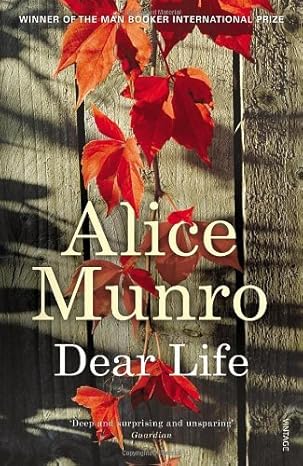
We begin with Munro — Nobel Laureate, master of the short story, and one of the most precise observers of human life in the English language. We’ll read three books across three Saturday sessions: her only novel-length work, Lives of Girls and Women (1971); a curated career retrospective, Alice Munro’s Best (2006); and her final and most personal collection, Dear Life (2012). Read a review of her work in The New York Times.
Learn more here about this Lecture and Discussion Series.

Why Munro? Why Now?
Because she does something most storytellers never attempt: she refuses to move through time in a straight line.
Her stories unfold the way memory actually works — by association, by what matters most, by the sudden pull of a detail that collapses thirty years in a single sentence. Reading her is like being given permission to experience a life the way we actually live it, rather than the way we’ve been taught to tell it. If you’re a writer working on structure, as I am, then this is a vital reason to read her work. It is precisely why I created this mini lecture series: I want to share what I am studying with you. If you’re not a writer, it does not matter: come to listen, come to contribute what you enjoyed about each book.
She is also one of the most incisive writers of character in the English language. She shows you exactly what a person is made of without ever quite explaining it. You simply know these women. You recognise them — sometimes uncomfortably so.
In each session, we’ll look at how she layers time and memory, how she uses silence and restraint, and how she builds entire worlds from the texture of ordinary life: a kitchen, a marriage, an afternoon that changes everything. No dramatic events required.
Learn more about Alice Munro through the Nobel Prize website here.
Who This Lecture and Discussion Series Is For
Anyone who loves reading. Anyone who wants to deepen their understanding of narrative craft. Anyone looking for a different kind of literary community — one that takes the reading life and analogue life seriously.
You don’t need to be enrolled in any of my courses. You don’t need to write at all. You need a copy of the books, a Saturday afternoon or morning (depending on your time zone), and a willingness to pay close attention.
A reading guide will be distributed before each session. Places are limited.
Dates and Details
Three Saturdays, 5–7 PM GMT, live on Zoom: April 18 · May 16 · June 20, 2026
If you’ve been asking for something like this — here it is.