

Seven live online masterclasses in narrative nonfiction — a complete apprenticeship in miniature, taught across a single week. Register below for the full Footpath of seven classes.
- Monday 14 September – Sunday 20 September
- 4–6 PM London · 11 AM New York · 8 AM San Francisco · 5 PM Paris · 8:30 PM Delhi · 1 AM Sydney (next day) · 3 AM Auckland (next day)
- Live online, a recording goes to everyone
A footpath is not a road. Nobody surveys it or lays it down; it appears because one person walks a route, and then another, until the ground itself remembers the way through. Learning to write works the same way — which is why these seven masterclasses are arranged as seven intentional educational steps.
Each class stands alone and is complete in two hours. Together they form an arc, because a course in storytelling should itself be well told. Walk one step if that is what you need. Walk four. Walk all seven and you will have crossed the whole ground, from the empty desk on Monday morning to the revised page on Sunday night.
How These Creative Nonfiction Writing Classes Work
The Full Footpath — £275
All seven classes, the complete arc, from the Eight Pillars to the Editor’s Eye — a saving of £75 over single tickets. The Footpath was designed to be walked whole: each class builds on the last, and the week ends somewhere the first evening makes possible. Most beginning writers choose this.
The Four-Class Bundle — £160
Pick any four of the seven — a saving of £40. Ideal if you want to shape the week around your own writing life. After you book, we will email you and ask for your four choices.
Single Class — £50
Choose any narrative nonfiction course that calls to you in here. Every class stands alone, so you can step onto the path wherever it suits.
Why the week is sequenced this way
The Footpath builds the way a writing life builds. We begin with the territory itself — what narrative nonfiction is, through the Eight Pillars that underpin everything taught at The Narrative Life. Then the practice that sustains a writing life, then the reading that feeds it, then your own voice, recovered and trusted.
With those foundations laid, we turn to the work: gathering true material, opening and closing a piece with intention, and finally revising it with an editor’s eye. You will leave with a map of the whole craft, a working practice, pages underway, and the certainty that this territory is yours to walk.
Who The Footpath is for
Beginners, genuinely, to narrative nonfiction. No experience is required and none is assumed — most people arrive with nothing but a true story they need to tell and no idea how to tell it. Experienced writers come too, usually for one or two specific steps, and academics and professionals often come for the voice class alone. If you cannot attend live, a recording is sent to everyone who registers.
The seven steps
Step One · Monday 14 September — Setting Out: An Introduction to Narrative Nonfiction
Setting out is the hardest part of any walk, and this first step makes it easier by handing you the map: the Eight Pillars that hold up every piece of narrative nonfiction ever written.
The gateway class, and the only place to take in the whole territory in one sitting. What narrative nonfiction actually is — not journalism, not memoir exactly, not the essay exactly, but true stories told with a novelist’s tools and a historian’s conscience. We walk through the Eight Pillars one by one, and you leave with a map of the discipline and a clear sense of which pillar your own writing most needs next.
Step Two · Tuesday 15 September — Clearing the Ground: Building a Writing Practice
Nothing can be built or grown until the ground is cleared, and this step clears yours — replacing the wait for inspiration with a writing practice that runs whether or not you feel like a writer that morning.
Before craft, the conditions for craft. The mechanics — time, place, ritual, the phone in another room — and the deeper work of building a boundary around your writing life that family, work and the noise of the world learn to respect. Everyone leaves with a written plan: when, where, how long, and what to do when it collapses, because it will.
Step Three · Wednesday 16 September — Reading the Ground: How to Read Like a Writer
A tracker reads a field for what passed through it, and this step teaches you to read a page the same way: not only what the writer said, but the marks they left while saying it.
Writers are made by reading, but not the reading most of us do. This is reading with the hood up: slowing over a paragraph to ask why this verb, why this sentence length, why the scene breaks here. Two short passages dismantled together, one for structure and one for sentence-craft, plus annotation habits that turn everything on your shelf into faculty.
Step Four · Thursday 17 September — Finding Your Footing: Recovering Your Voice in the First Person
Somewhere in a career of writing like an institution, most people lose their footing — and this step recovers it, returning the first person to your prose along with the judgement to know how much of it you actually need.
For everyone who feels they don’t have a voice, or had one once and lost it. Especially for academics and professionals trained out of the first person: taught that authority means absence, that hedging is honesty. Exercises that loosen the institutional habits, then the craft of the ‘I’ itself — where it illuminates, and where it blocks the view.
Step Five · Friday 18 September — Off the Path: Research for Writers
Every true story eventually requires you to leave the desk, and this step goes off the path into the archive, the field and the interview, then brings you back knowing what to do with what you found.
Where material lives and how to gather it. Archives and the paper trail; place as a primary source, and the note-taking that makes a walk yield prose; and the craft of the interview, including the discipline of silence and why the real material arrives after the rehearsed answers run out. Ends with the two disciplines that save years: a filing system that holds, and recognising when research has become avoidance.
Step Six · Saturday 19 September — The First Step and the Last: Beginnings and Endings
Two sets of words carry disproportionate weight in any piece, and this step attends to both: the gate your reader enters by, and the ground you leave them standing on.
The two moments a reader never forgives you for getting wrong. How the first five hundred words make a promise — of subject, of voice, of the kind of attention the piece will pay — and how nonfiction closes without a bow: resolution versus resonance, the final image versus the final idea. The pairing is the point, because a great ending returns, transformed, to the opening’s promise.
Step Seven · Sunday 20 September — Retracing Your Steps: Revising Your Own Work
Revision is not tidying but retracing, and this final step walks the whole route back across your own draft to find where the way was lost — because this is where the writing actually happens.
The class where writing actually becomes good, because nobody drafts well and everybody can learn to revise well. The passes in order: structural read, paragraph pass, line edit. The techniques that create distance — reading aloud, the cooling-off period, the reverse outline. And the psychological half nobody teaches: reading your own pages as a stranger, and cutting sentences you are proud of.
Ways to walk The Footpath
A single class — £50. Choose any class that calls to you. Every one stands alone, so you can step onto the path wherever it suits.
Any four classes — £160, a saving of £40. Shape the week around your own writing life. After booking, we will email to ask which four you would like.
The full Footpath, all seven — £275, a saving of £75. The complete arc, from the Eight Pillars to the Editor’s Eye. The Footpath was designed to be walked whole: each class builds on the last, and the week ends somewhere the first evening makes possible. Most beginning writers choose this.
For students outside the UK
The Narrative Life is run from Devon, England, so prices are listed in pounds sterling — but the classes are built for an international room, and students join from six continents. If you are paying with an American, Canadian or Australian card, your bank handles the conversion automatically at checkout and you will see the amount in your own currency on your statement. At current rates a single masterclass is around $67, four around $215, and the full week around $370.
Questions about The Footpath
- Do I need any writing experience? No. The Footpath is designed for beginners and assumes nothing.
- Do I have to attend live? No. A recording is sent to everyone who registers, for every class.
- Can I take just one class? Yes. Every class is complete in itself.
- How do I choose my four for the bundle? We email you after booking and you tell us which four.
- How long is each class? Two hours, with a ten-minute break.
- Is it the same as an online writing course? It is shorter and more concentrated. If you want a full course, The Art of Narrative Nonfiction runs across eight fortnightly sessions.
- What if I need to cancel? Refunds are available in writing up to 14 days before the start date.

About The Footpath
Kathryn discovered the joys of footpaths when she moved to England in 2007, and they have served as significant parts of living a narrative life.
The Footpath series of masterclasses takes its name from the way a path is actually made. Nobody surveys it or lays it down; it appears because one person walks a route, and then another, until the ground itself remembers the way through. Learning to write works the same way. These seven masterclasses are seven steps along that path — each one complete in itself, each one two hours of live teaching you can take on its own, and each one facing the same direction. Walk a single step if that is what you need. Walk three. Walk all seven and you will have crossed the whole ground, from the empty desk on Monday morning to the revised page on Sunday night.
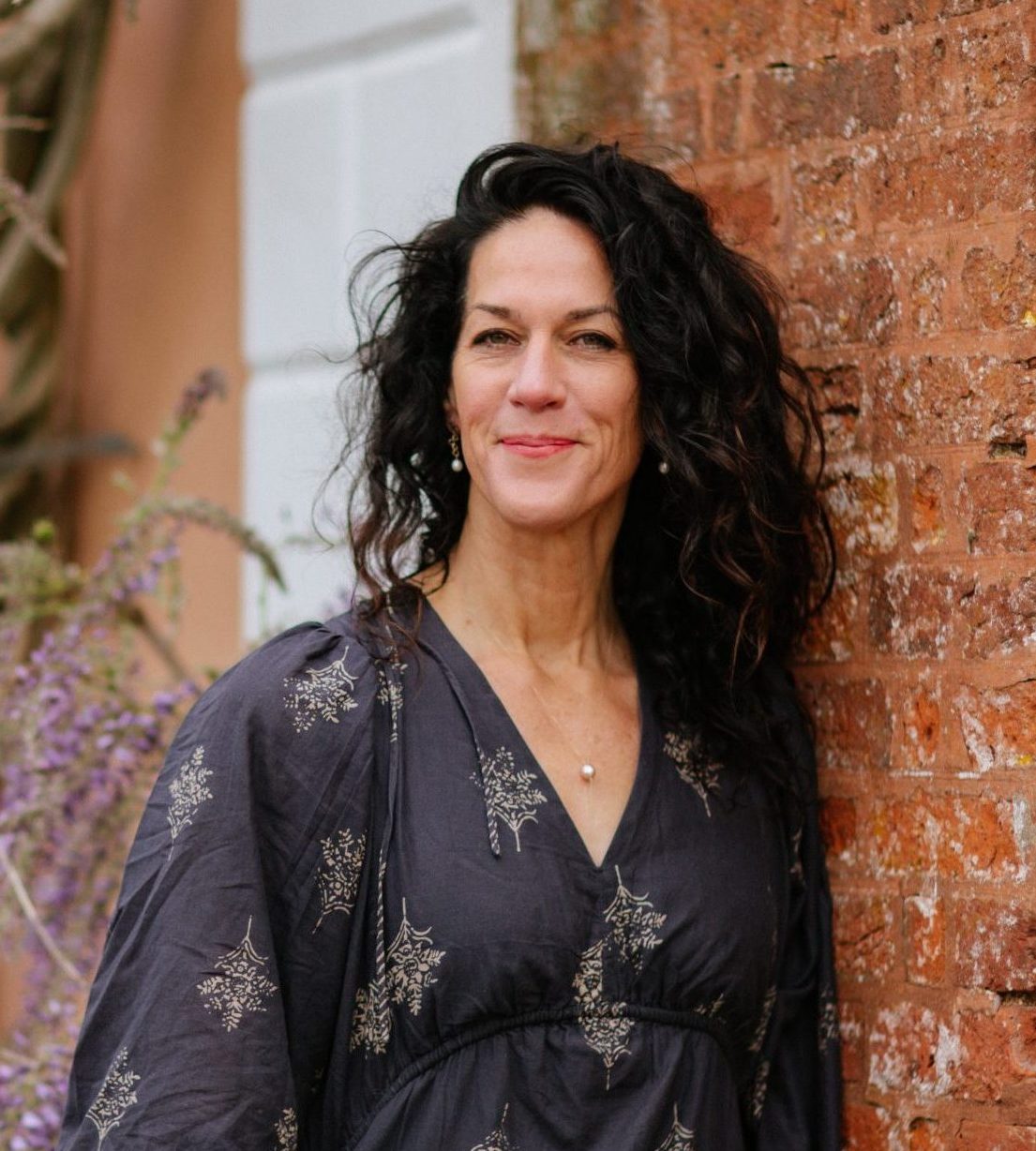
About Kathryn
Kathryn Aalto is a New York Times bestselling author, historian and passionate teacher of narrative nonfiction. Her books include The Natural World of Winnie-the-Pooh: A Walk Through the Forest that Inspired the Hundred Acre Wood and Writing Wild: Women Poets, Ramblers, and Mavericks Who Shape How We See the Natural World.
From her studio in Devon, England, she leads The Narrative Life, an international school of narrative nonfiction whose students write from six continents. She teaches live online creative nonfiction courses in memoir, nature writing, travel writing and literary nonfiction — many of her students arriving as complete beginners, with nothing but a true story they needed to tell. Her students have gone on to win national travel writing prizes and sign contracts with major publishers.
Her teaching is built on her Eight Pillars of Narrative Nonfiction — presence, arc, character, dialogue, voice, language, setting and resonance — a framework for turning real life into resonant story. She holds master’s degrees in garden history and creative nonfiction, has taught critical thinking at university level, and believes the writing life is not a talent bestowed on a few but a path anyone can walk with excellent teaching.
Explore all of Kathryn’s online creative nonfiction writing courses, masterclasses and mentoring: Online Creative Nonfiction Writing Courses | Kathryn Aalto.
Terms and Conditions
Thank you for enrolling in this narrative nonfiction course (known as Course). By registering for this Course, you agree to the following terms and conditions:
- Course Overview. The Course is designed to provide online instruction in narrative nonfiction. The Course is conducted online via Zoom and will begin on the date stated above.
- Eligibility and Registration. Participants must provide accurate and complete information during registration. The Course is open to individuals aged 16 or older.
- Payment Terms. Full payment of the Course fee is required at the time of registration. Registration is only confirmed once payment is successfully processed. If you have arranged tuition instalments, those are required to be paid notwithstanding your attendance.
- Refund Policy. Refunds are available upon written request up to 14 days before the Course start date. After this period, no refunds will be issued, regardless of the reason for withdrawal or non-participation. Refund requests must be emailed to kathryn@kathrynaalto.com and include the participant’s name and order details.
- Course Access. Participants will receive the Course syllabus upon registration. Sharing Course materials with third parties is strictly prohibited.
- Intellectual Property. All Course materials, including videos, handouts, and presentations, are the intellectual property of Kathryn Aalto. Participants may not reproduce, distribute, or share Course content without prior written consent. Filming of live or recorded Courses is prohibited.
- Conduct and Participation. Participants are expected to engage respectfully and professionally in all Course activities. Disruptive or inappropriate behaviour will result in removal from the Course without a refund.
- Technical Requirements. Participants are responsible for ensuring they have the necessary technology to access the Course, including a stable internet connection and a compatible device.
- Course Changes and Cancellation. Kathryn Aalto reserves the right to modify the Course schedule, content, or guest speakers as necessary. In the unlikely event the Course is cancelled by Kathryn Aalto, participants will receive a full refund.
- Liability. Kathryn Aalto is not responsible for any personal or professional outcomes resulting from participation in the Course. Participation in the Course is at the participant’s own risk.
- Privacy Policy. Participant information is collected for the purpose of Course administration and will not be shared with third parties without consent.
By registering for the Course, you acknowledge that you have read, understood, and agreed to these Terms and Conditions. For questions or assistance, please contact us at kathryn@kathrynaalto.com.