The Art of Narrative Nonfiction (Level 1) — SUMMER TERM (June 8-August 17, 2026)

ABOUT

The live online creative nonfiction writing course that teaches you everything an MFA teaches about true storytelling — in a fraction of the time, at a fraction of the cost, with a New York Times bestselling author.

The Story You Need to Tell Is Already There. This Course Shows You How to Tell It.

There is a particular kind of writing that sits at the intersection of journalism and literature, memoir and reportage, personal essay and cultural criticism. It goes by many names — narrative nonfiction, creative nonfiction, literary nonfiction — but it does one thing better than any other form: it tells true stories so well that readers forget they are reading nonfiction at all.

It is also the most teachable form of serious writing there is. And this course teaches it completely.

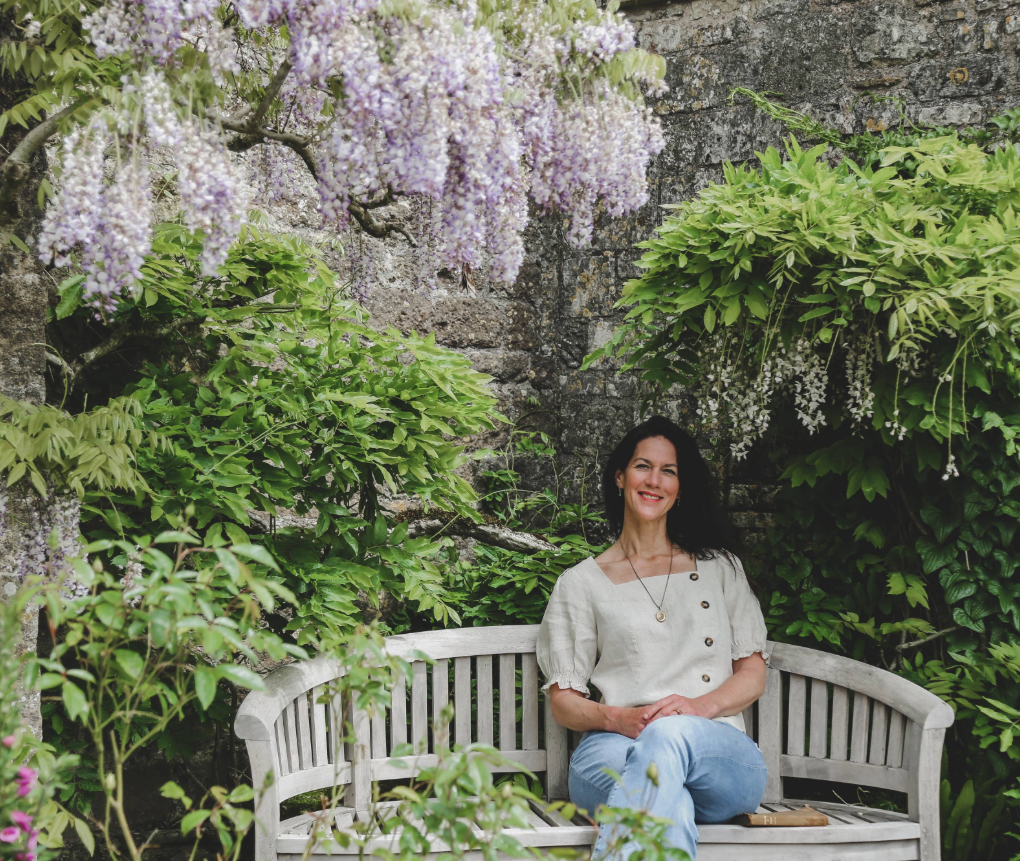
The Art of Narrative Nonfiction is a live online creative writing course led by Kathryn Aalto — New York Times bestselling author, master teacher, and one of the most sought-after instructors in narrative nonfiction and memoir writing in the UK and US today. Her students get published, win prizes, and embrace narrative living. Over the duration of the course, you will learn how to turn real experience into riveting literature: how to structure a true story, build a scene, develop character, find your voice, research with depth, and write with the precision and confidence that narrative nonfiction demands.

This is not a course about thinking you need to find a muse. It is a course about mastering a craft.

Why Narrative Nonfiction — and Why Now

We are living through a strange moment for writing. Algorithms can produce text faster than you can find your favourite pen. AI can remix, imitate, and approximate — it can fake tone, manufacture confidence, and generate sentences that look, at a glance, like writing.

But it cannot live. It cannot hitchhike across Patagonia, nurse a broken heart, discover a rare bird at dawn, or sit across a table from a stranger and feel the full, irreducible weight of their story. Narrative nonfiction depends on human experience — on presence, on witness, on the particular accumulation of a life actually lived — and that makes it gloriously, stubbornly un-automatable. These stories cannot be scraped, summoned, or hallucinated. They must be witnessed, felt, and told by someone who was actually there.

That someone is you.

In a media landscape where deepfakes multiply and attention fractures by the hour, narrative nonfiction is not merely useful. It is essential — the form that best positions a writer at the crossroads of truth and creativity, where rigorous research meets literary imagination, where a single true story can illuminate an entire world, shift a reader’s perspective, and create the lasting connection that only honest writing makes possible.

The Alternative to an MFA — Focused, Affordable, and Built Around One Genre

A Master of Fine Arts in Creative Writing is a significant investment — in time, in money, and in the opportunity cost of two or three years spent across multiple genres, many of which may not be yours.

This course offers a different proposition: the core of what an MFA teaches about narrative nonfiction, distilled into a focused, intensive programme designed specifically around this one genre. Every session, every lecture, every exercise, and every piece of feedback is oriented toward a single question: how do you write true stories that are genuinely, durably excellent?

For writers who know that narrative nonfiction is their form, this course delivers what an MFA cannot: complete focus, immediate application, and direct access to a teacher who has spent her entire career working in this tradition. It will not cost you three years or a postgraduate tuition fee. And it will give you tools you will use for the rest of your writing life.

What You Will Learn

The Eight Pillars of Narrative Nonfiction. The structural foundations of the form — presence, arc, character, dialogue, voice, language, setting, and resonance — taught as an integrated system you can apply to any true story you want to tell. These are the pillars that separate narrative nonfiction from a report, a blog post, or a diary entry. Master them, and you can write anything.

Voice and Style. Your voice is not something you invent. It is something you uncover — through practice, through reading, and through understanding what you are actually trying to say. You will learn how to develop a voice that is unmistakably yours while maintaining the authority nonfiction demands: how to balance interiority with observation, intimacy with rigour, personality with precision.

Scene-Building, Dialogue, and Sensory Writing. Narrative nonfiction lives and dies in its scenes. You will learn how to construct them: how to use sensory detail without sentimentality, how to write dialogue that reveals character, and how to build the immersive, present-tense urgency that pulls a reader through a true story as powerfully as fiction.

Structure and the Narrative Arc. How do you organise a life, a journey, or a memory into a structure that feels both inevitable and surprising? You will learn how to open, move through time non-linearly, build toward meaning without over-explaining it, and write endings that earn their weight.

Research and the Ethics of Truth. Great narrative nonfiction is deeply researched. You will learn how to weave fact and context into narrative without interrupting its flow, and how to handle the ethical responsibilities of writing about real people — representing others fairly, managing memory honestly, and protecting yourself legally and creatively.

Reading Masterworks. The fastest way to become a better writer is to read better writing — closely and with craft in mind. You will study landmark texts by writers including E.B. White and Maya Angelou, as well as contemporary essayists, learning how they achieve their effects and how those techniques can be made your own.

How the Course Works

The Art of Narrative Nonfiction is a live, online course capped at sixteen participants — small enough to ensure every writer receives genuine individual attention, large enough to create a real writing community. Sessions combine lecture, close reading, guided writing exercises, and peer workshop, with personalised written feedback from Kathryn throughout.

The course runs via Zoom. You can join from anywhere in the world. All you need is a reliable internet connection and a story you have been meaning to tell.

Who This Course Is For

This course is for writers drawn to memoir, personal essay, nature writing, travel writing, literary journalism, food writing, or any hybrid form that blends fact with literary imagination — whether you are building a practice from the ground up or bringing the techniques of literary nonfiction to bear on existing work as a journalist, academic, or practitioner in another genre.

DATES

Format: Live Online via Zoom
Schedule: Every other Monday then weekly in August
Dates: June 8/22, July 6/27, August 3/17/24/31
Times: 6-8:30 PM BST

If you’d like to meet Kathryn and ask questions about this or other courses, consider booking a discovery call here.

TUITION

Tuition: £550 per term

This is an investment in your writing life — in the craft, the community, and the sustained creative practice that serious writers build over time. A single term with Kathryn offers the kind of focused, expert-led literary education that, at a university, would cost many times this amount. Here, it is designed to be genuinely accessible.

Payment is made as a single term fee at the point of registration. For writers who would find a payment plan more manageable, tuition can be divided into equal monthly instalments, processed automatically and securely via PayPal at checkout. If you would prefer to arrange an alternative payment schedule, write to Kathryn directly at kathryn@kathrynaalto.com — she is happy to find an arrangement that works for you.

No writer who is ready to do the work should be turned away by the practicalities of payment.

Terms and Conditions

Please read the following carefully before registering. By completing your enrolment, you confirm that you have read and agreed to these terms.

1. Course Overview This is a live, online creative nonfiction writing course, delivered in real time via Zoom. Sessions are interactive, intimate, and limited in number to ensure every participant receives genuine attention and engagement.

2. Eligibility and Registration Participants must be 16 years of age or older. By registering, you confirm that all details provided are accurate and complete. If you are unsure whether a course is the right level or fit for you, please book a free consultation before enrolling.

3. Payment Terms Full tuition is required at the point of registration unless a payment plan has been arranged in advance. Where a payment plan is in place, all scheduled instalments must be honoured in full, regardless of attendance. Enrolment is confirmed upon receipt of payment.

4. Refund Policy A full refund is available for cancellations made up to 14 days before the course start date. After this point, tuition fees are non-refundable. All refund requests must be submitted in writing to kathryn@kathrynaalto.com. If you are unable to attend after the refund window has closed, your place may, at Kathryn’s discretion, be transferred to a future term.

5. Course Access and Materials Enrolled participants will receive the course syllabus upon registration, along with any preparatory reading or materials ahead of the first session. All course materials are provided to support your learning within the course and are not for external distribution.

6. Intellectual Property All course materials — including lectures, handouts, exercises, written feedback, and any recorded content — remain the intellectual property of Kathryn Aalto and her writing school. They may not be reproduced, distributed, shared, downloaded, screenshotted, or filmed in any form without prior written permission. This applies to all formats and all platforms. The creative work produced by participants remains entirely their own.

7. Conduct and Community This course gathers writers from across the world into a shared creative space. Respectful, generous, and professionally considerate behaviour is expected from all participants at all times — in sessions, in written exchanges, and in any community spaces connected to the course. A writing community is only as good as the care its members bring to it.

8. Technical Requirements Participants are responsible for ensuring they have a stable internet connection and a compatible device capable of running Zoom for the duration of each session. If you have concerns about your technical setup ahead of the course, please get in touch and we will do our best to help.

9. Changes and Cancellation While every effort is made to deliver the course as described, Kathryn reserves the right to make reasonable modifications to the schedule, content, or guest contributors where necessary. In the unlikely event that a course is cancelled in its entirety, a full refund will be issued to all enrolled participants promptly.

10. Privacy Your personal information is held in confidence and will never be shared with third parties. It is used solely for the purposes of course administration and communication. For any questions about how your data is handled, please write to kathryn@kathrynaalto.com.

By registering for this course, you confirm that you have read, understood, and agreed to the terms above. For any questions before or after enrolment, please write to kathryn@kathrynaalto.com — every enquiry is welcome and will be answered personally.


FAQs

1. Are Kathryn Aalto’s creative writing courses suitable for beginners?

Absolutely. Every course Kathryn teaches is designed to welcome writers wherever they are — whether you are putting words on a page for the first time or bringing years of writing experience to a new genre. Narrative nonfiction is a form that rewards beginners precisely because it begins with what you already have: your life, your observations, your singular way of moving through the world. No prior publication or formal training is required to begin.

Courses are structured across four levels to ensure that every writer is working at the right level of challenge and support:

Level 1 — Foundational courses for writers new to narrative nonfiction and creative nonfiction. These courses introduce the essential craft elements of the form: scene-building, voice, structure, and the art of telling true stories well. This is where your practice begins.

Levels 2–3 — Intermediate courses for writers who have completed a Level 1 course, a comparable programme elsewhere, or who apply with a writing sample demonstrating readiness. These courses deepen and extend the foundational work, introducing more complex techniques of structure, character, and form.

Levels 3–4 — Advanced courses for experienced writers working at the higher edges of the craft: nuanced voice, architectural structure, layered dialogue, the ethics of writing about real people, and the particular demands of writing toward publication.

If you are unsure which level is right for you, Kathryn offers a free consultation. Book a time here.

2. What kind of feedback will I receive on my writing?

The feedback in Kathryn’s courses is one of the things students describe most consistently and most warmly. It is detailed, constructive, and genuinely personal — the kind of close reading that writers often spend years searching for and rarely find.

Kathryn provides written feedback on every submission using her reMarkable device, which allows her to annotate your work by hand — margin notes, underlinings, questions in the text — in a way that feels like sitting across a table from an editor who is fully invested in your work. Feedback addresses the full range of craft: syntax, word choice, rhythm, and sentence-level precision alongside the larger questions of structure, voice, theme, and what the piece is ultimately trying to do and say.

The tone is always one of genuine engagement. Kathryn’s feedback supports, encourages, and challenges in equal measure — rigorous enough to push your writing forward, warm enough to make the process feel like collaboration rather than critique. Many students describe her notes as the most useful writing feedback they have ever received.

3. What kinds of assignments and exercises are typical in these courses?

Courses combine in-class exercises — often exploratory, experimental, and done in real time together — with self-directed at-home reading and writing assignments that give you space to work at your own pace and follow your own material.

Assignment expectations vary by level:

Level 1 — 2 to 4 pages of sketches, experimental scenes, and personal essays every two weeks. The emphasis is on generating material freely and building the habit of regular writing, without the pressure of producing polished work before the tools are in place.

Levels 2–4 — 4 to 10 pages every two weeks, with increasing depth of revision and craft awareness expected. At these levels, assignments begin to connect into larger, more sustained pieces of writing — the kind that could, with continued work, move toward publication.

Across all levels, assignments are designed to balance variety and creative freedom. You are never locked into a prescribed subject or form. The writing you bring to these courses is your own — drawn from your life, your research, your obsessions — and Kathryn’s teaching meets you there.

4. Can taking a narrative nonfiction writing course with Kathryn lead to publication?

Yes — and it already has, for many of Kathryn’s students. But it takes more than a single course, which is a genuine step toward publication. It gives you essential craft skills, a clearer understanding of what your writing is doing and what it needs, and the confidence that comes from having your work taken seriously by an expert reader.

That said, publication in serious literary journals and with reputable publishers is a long game. It requires an investment in time along with persistence, sustained revision, and a working knowledge of the industry — how to submit, where to submit, how to respond to rejection, and how to keep going. Most of Kathryn’s students who go on to publish have taken more than four courses, participated in workshops, masterclasses, mentoring, and committed to their practice over time. This mirrors, in structure and rigour, what an MFA programme in narrative nonfiction offers — at a fraction of the cost and with the advantage of complete focus on the genre that is actually yours.

Publication is not guaranteed. But Kathryn’s courses give you the tools, the feedback, the community, and the direction to pursue it with genuine seriousness. Several students have gone on to publish in respected literary journals, contribute to major publications, and complete book-length works of narrative nonfiction that began as course assignments.

5. How does this course compare to an MFA or MA in Creative Writing — and what does a postgraduate degree actually cost?

This is a question worth answering honestly, because the answer may change how you think about your options.

A Master of Fine Arts in Creative Writing at a US university typically costs between $30,000 and $70,000 in tuition alone — and can exceed $100,000 at private institutions when living costs are included. In the UK, an MA in Creative Writing at a reputable university currently runs between £9,000 and £18,000 for a single year of study. These programmes are broad by design: they cover multiple genres, require academic coursework alongside creative work, and culminate in a thesis or portfolio that may or may not be the book you actually want to write.

Kathryn’s courses offer something that no MFA can: complete, laser-focused immersion in narrative nonfiction — the specific genre of memoir, personal essay, literary journalism, and nature writing — taught by a New York Times bestselling author with over twenty-five years of teaching experience, in a live, interactive setting with a small cohort of serious writers from around the world.

Every lecture, every exercise, every piece of feedback is oriented toward a single question: how do you write true stories at the highest possible level? There are no electives in genres you don’t write. No seminars on subjects peripheral to your practice. No academic hoops to jump through. Just the craft, the community, the feedback, and the direct path toward the writing life you are working toward.

For writers who know that narrative nonfiction is their sole form and focus, working with Kathryn Aalto rivals — and in its focus, may surpass — what a university programme delivers, at a cost that makes sustained study genuinely accessible.

6. Who will my classmates be?

Writers from around the world, at every stage of their creative lives. Kathryn’s courses draw students from the United States, Canada, the United Kingdom, Europe, Africa, Asia, and beyond — a genuinely international community brought together by a shared commitment to writing true stories well.

This breadth of perspective is one of the quiet gifts of the programme. The experiences, voices, and cultural contexts that your classmates bring to their writing will expand and enrich your own. Writers who have studied together in Kathryn’s courses often describe the community they find there as one of the most lasting benefits — creative friendships and reading partnerships that continue long after the course ends.

Courses are capped at sixteen participants to preserve the intimacy and depth of engagement that makes this kind of community possible. In a class this size, everyone is known. Everyone’s writing is read. Everyone’s voice matters.

7. Where can I read excellent examples of narrative nonfiction to deepen my understanding of the genre?

One of the best things you can do alongside any writing course is read widely and attentively in the form — not just for pleasure, but with craft in mind. The following journals and resources represent the heart of the narrative nonfiction world, and returning to them regularly will make you a sharper, more ambitious writer.

Creative Nonfiction — the founding journal of the genre, established by Lee Gutkind, the writer and editor who named and defined creative nonfiction as a literary form. An essential destination for anyone serious about the genre.

Hippocampus Magazine — one of the finest online publications devoted exclusively to personal essay and creative nonfiction. A welcoming home for emerging voices alongside established writers, and an excellent guide to what the best contemporary work in the form looks like.

River Teeth: A Journal of Nonfiction Narrative — a flagship literary journal for narrative nonfiction, combining long-form essays and memoir with critical writing about the form. Their weekly micro-essay series, Beautiful Things, is one of the most quietly extraordinary things on the internet: essays of 250 words or fewer that find beauty and meaning in the texture of daily life.

Narrative Magazine — a prestigious, free-to-read online library of fiction, essays, poetry, and nonfiction by celebrated and emerging writers. A place to read widely, encounter new voices, and understand what serious literary ambition looks like across forms.

Reading these journals will not only develop your craft — it will show you where your work might one day live.

8. Can I pay my course tuition in instalments?

Yes. Kathryn’s writing school is committed to making serious literary education as accessible as possible, and tuition can be arranged across two to four monthly payments to suit your circumstances. If an instalment plan would make the course more manageable, simply get in touch directly at kathryn@kathrynaalto.com to arrange a schedule that works for you. No complicated process — just a straightforward conversation. Upon payment, there are options through PayPal to pay in instalments.

COMMUNITY

Kathryn Aalto fosters a warm, inclusive, and inspiring community in her online writing courses, where participants from diverse backgrounds come together to explore their creativity. Her courses are designed to encourage collaboration, thoughtful dialogue, and mutual support, cultivating a space where students feel safe to express themselves and share their work.

Kathryn’s teaching style emphasizes empathy and attentiveness, helping students build confidence in their writing while honouring their unique voices. Through guided discussions, personalised feedback, and opportunities for peer interaction, she cultivates a sense of belonging and shared purpose. The community Kathryn creates is one of encouragement, growth, and a shared passion for the written word, where each participant is both a learner and a contributor to the collective experience.

TEACHING PHILOSOPHY


“My teaching philosophy is rooted in the belief that education is a collaborative and transformative journey, one that empowers students to explore their creative potential, embrace their unique voices, and engage deeply with the world around them. I am committed to creating a learning environment that is inclusive, supportive, and intellectually stimulating, where students feel encouraged to take risks, ask questions, and challenge themselves.”

1. Fostering Creative Exploration

Creativity, in my view, behaves a bit like a curious fox: it shows up when the landscape feels open, safe, and full of intriguing trails. Give it room to roam, and suddenly it’s leaping over fences and discovering new worlds. My role as an educator is to hand students the compass, snacks, and map—then encourage them to wander boldly. Through lively lectures, spirited discussions, and assignments that stretch (but don’t snap) the imagination, I aim to spark curiosity and embolden writers to push beyond the well-worn paths of conventional thinking. I want students to experiment with language, subvert expectations, and make creative mischief in ways that feel personally meaningful and artistically daring.

2. Encouraging Critical Thinking and Reflection

I see literature and writing as both telescope and mirror: tools that help us examine the world with precision and examine ourselves with honesty. In my classes, I encourage students to read critically, question confidently, and reflect deeply. We unpack big ideas, tease apart tangled themes, and learn to articulate insights with clarity, courage, and a bit of flair. I emphasize the importance of seeking out multiple perspectives—especially the uncomfortable ones—and exploring the ethical terrain of storytelling. After all, thoughtful writing doesn’t just entertain; it illuminates what it means to be human.

3. Building a Supportive Learning Community

A flourishing classroom is less like a lecture hall and more like a vibrant micro-ecosystem: collaborative, respectful, and humming with exchange. I work intentionally to create a space where every student feels seen, heard, and valued. We share work, give generous and constructive feedback, and engage in conversations that matter. Heavily influenced by the Harkness method—fine-tuned at Phillips Exeter Academy, where all three of my children graduated—I structure my classes around the art of conversation: active listening, thoughtful dialogue, and genuine collaboration. I also recognise that students learn differently, and I aim to adapt my teaching to meet a wide range of needs, voices, and learning styles.

4. Empowering Student Voices

One of my central goals as a teacher is to help writers locate, strengthen, and celebrate their own voice—the one that is unmistakably, unapologetically theirs. Whether a student is rediscovering creativity after years of academic writing or stepping into narrative nonfiction from another genre entirely, I encourage them to write with authenticity and conviction. Every student has a story deserving of the spotlight; my job is to help them polish the lens. This means developing technical craft, yes—but also dissolving the self-doubt, inhibitions, and inner critics that tend to lurk around creative work.

5. Lifelong Learning and Growth

Teaching, for me, is a beautifully reciprocal exchange: I learn as much from my students as they learn from me. Their insights, bravery, and curiosity continue to expand my own thinking. My commitment to professional growth—through ongoing engagement with ASLE (Association for the Study of Literature and Environment) and AWP (Association of Writers and Writing Programs)—keeps me connected to current conversations in literature, writing, and pedagogy. By modelling curiosity, openness, and joy in lifelong learning, I hope to inspire my students to keep growing long after the course ends, both as writers and as thoughtful humans.

Results

My teaching philosophy is rooted in the belief that education is a dynamic, collaborative, human-centered process. By nurturing creativity, fostering critical thinking, and building strong communities, I aim to empower students to become confident, reflective, innovative writers—people who engage with the world in ways that are both imaginative and meaningful.

Once students sharpen their narrative nonfiction skills, I encourage them to step into the literary world with boldness: apply for awards, submit to publications, and keep nourishing their private writing lives through journals and ongoing practice. This proactive support helps emerging writers find external validation for their insight and craft—should they seek it.

My students have achieved remarkable successes: winning the £10,000 Nature Chronicles Prize in 2022, earning long-listings for the 2024 prize, claiming the 2022 Bradt New Travel Writer of the Year award, and appearing on shortlists for prizes such as the Fish Memoir Prize. Their work has been published by university and general presses, book trusts, national magazines, and literary journals.

But accolades are only one chapter in the story of a writer’s life. There is equally profound value in embracing writing as part of a contemplative, curious, reflective way of being. That quieter fulfilment cannot be measured, ranked, or awarded—and it is every bit as meaningful.

TESTIMONIALS

“Kathryn Aalto is a world-class teacher. I had 30 years’ experience as a journalist and copywriter, but I was a novice in narrative non fiction. Kathryn taught me how to write, guiding me on a journey of discovery, revealing the secrets of sensory writing, bringing filmic vividness to my descriptions of the world around me and uncovering the inner landscapes of the mind. I will be forever grateful for her inspirational teaching and the support of the remarkable writing communities she curates, from whom I have received invaluable encouragement and among whom I have made enduring friendships.”  —  Gary F., Rutland, England

“Kathryn possesses a rare talent to hold a learning space in such a way each participant is supported while doing the hard work of being vulnerable. She extends an invitation to share space together in a small circle across time and distance as writers gather from around the world in a digital classroom with warmth and grace.  As a new writer, I felt unsure and intimidated. Was I ready? Did I have anything interesting to say?  Kathryn dispelled my fears, welcomed me and never stopped encouraging me to stretch just a little further.  She weaves and layers lectures, writing prompts with workshopping along with insightful feedback (often with sketches!) for every session. Kathryn is attentive to the temperament of each class, pausing a little longer here, waving a brief hello to something over there. I rave about these classes! Not only for how each has helped me to learn the craft of writing but for how she has helped me discover my voice. Quite honestly, growing as a writer has profoundly affected my relationships. Deepening my relationship to self, to loved ones and the world I habit. What a joy!” — Beth Anne, New Jersey

“Margaret Atwood said ‘If you really want to write, and you’re struggling to get started, you’re afraid of something.’ Kathryn fixes those nagging fears by showing writers what we have that is already good, and what we can do better tomorrow. It’s win-win, and she remakes a traditional “class” into such an enjoyable, productive journey. I’ve also been lucky enough to experience the awe-inspiring surroundings and warm community that form the bedrock of the Rural Writing Institute. It’s not often that you can genuinely say that one long weekend shifted the way you look at the world, but the effects are still with me in my reading and writing years later.” — Caroline, Aberdeen, Scotland

“After six months of working with Kathryn–which is a bit like entering the space of a handwritten letter, what with her sharp aesthetic sense, far-ranging intelligence, wit, and curiosity–I’ve made tangible progress on an unwieldy, long-form project I was struggling to articulate. I came to her Memoir and Life Writing class for accountability, and came away having experienced the kind of support, writing insight, and real feeling of friendship that can be difficult to find in a workshop environment. Kathryn fostered a warm, charming atmosphere in class (a real feat online), allowing for life-long connections to develop among our group of writers. She cares about the arc of her student’s writing lives–a form of attention that encourages artistic growth and positive risk-taking. She not only brought her years of writing and publishing experience to class and to our bi-monthly writing assignments (her personal feedback, often handwritten, is invaluable), she also brought her unique perspective. Writer-gardener-historians are, I think, particularly adept at imagining the possibilities for a piece, no matter your subject. Kathryn pushed me to dig deeper, moving my writing in new directions. No matter where one is in their writing life, working with Kathryn will be an experience of profound joy, insight, and artistic deepening.” — Veronica, Portland, Oregon